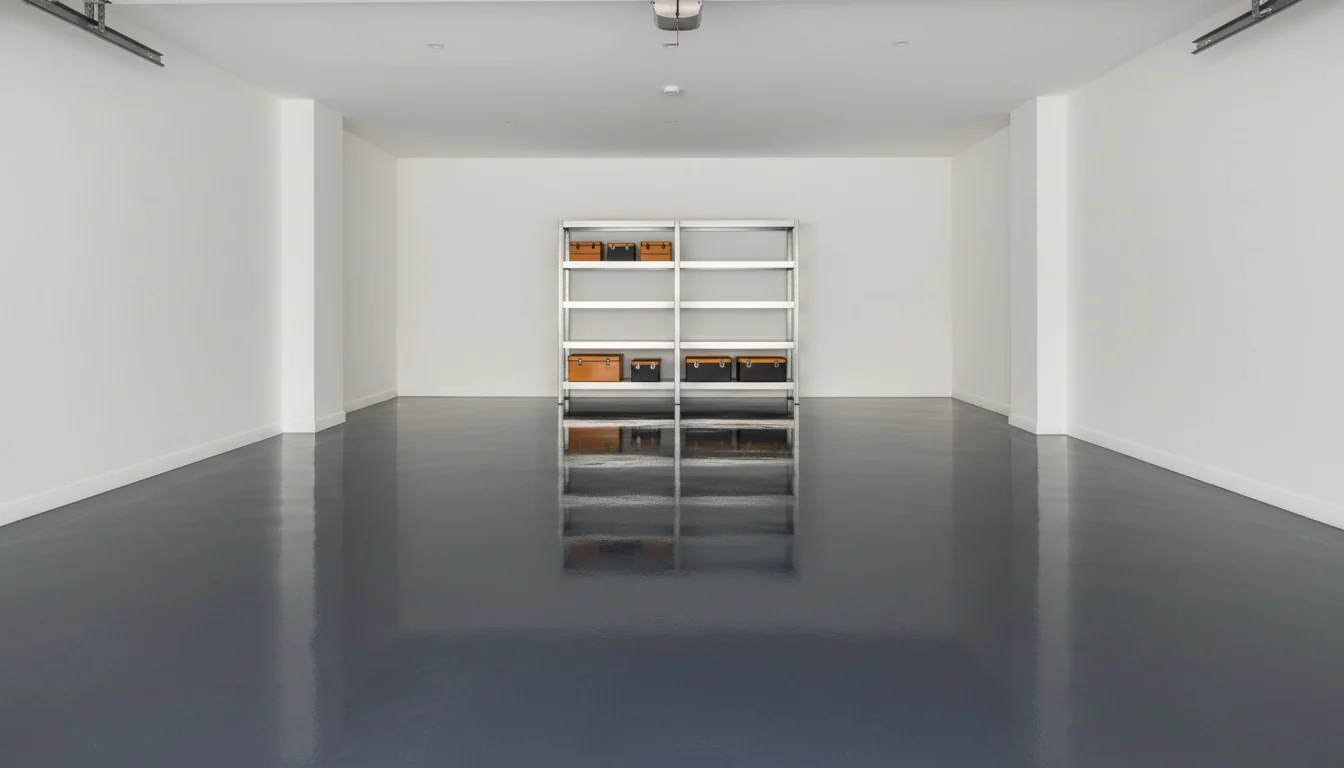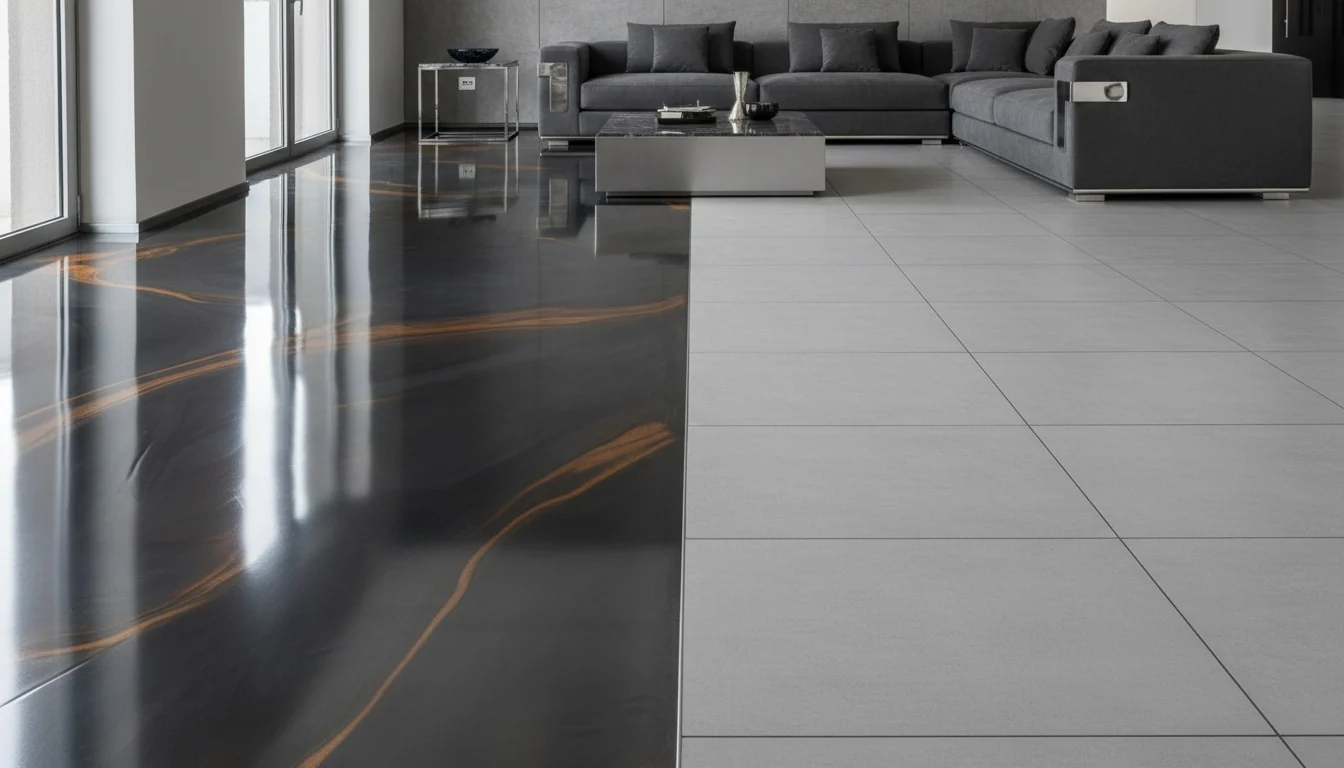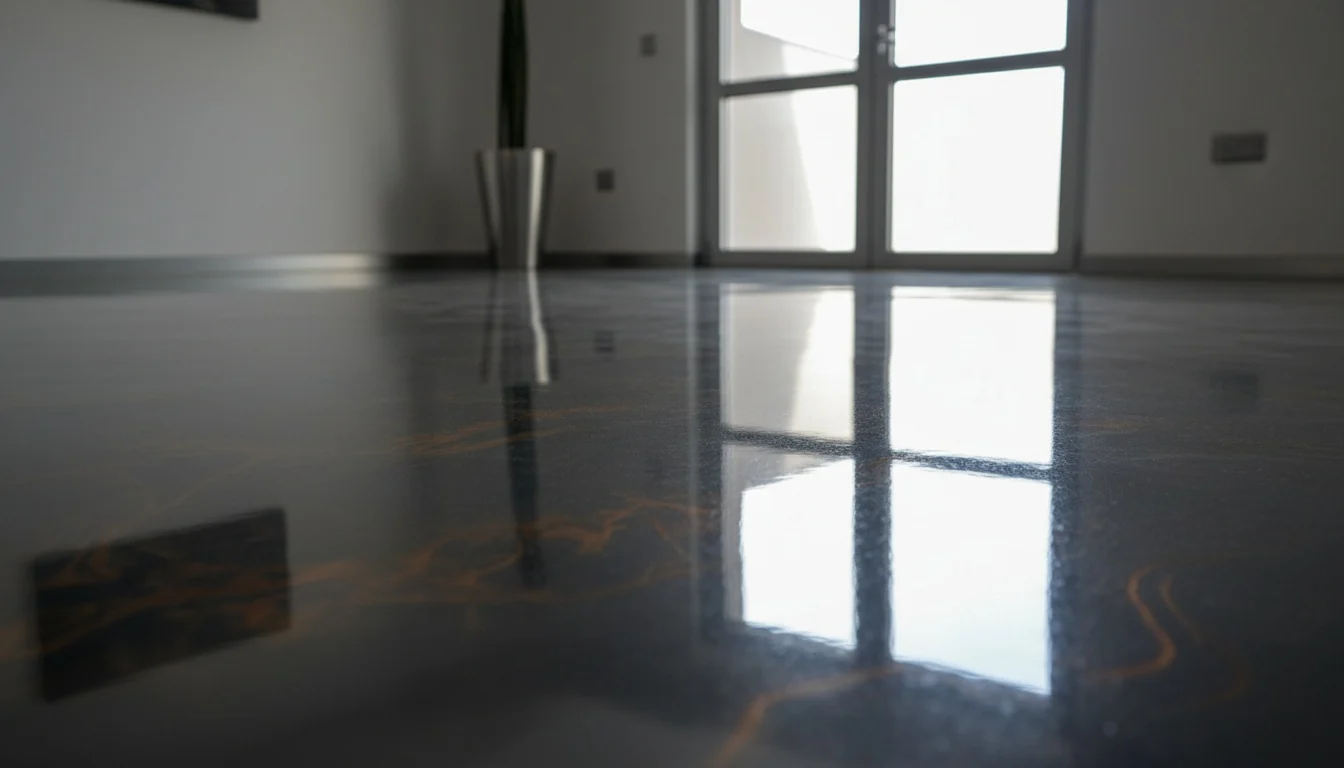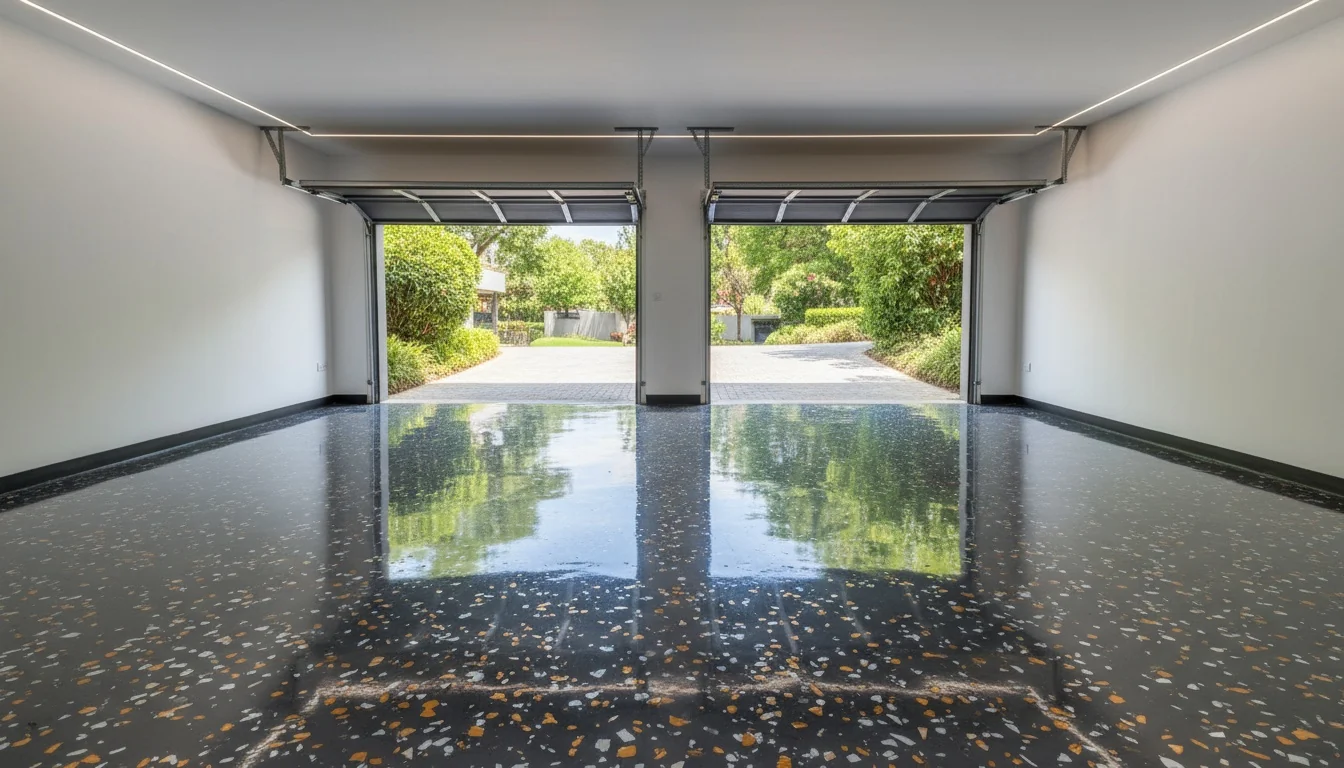

In Johannesburg the garage does a job it does not do everywhere: it keeps the car out of summer hail. Hail in South Africa falls most often from mid-November to February, mainly in the late afternoon, which is exactly when cars are coming home. So the garage floor here sees hot tyres, rainwater dripping off the bodywork and oil, nearly every day of the storm season. Whether an epoxy coating is worth it comes down to five questions, and this guide takes them one at a time, with our prices and the local weather that affects each one.
Key takeaways
- Cost: on a 36 m² double garage, from about R9,000 (solid colour), R12,600 (flake) or R16,200 (metallic) at the bottom of our price bands.
- Life: commonly 10 to 20 years when the slab is properly prepared.
- Timing: allow about four days off the floor in warm weather and about six in a Johannesburg July, and plan covered parking if it falls in hail season.
- Deal-breakers: a damp slab or cracks that are still moving. Both are fixed before coating, not coated over.
Question 1: do you actually use the garage?
This decides more than anything else. If the car lives in there, or you work on it, or the garage holds boxes, tools and bikes, a sealed floor earns its money every week:
- Bare concrete keeps shedding a fine grey dust; a coated slab stops it.
- Oil, brake fluid and battery acid stay on top of the coating instead of soaking in.
- Rainwater off the car mops up rather than darkening the concrete.
- A light-coloured gloss floor makes a dim garage noticeably brighter to work in.
If the garage is a locked store you open twice a year, those gains mostly go unused and the money is better spent elsewhere.
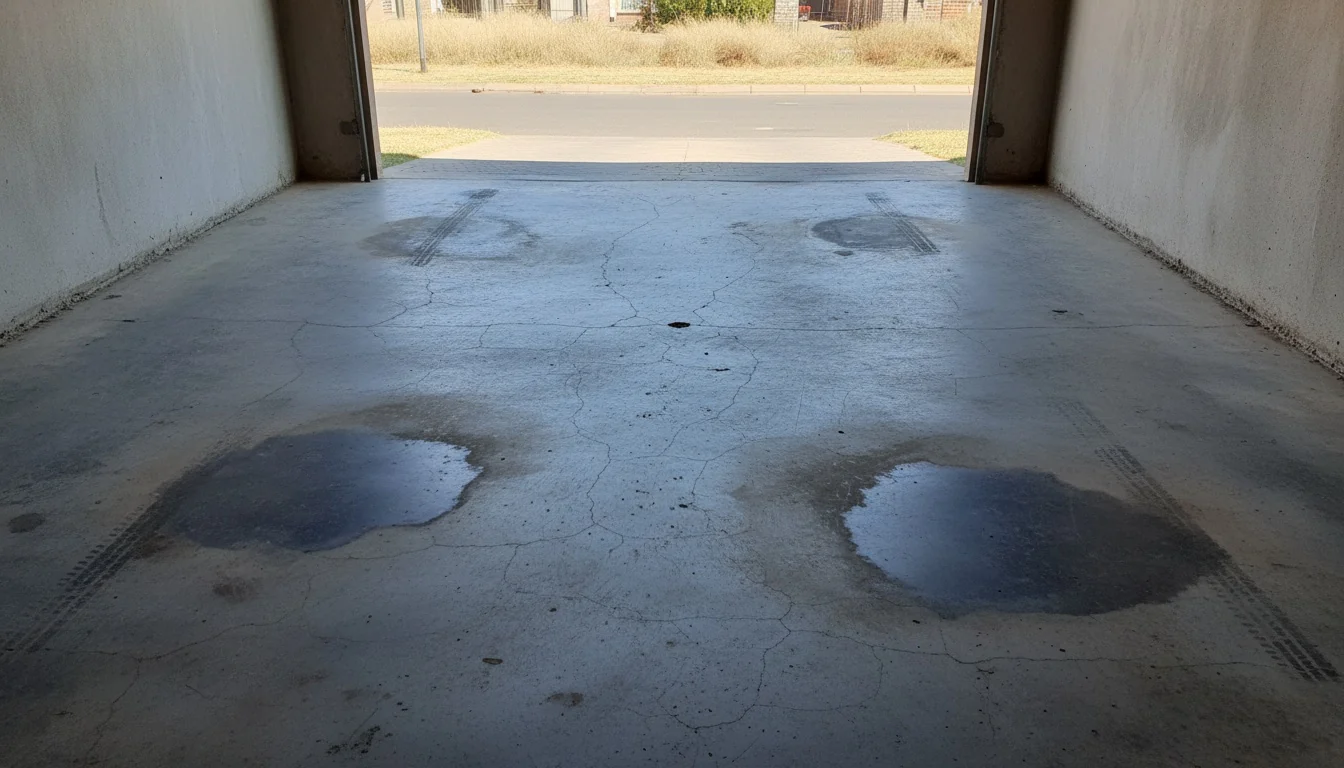
Question 2: is the slab dry?
Damp rising through the concrete is the quickest way to make a coating blister and lift. A South African epoxy data sheet sets the slab's moisture limit at 4 % by weight and asks for no rising moisture under a plastic-sheet test, and the in-situ humidity method used by the flooring industry generally looks for readings below about 75 % before a resin coating goes down. A garage that floods under the door in summer storms, or has a dark tide-mark along one wall, needs testing and possibly a damp-tolerant primer. That is extra work, and it belongs in the quote rather than after the floor has failed.
Question 3: are the cracks still moving?
Parts of Gauteng are built on expansive clay, which swells when the summer rain soaks it and shrinks as it dries out in winter. Researchers at Tshwane University of Technology list visible cracks, jammed doors and damaged floors among the results. A hairline shrinkage crack that has not changed in years is filled and coated over. One that opens and closes with the seasons will come straight back through a new coating unless it is cut out and finished as a joint. Have the cracks looked at before deciding on a finish, because they can change the price more than the system you choose.
Question 4: where does the car go while it cures?
Epoxy cures slower in the cold, and Johannesburg winters are cold at slab level. One South African data sheet gives these times before light traffic such as parking a car:
| Month | Average daily temperature | Nearest data-sheet row | Before you park |
|---|---|---|---|
| January | 20.0 °C | 20 °C | About 4 days |
| April | 16.1 °C | between 10 °C and 20 °C | About 4 to 6 days |
| July | 9.7 °C | 10 °C | About 6 days |
| October | 17.1 °C | between 10 °C and 20 °C | About 4 to 6 days |
The averages are for O.R. Tambo, and a shaded slab can run cooler than the air, so treat the table as a planning guide. Our guide to epoxy drying times goes into the detail. The practical point: a coating between mid-November and February means four or more days of the car standing outside during hail season. If you have a carport or a neighbour's garage, fine. If not, an autumn or spring booking is easier.
Question 5: what will it cost, and is that good value?
Garage floors are priced per square metre. A standard South African double garage is about 6 m by 6 m, so 36 m², and multiplying by the bottom of each of our price bands gives the starting points below.
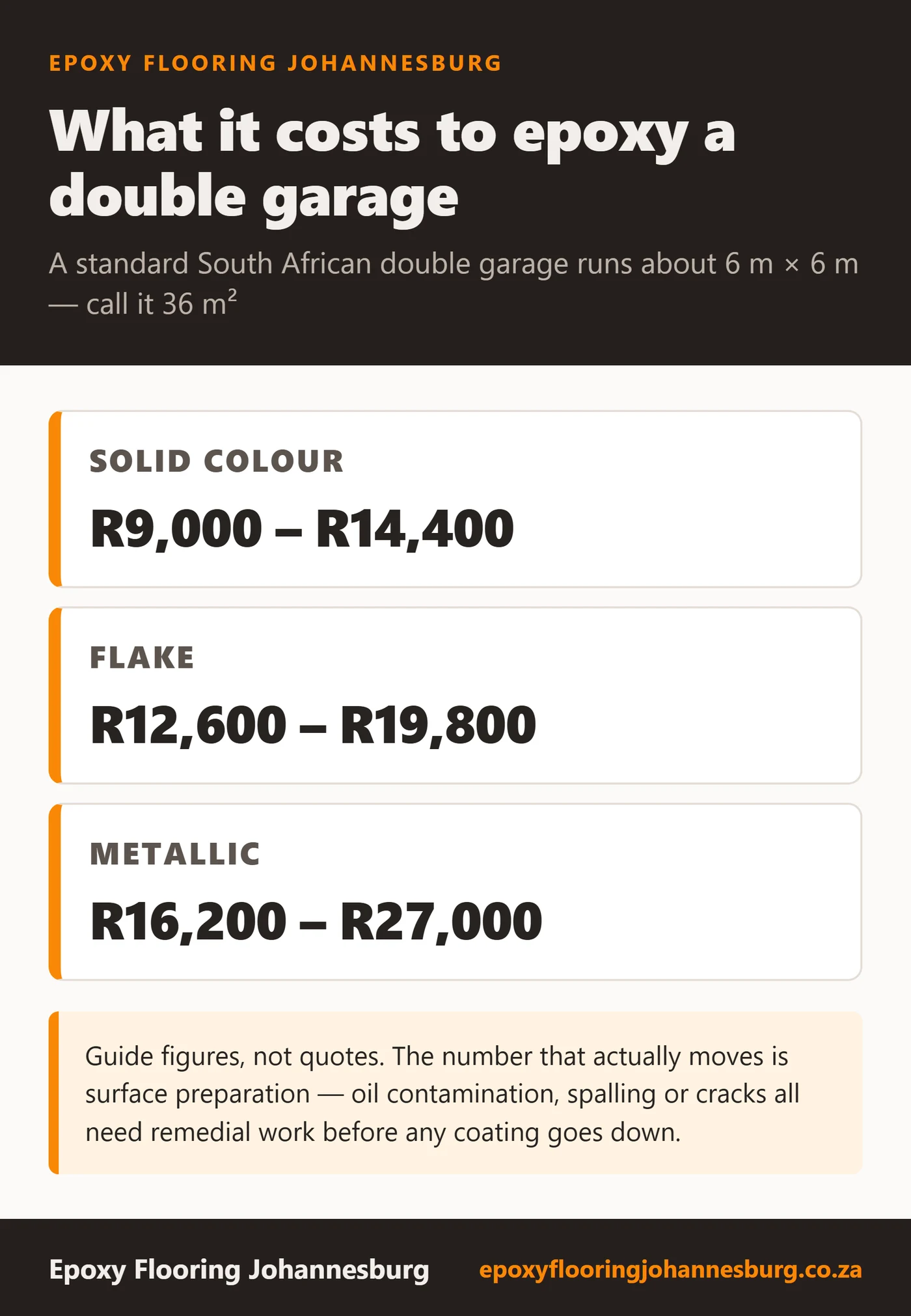
Those are floors, not typical totals. Our epoxy price guide puts a typical double garage from R12,000, because most slabs need some repair, and the questions above are where the extra goes: damp treatment, crack work, grinding off old paint. Spread R12,600 for flake over 15 years and you pay about R840 a year for a floor you walk on daily. For a comparison with tiling the same space, read epoxy or tiles.
The failure to avoid: hot tyre pick-up
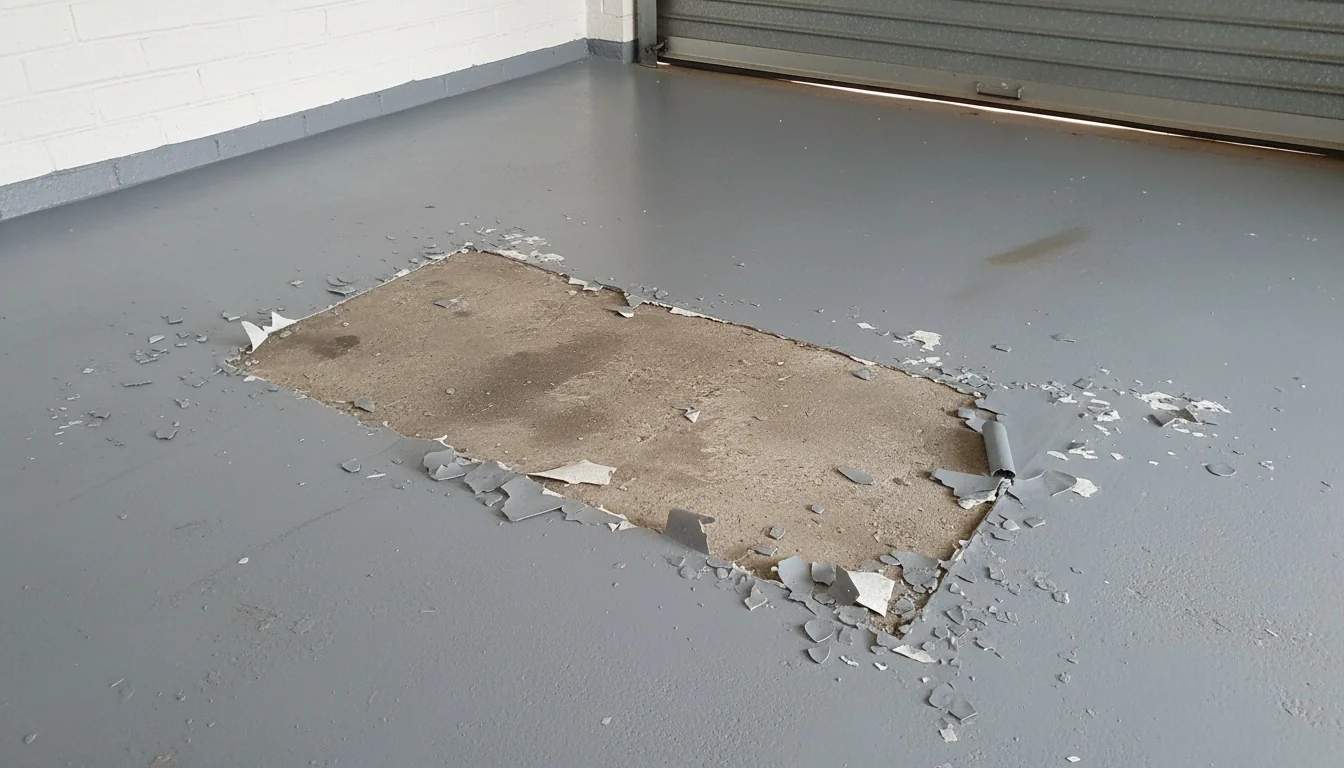
The classic garage failure is a tyre pulling the coating off the slab. A tyre comes in hot off summer tar, softens a thin or poorly bonded coat, then grips it as it cools, and the next time you reverse out a patch comes up with it. It is mostly a matter of coating build, bond and cure: a high-build system on a ground slab, left to cure fully before the car comes back, resists it; a thin coat on a dusty slab often does not. It is also why the waiting times in the table above are worth respecting, however inconvenient. Our guide to how long epoxy lasts covers the other causes of early failure.
Kit or professional install?
A hardware-store kit costs a fraction of a professional floor and takes a weekend. The catch is the preparation questions 2 and 3 cover. Many kits rely on an acid etch instead of diamond grinding, nobody tests the slab for damp, and cracks get painted over. The result is a thin coat of floor paint that looks good for a season and then starts lifting where the tyres sit. Removing it means grinding it off, so a failed kit often ends up costing more than doing the job properly once.
Which finish for which garage?
Flake is the right answer for most. The chips hide tyre marks and the dust that blows in through the dry months, and they add some grip when the floor is wet.
Solid colour is the cheapest way to seal the slab. It looks smart when new but shows every mark.
Metallic is for a show garage or one that doubles as an entertainment space. It costs the most and copes least well with heavy workshop use.
Our garage floor epoxy page sets out how each finish is installed and what it costs.
The verdict
Answer yes to question 1, and have a slab that passes questions 2 and 3 or can be repaired, and an epoxy floor is one of the better-value jobs you can do on a Johannesburg house. Pick a season that suits question 4, and choose flake unless you have a reason not to. If the garage is barely used, or the slab is wet and still moving, sort those out first or spend the money elsewhere.
The quickest way to answer questions 2 to 5 for your own garage is to have the slab looked at. Book a free on-site quote and we will check the damp and the cracks, recommend a system and give you a fixed written price with a date you can park again.