
Walk into a hardware store in Johannesburg and you will find tins labelled "epoxy floor paint". So it is a fair question: if the paint is epoxy and the floor is epoxy, what exactly is the difference, and is it worth paying for?
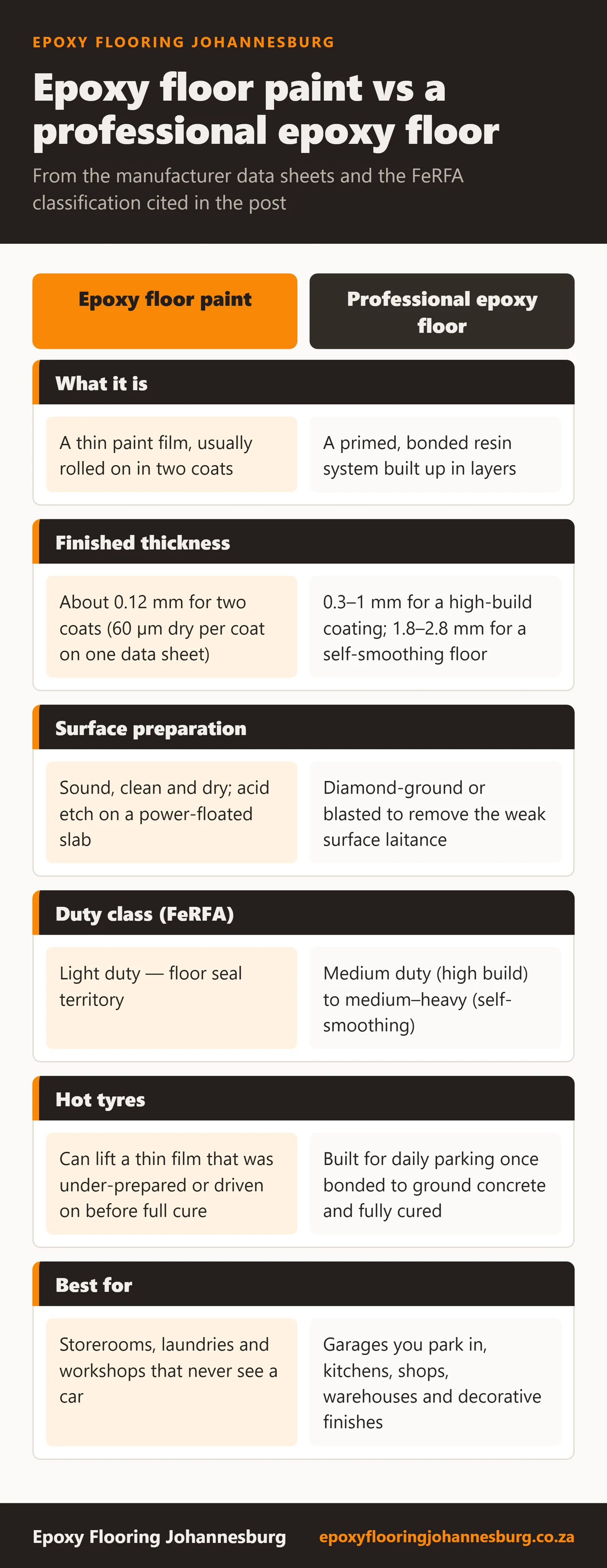
The short answer is thickness, preparation and what the floor has to survive. Floor paint is a thin film. A professional epoxy floor is a bonded resin layer that can be more than twenty times thicker, laid on concrete that has been mechanically ground first. Both have their place, and this guide sets out honestly where each one belongs.
Key takeaways
- Paint is a film, not a floor. One two-pack water-based epoxy floor paint dries to 60 microns per coat, so two coats come to roughly 0.12 mm.
- A resin floor is measured in millimetres. A self-smoothing epoxy wearing course is laid at 1.8 to 2.8 mm, roughly 15 to 23 times thicker than those two coats of paint.
- The real difference is underneath. Paint instructions ask for a scrub and often an acid etch. A resin system is laid on concrete that has been diamond-ground or blasted.
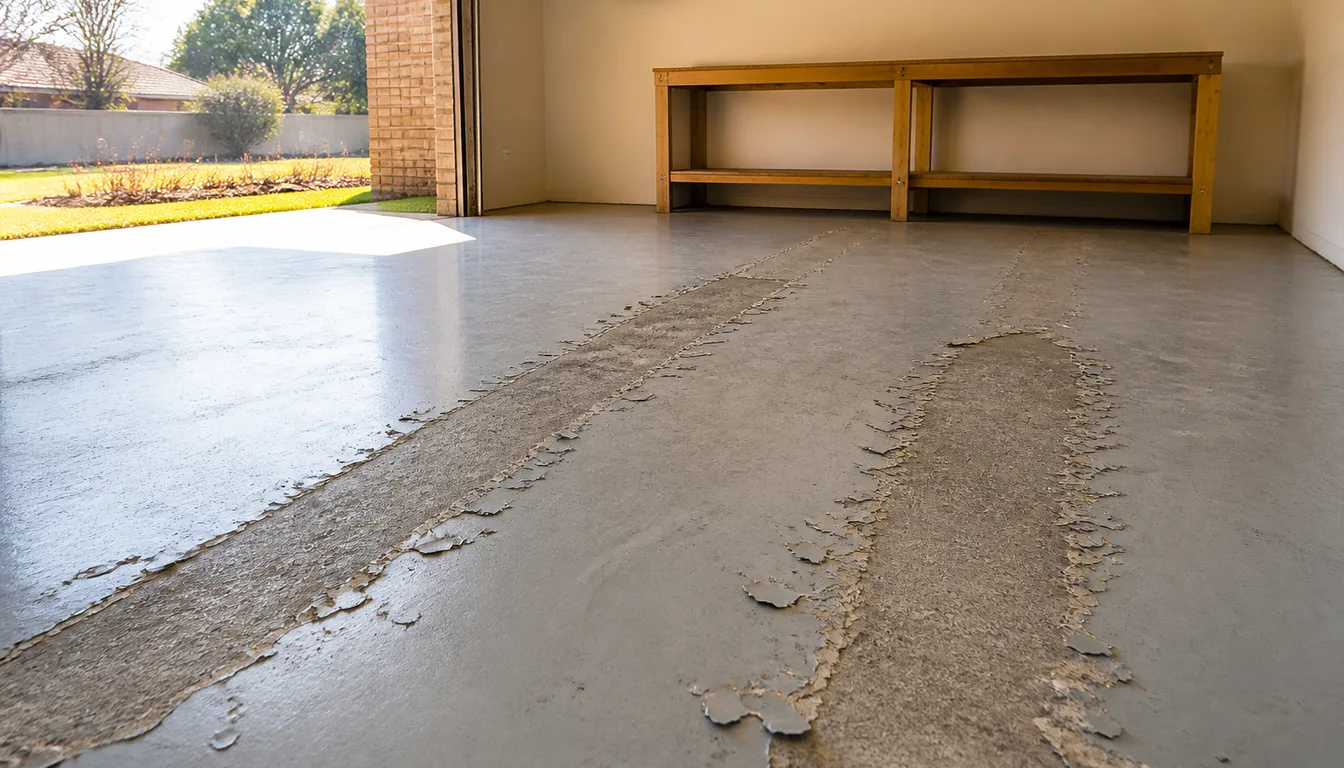
- Hot tyres are where paint loses. A car parked every day is the hardest test a thin coating faces, and Johannesburg summers make it harder.
- Paint is the right call for light-duty rooms like storerooms and workshops that never see a car, as long as the slab is prepared properly.
What "epoxy floor paint" actually is
The phrase covers a wide range of products, and the label alone does not tell you much. Some are genuine two-part epoxies: a base and a hardener you mix together, with a limited working time once mixed. Others are one-part paints that are ready to use straight from the tin, and some "garage floor paints" are not epoxy at all. One US garage floor paint, for example, lists its binder as modified acrylic on its own technical data sheet. The first line worth reading on any tin is the binder, not the word on the front.
Even a good two-part epoxy floor paint is built to be thin. Johnstone's Trade publishes the numbers for its two-pack water-based epoxy floor paint plainly: it goes on at 120 microns wet and dries to 60 microns, because the product is 50% solids by volume and the water evaporates. It covers roughly 5 to 7 square metres per litre per coat. So a typical 36 m² double garage needs somewhere between 10 and 15 litres for two coats, and ends up with a finished film of about 120 microns, or 0.12 mm.
None of that makes it a bad product. It is a protective paint that seals the concrete, stops dust, resists oil and looks a great deal better than bare concrete. It is simply not the same thing as a resin floor, and it is not designed to be.
How much thicker is a professional epoxy floor?
The resin flooring industry already has a ladder for this. FeRFA, the UK's Resin Flooring Association, classifies resin floors into eight types by typical thickness and duty. The bottom of the ladder is where floor paint sits:
- Type 1, floor seal: applied in two or more coats, generally solvent or water borne, light duty, with a typical thickness given as 150 microns.
- Type 2, floor coating: light to medium duty, typically 150 to 300 microns.
- Type 3, high build floor coating: medium duty, typically 300 to 1,000 microns.
- Type 5, flow applied flooring: the "self-smoothing" or "self-levelling" floors, medium to heavy duty, typically 2 to 3 mm.
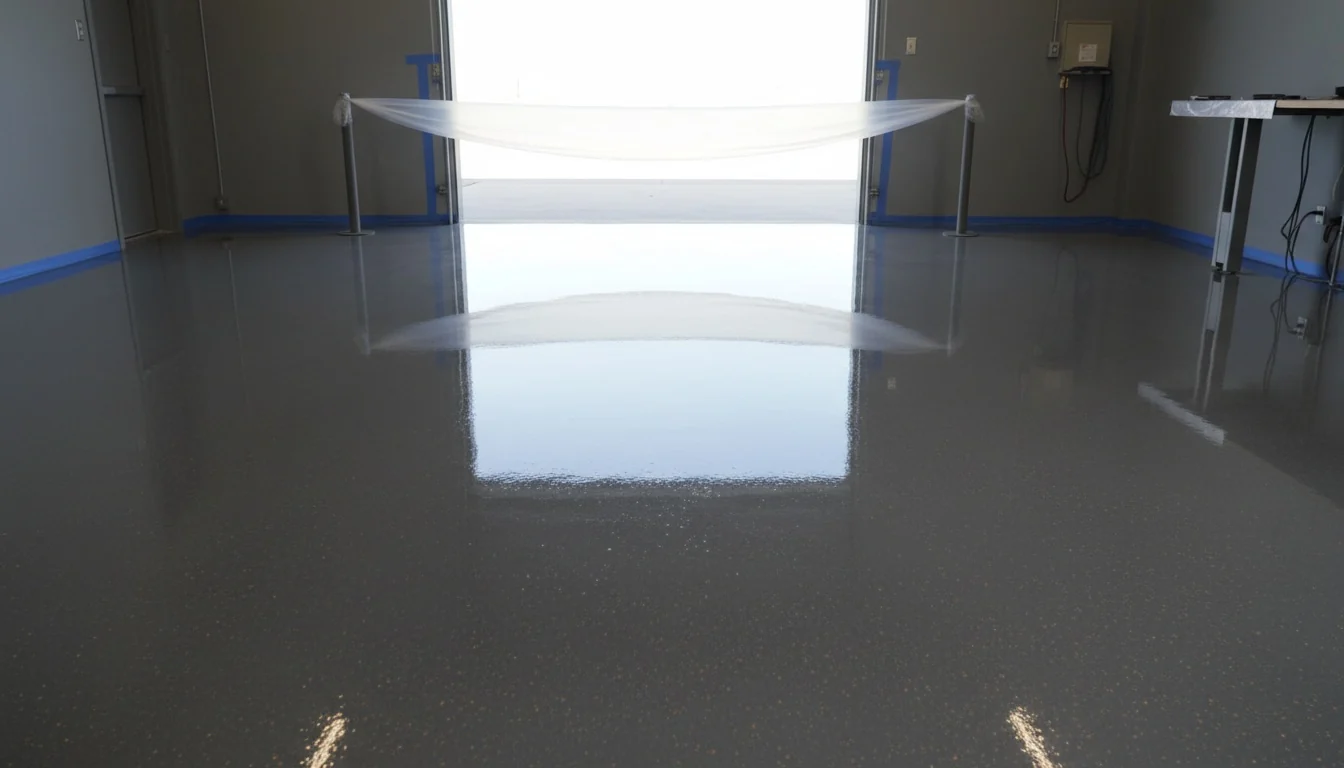
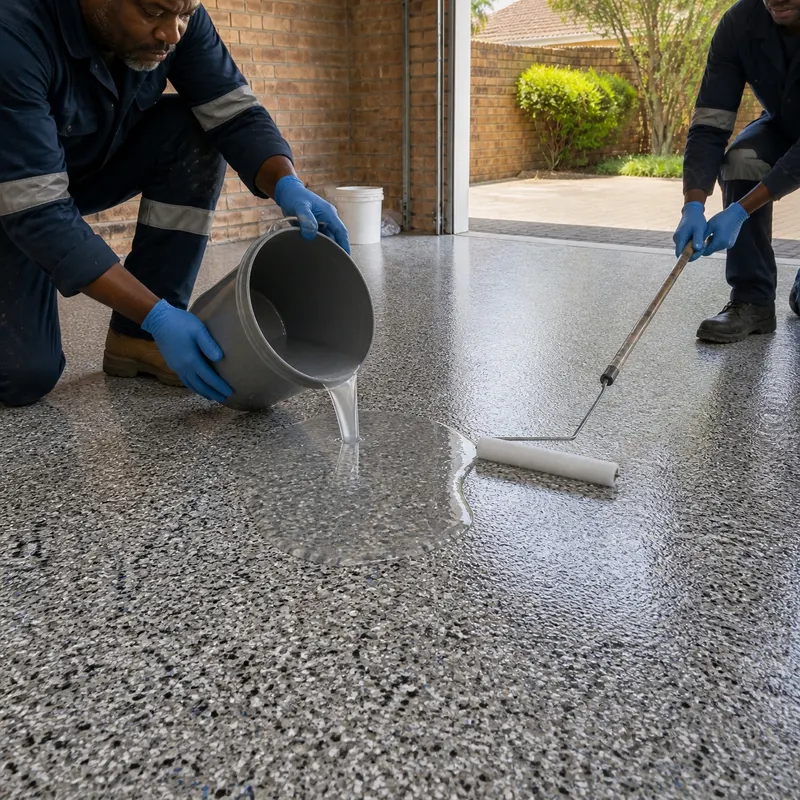
Two coats of the water-based epoxy paint above land at about 120 microns, below the floor coating band and in light-duty floor seal territory. At the other end, Sika South Africa's self-smoothing Sikafloor-381 is laid as a wearing course of 1.8 to 2.8 mm and is roughly 100% solids, so almost nothing evaporates and what is poured is what stays. Divide one by the other and the resin floor is roughly 15 to 23 times thicker than the paint. That extra material is what takes the knocks, the dragged toolbox and the dropped jack, instead of the concrete underneath.
The real difference is the preparation you cannot see
Thickness is the visible half. The half that decides whether a floor lasts is what happens to the concrete before anything is applied, and here the two approaches part ways completely.
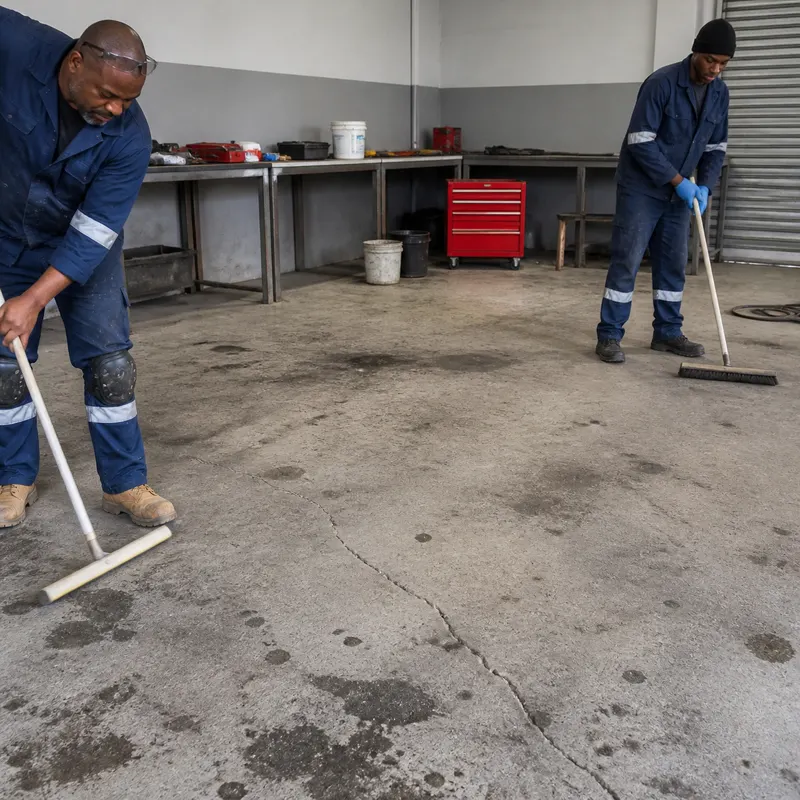
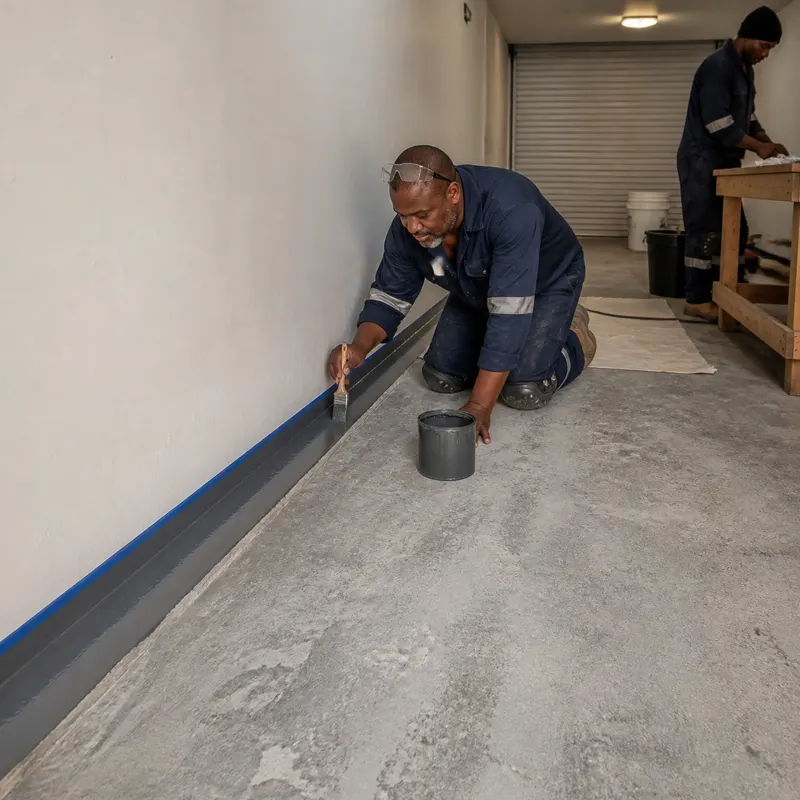
Floor paint instructions are written for a homeowner with a bucket and a stiff brush. The Johnstone's sheet asks for a surface that is sound, clean and dry, and recommends an acid etch solution if the floor has been power floated, to give the paint a key. The Hot Trax sheet goes further than most: it recommends mechanical abrasion such as grinding, accepts acid etching as an alternative, and asks for a moisture check of 2% or less before painting. Those are good instructions. They are also the steps a weekend job is most likely to cut short.
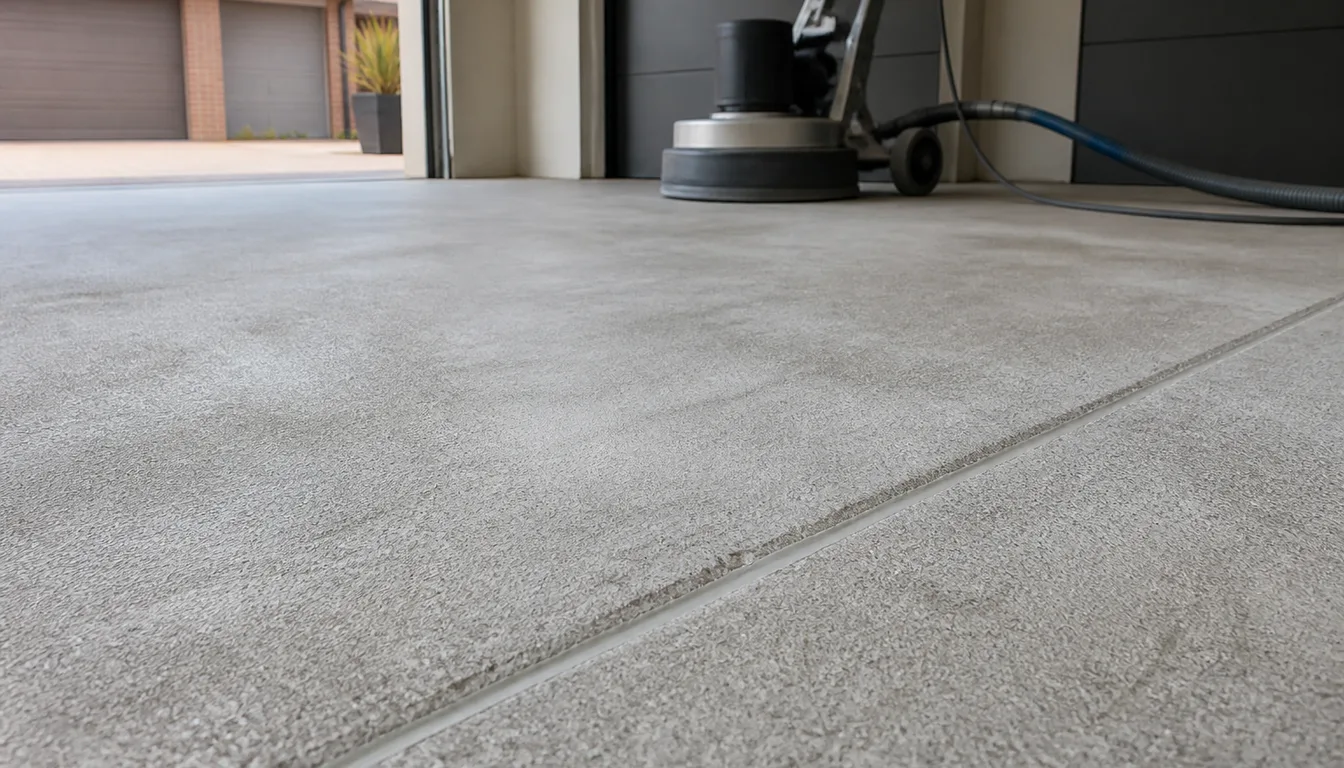
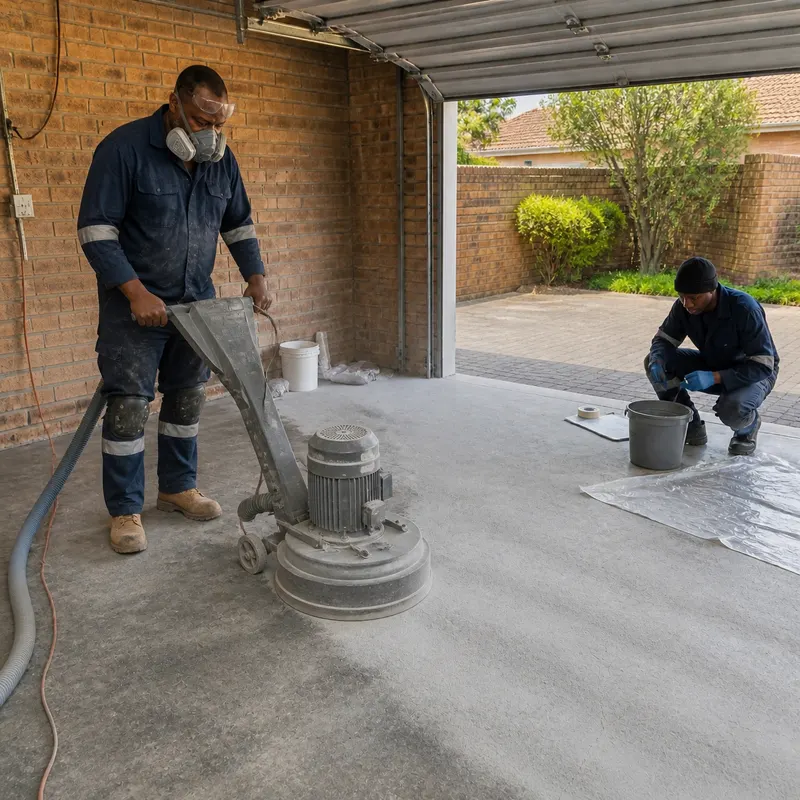
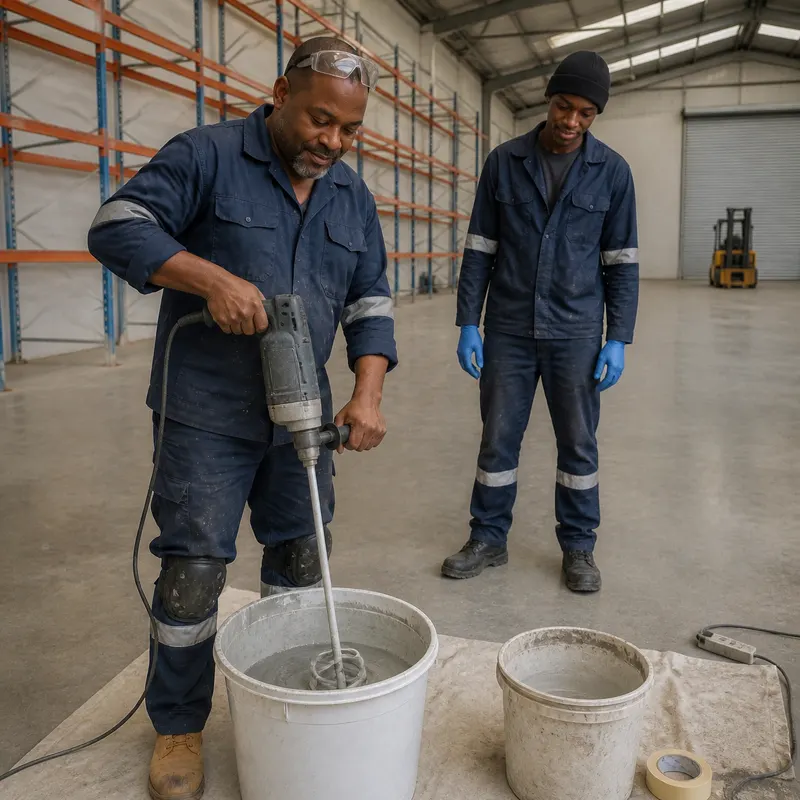
A resin system starts from a much stricter specification. The Sikafloor-381 data sheet requires concrete with a compressive strength of at least 25 N/mm² and a pull-off strength of at least 1.5 N/mm². It must be prepared mechanically, by abrasive blast cleaning or scarifying, to remove the cement laitance (the weak, dusty skin on top of a slab) and leave an open-textured surface. Moisture must be 4% or less, with no rising damp, and the substrate has to be free of existing coatings. That last point matters if you are weighing paint now and a proper floor later: the paint has to be ground off before a resin floor can go down.
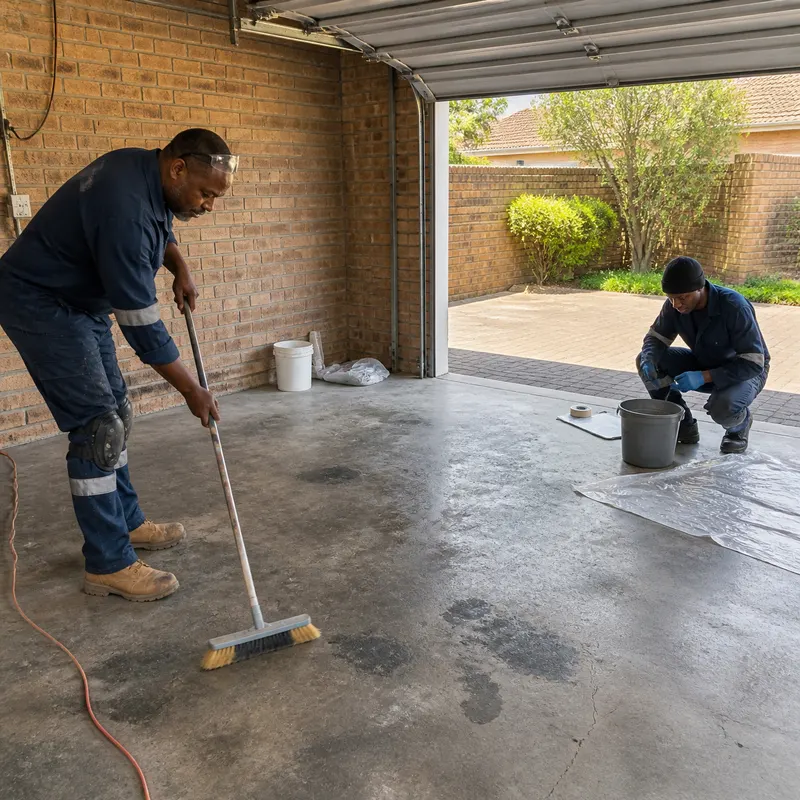
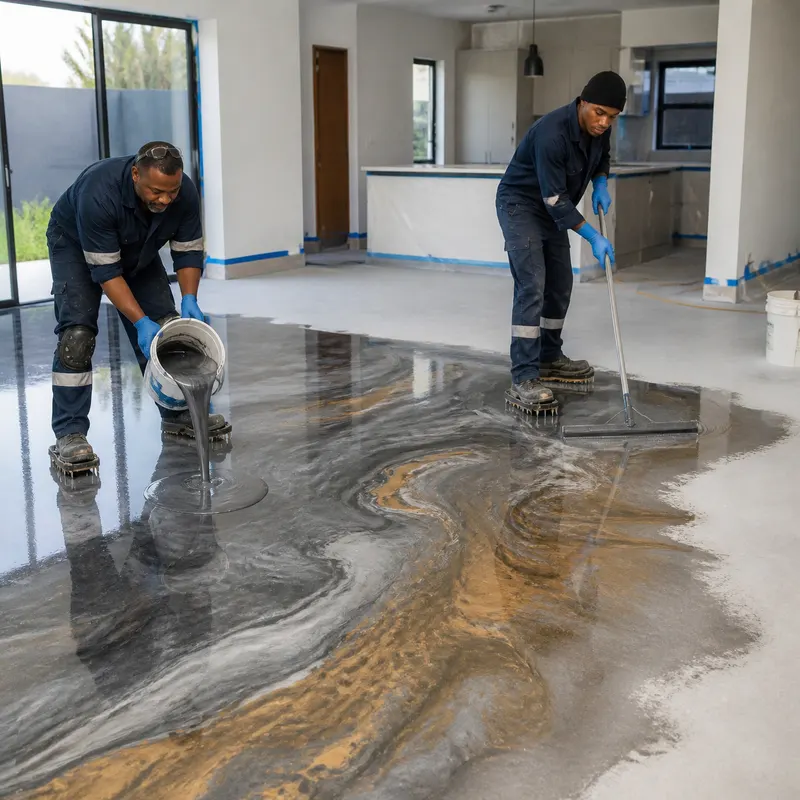
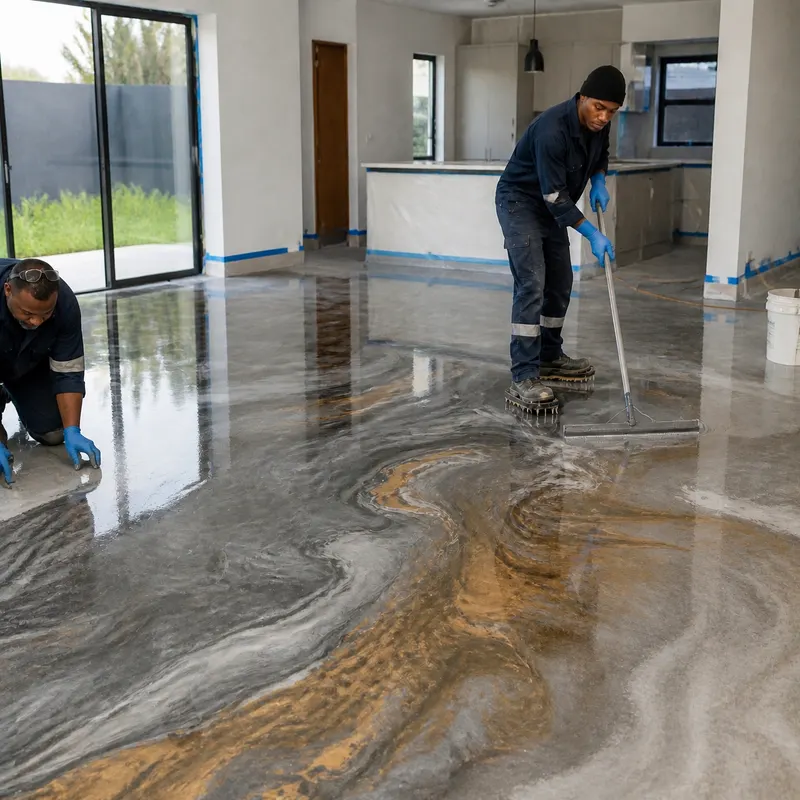
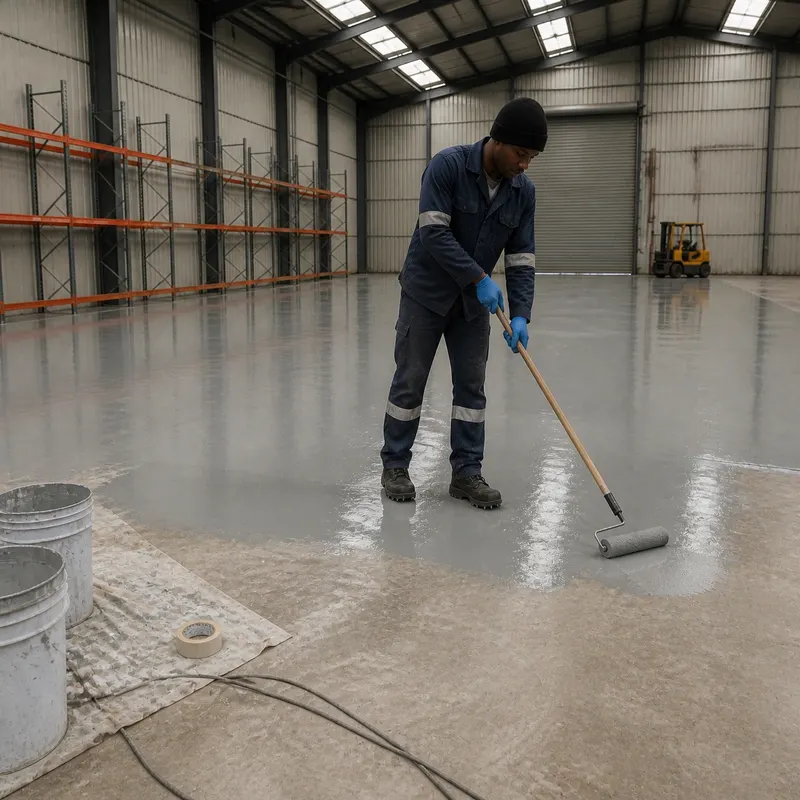
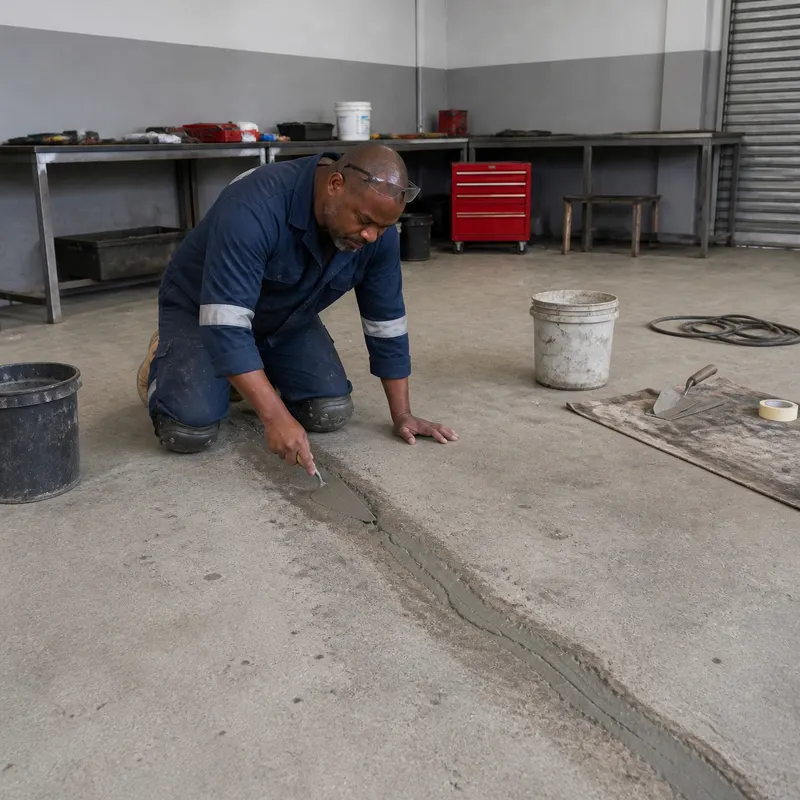
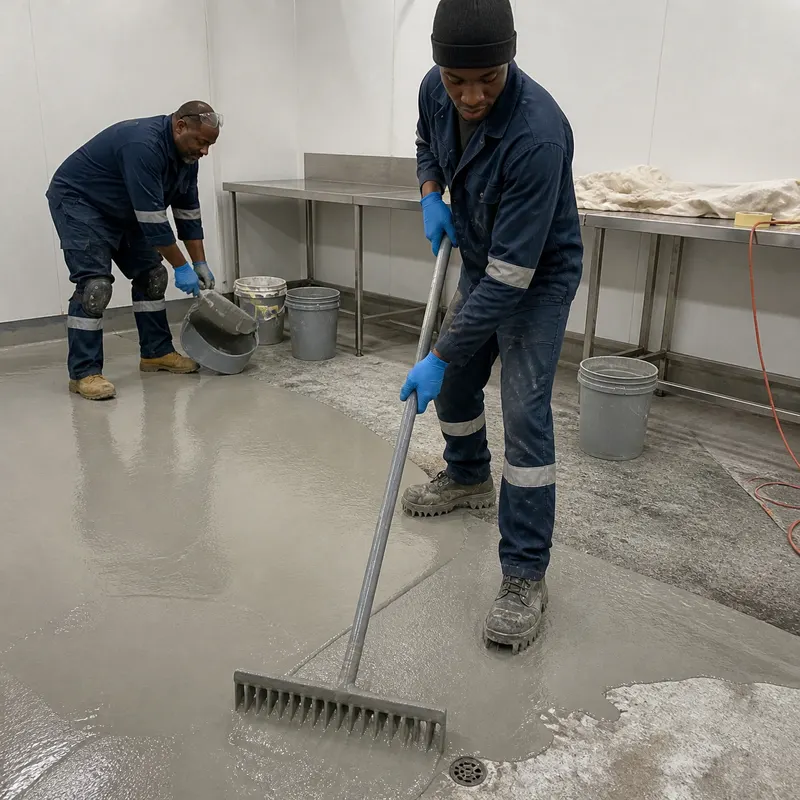
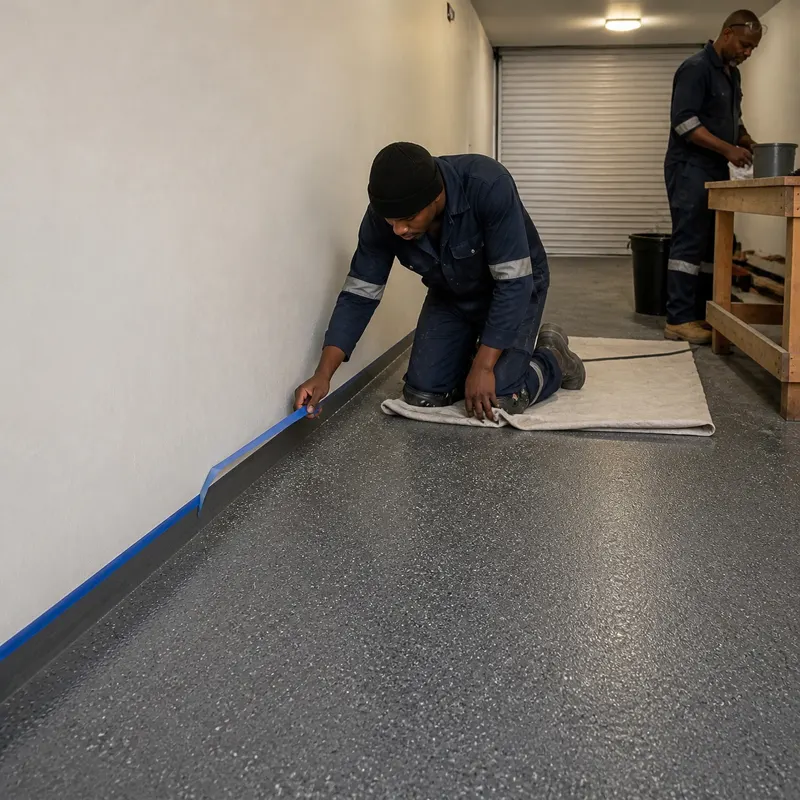
This is the work we do before a single coat goes on. We diamond-grind the slab, repair cracks and pitting, test for moisture, then prime and build the system. Our garage floor epoxy service sets out that sequence step by step, and it is the main reason an installed floor costs more than a tin of paint.
Why Johannesburg garages are hard on a thin film
Where you live changes how quickly a thin coating gets found out, and the Highveld tests a garage floor in both seasons.
Summer is the hot-tyre season. Johannesburg's hottest month is January, with an average high of about 26 °C, and it is also the wettest month. Everest Paints, a UK floor coatings manufacturer, explains that friction from driving can heat tyres to over 60 °C, especially in summer or after motorway driving. A hot tyre parked on a soft or weakly bonded coating can bond to it, and as the tyre cools the coating comes up with it, because the bond to the tyre has become stronger than the bond to the concrete. Everest is fair about where the blame usually lies: it calls this rarely a product defect, and more often a timeline failure (driving on a coating before it has fully cured) or a lack of proper surface preparation. It also names low-quality single-pack paints among the coatings that tyre oils soften. A commute up the M1 or the N1 on a January afternoon, then straight into the garage, is exactly that test.
Winter is the cold-slab season. July is Johannesburg's coldest month, with an average low of about 3 °C. The Hot Trax data sheet says not to apply it if the surface or air temperature is below 10 °C, and Sika sets the same 10 °C minimum for its resin system. A garage slab on a winter morning is often colder than that, so an early Saturday start breaks the paint's own instructions before the first coat is rolled. We plan winter jobs around the slab temperature for exactly this reason, and the effect on cure times is covered in our guide to how long an epoxy floor takes to dry.
When floor paint is the right choice
We install resin floors, so it would be easy to say paint is never good enough. That would not be true. A well-prepared, two-coat floor paint is a perfectly sensible choice when:
- The room never sees a car: a storeroom, a laundry, a hobby workshop or a garden shed.
- Foot traffic is light and nothing heavy gets dragged or dropped on it.
- You want a cleaner, dust-free surface quickly and accept that you will recoat it in time.
- The slab is sound, dry and you are prepared to do the preparation the tin asks for, properly.
If that describes your floor, buy a genuine two-part product, read the data sheet rather than the label, follow its preparation and temperature limits to the letter, and respect the full cure before you load it. Johnstone's quotes seven days to full cure, and the Hot Trax sheet asks for seven days before hot tyres.
When you need a professional epoxy floor
The balance tips the other way as soon as the floor has real work to do:
- A garage you park in every day, where hot tyres, oil, brake fluid and dropped tools are part of normal life.
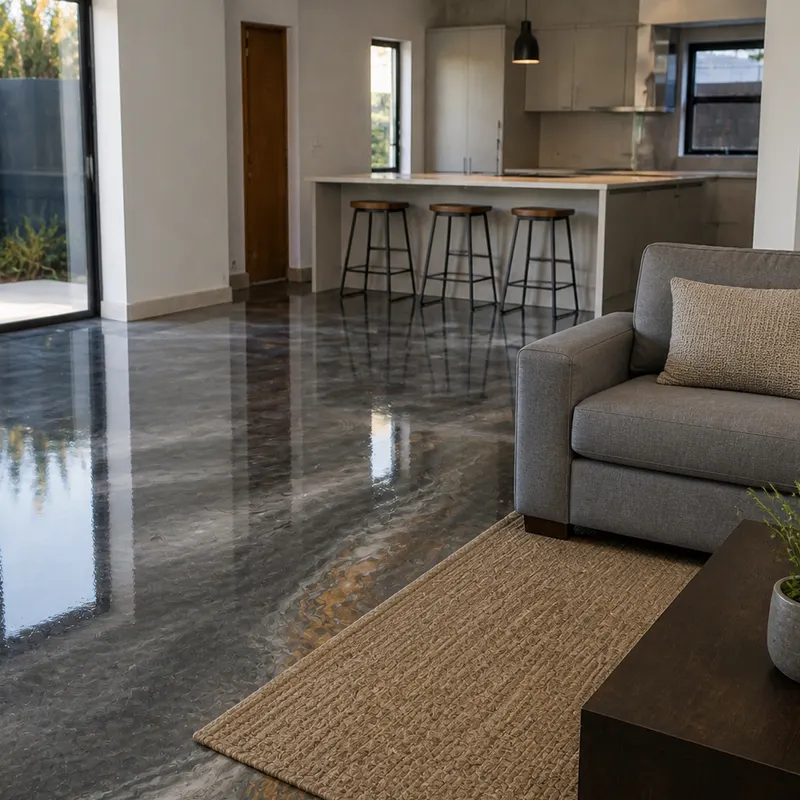
- Kitchens, sculleries and living areas, where the floor is part of the interior and has to look right for years.
- Shops, workshops and warehouses, where trolleys, pallet jacks and constant foot traffic would wear through a thin film.
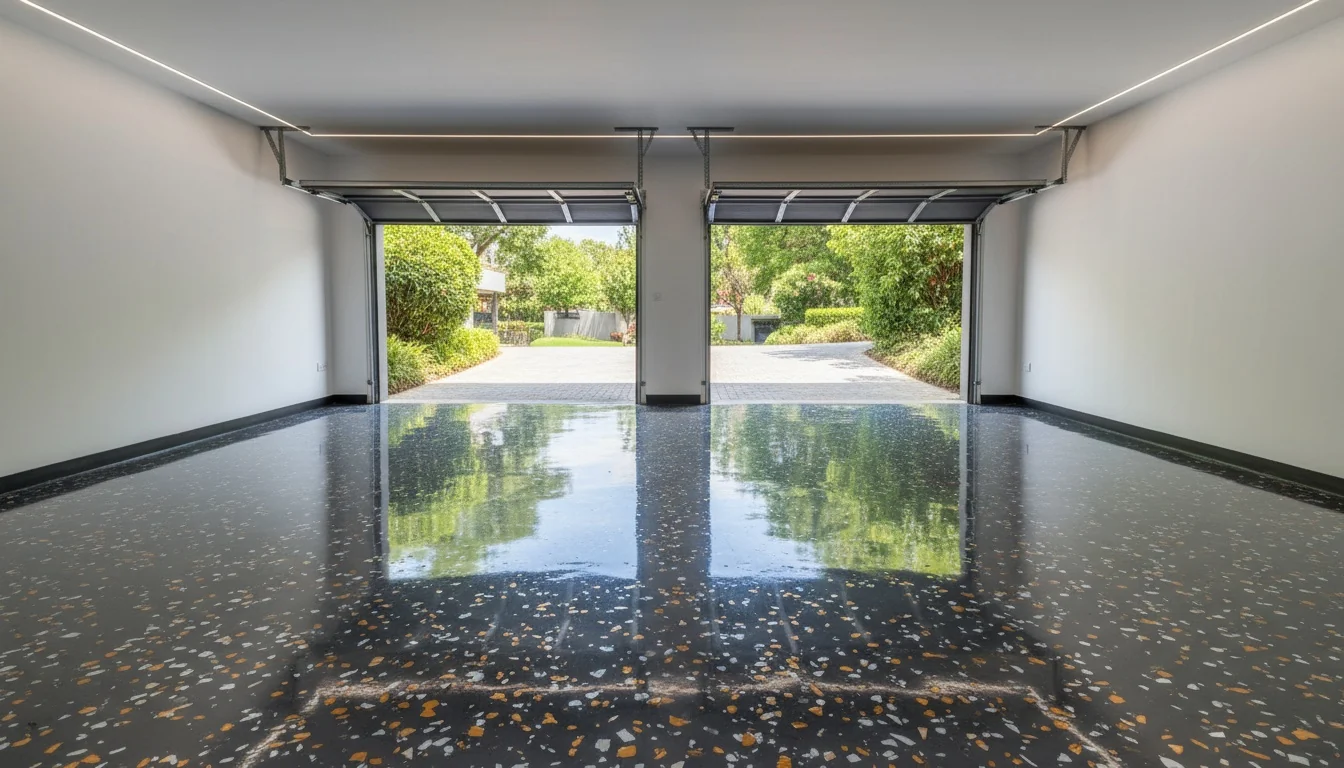
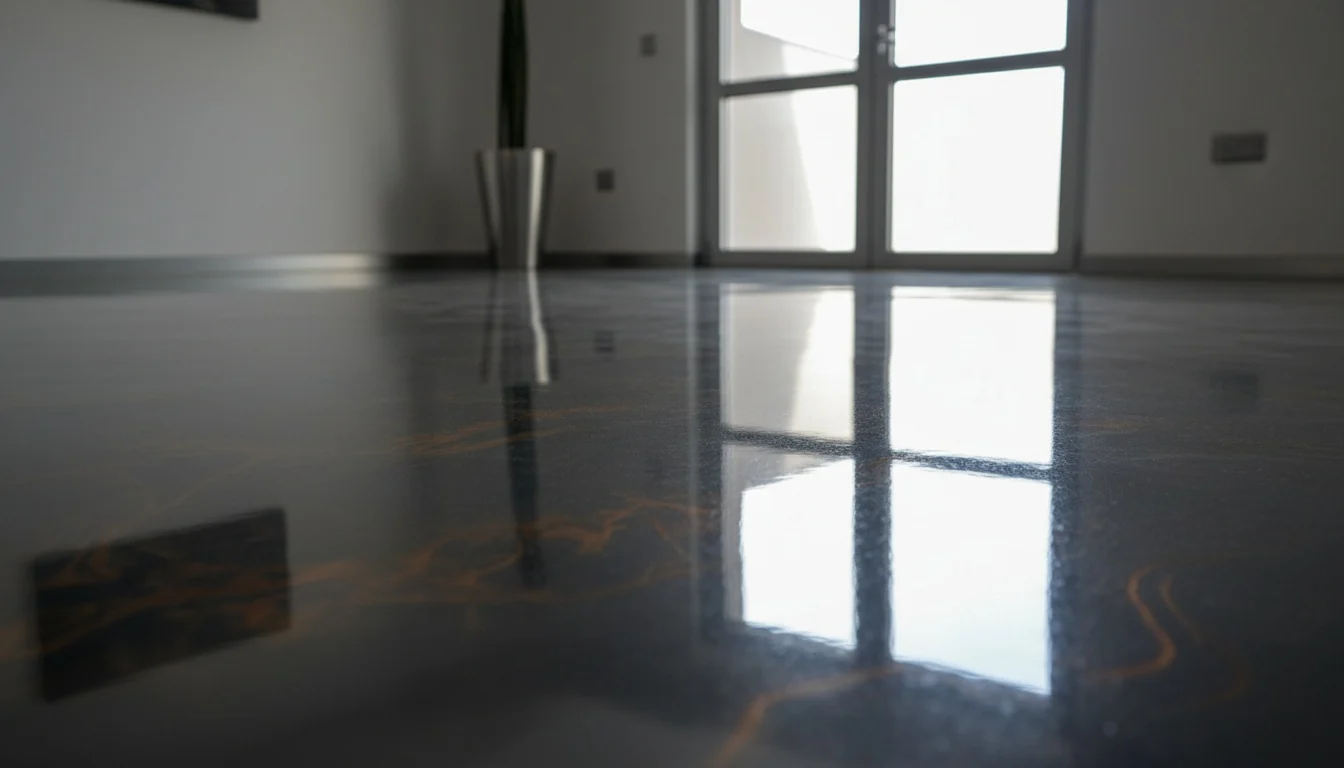
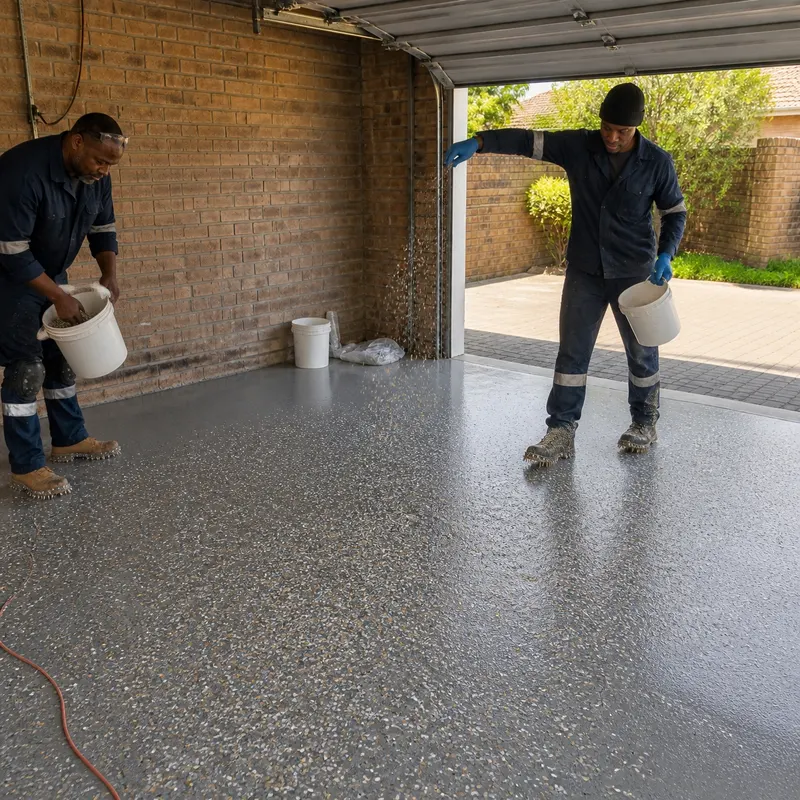
- Decorative flake and metallic finishes, which we build as multi-coat resin systems rather than a single film.
- An older slab with cracks, damp or old coatings, where the preparation is the hard part of the job.
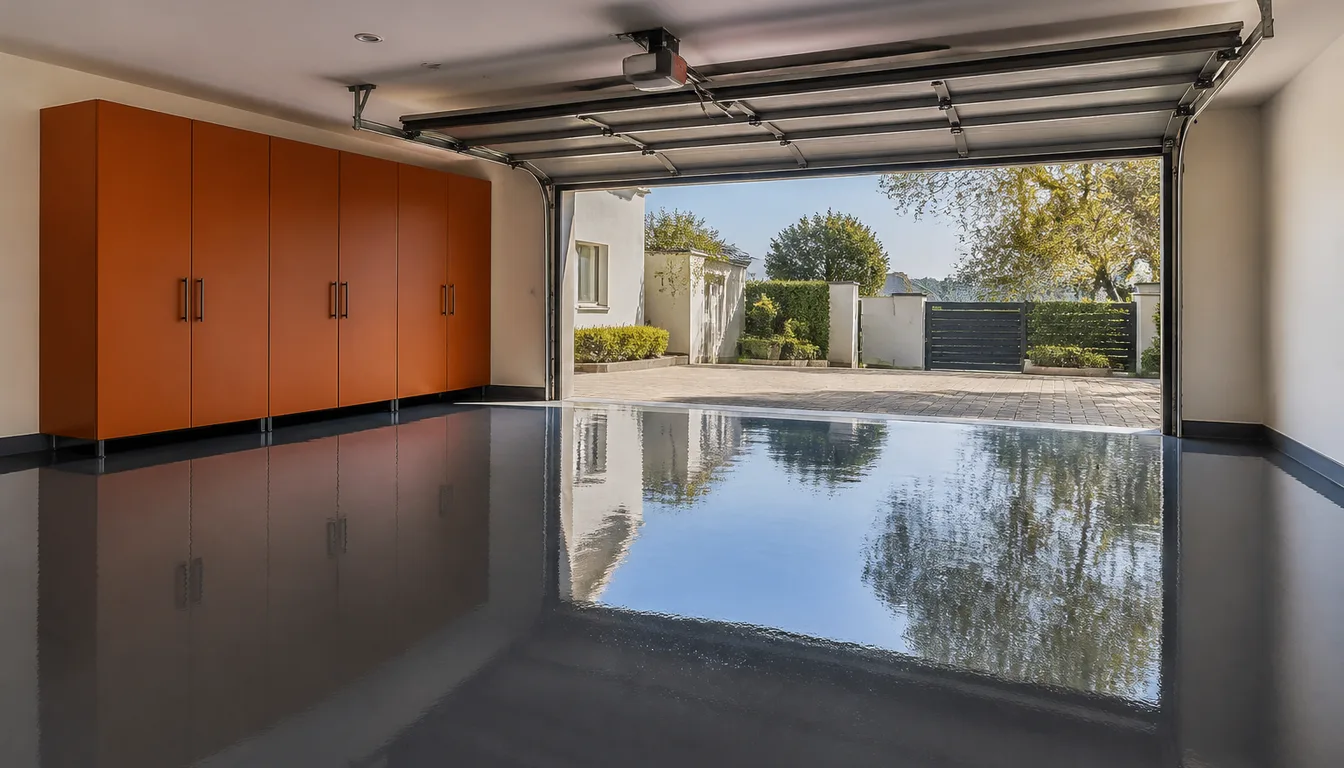
If you are still deciding whether a garage floor is worth doing at all, our guide on whether to epoxy your garage floor covers the case for and against, the cost of a typical garage and the DIY kit question in more detail.
What it costs, compared honestly
Floor paint will always win on the till slip. You buy the material, you supply the labour and the weekend, and you skip the grinding equipment. For an installed epoxy floor, a solid-colour system in Johannesburg costs roughly R250 to R400 per square metre, including the diamond grinding, crack repair, primer and coats. Our epoxy flooring price guide sets out the ranges for flake, metallic and industrial systems too.
The fairer comparison is not price per square metre but price per year of service on the floor you actually have. A storeroom does not need a 2 mm resin floor. A double garage with two cars in it every night will make a thin paint film look expensive surprisingly quickly, and if the paint fails it has to be ground off before anything better can replace it. That is the cost people tend to miss: the second floor is always more expensive than the first, because it starts with removing the first.
The bottom line
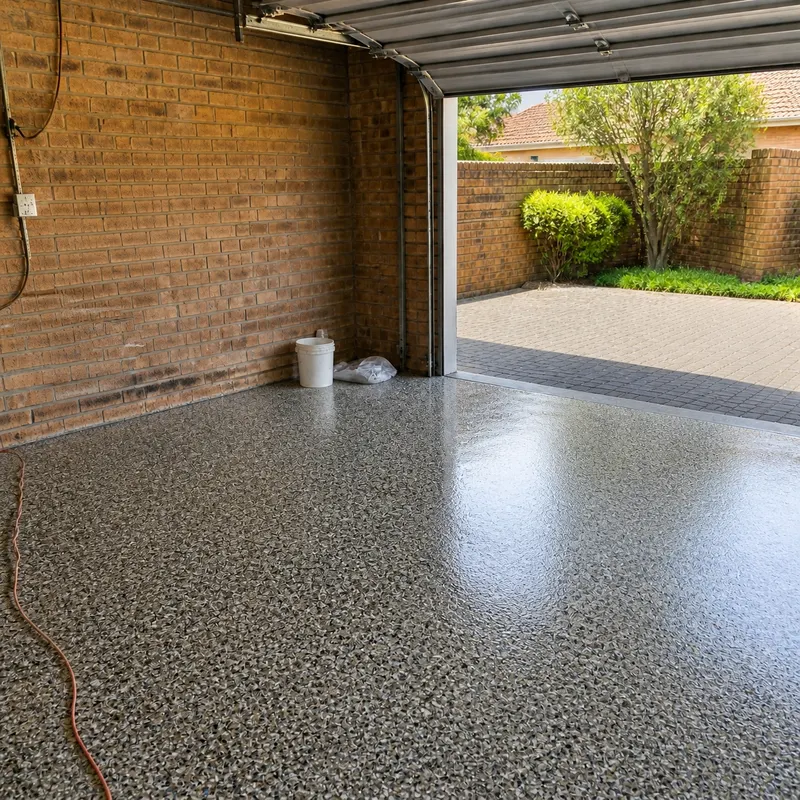
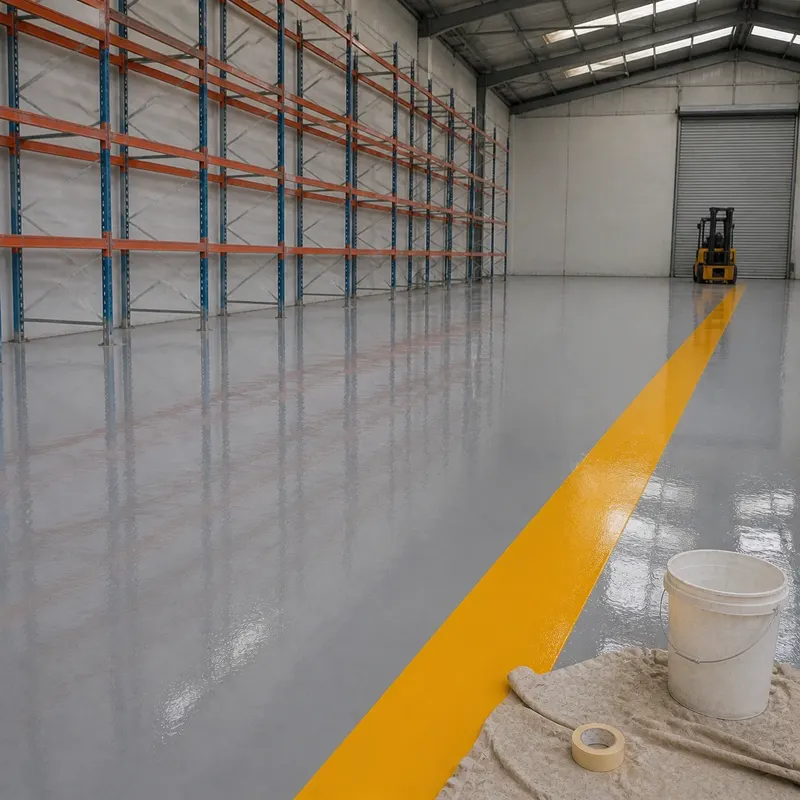
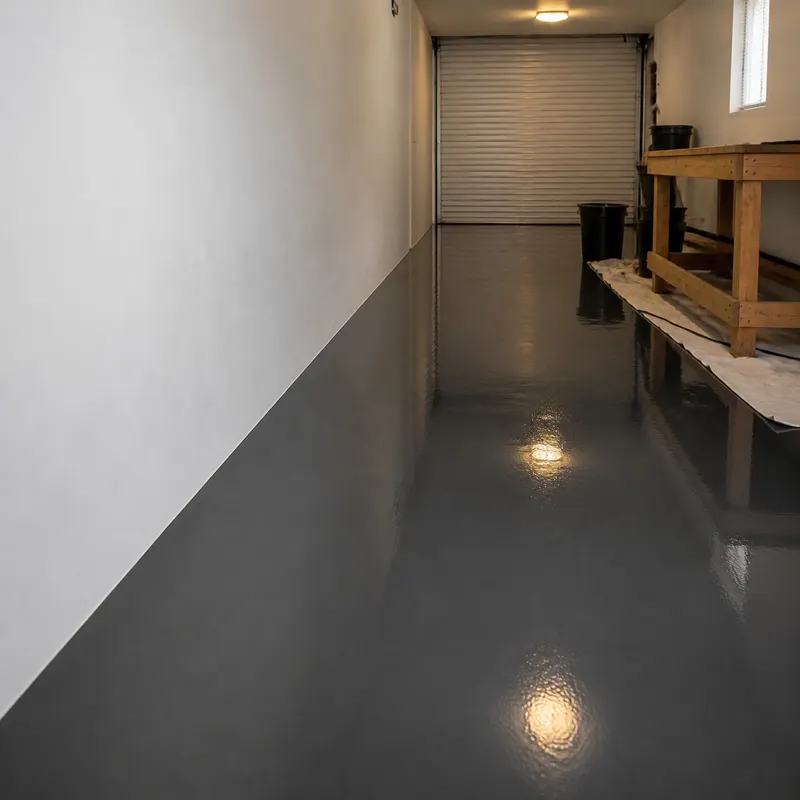
Epoxy floor paint and an epoxy floor share a word, not a job description. Paint is a thin, light-duty film that suits rooms where nothing heavy happens. A professional epoxy floor is a bonded resin layer, many times thicker, laid on mechanically prepared concrete, and built for cars, kitchens, trading floors and decorative finishes.
If you are not sure which side of that line your floor sits on, we will tell you straight. We look at the slab, test it, ask what the floor has to carry, and if paint would genuinely do the job we will say so. Book a free on-site quote and you will get a written answer for your own floor rather than a guess.