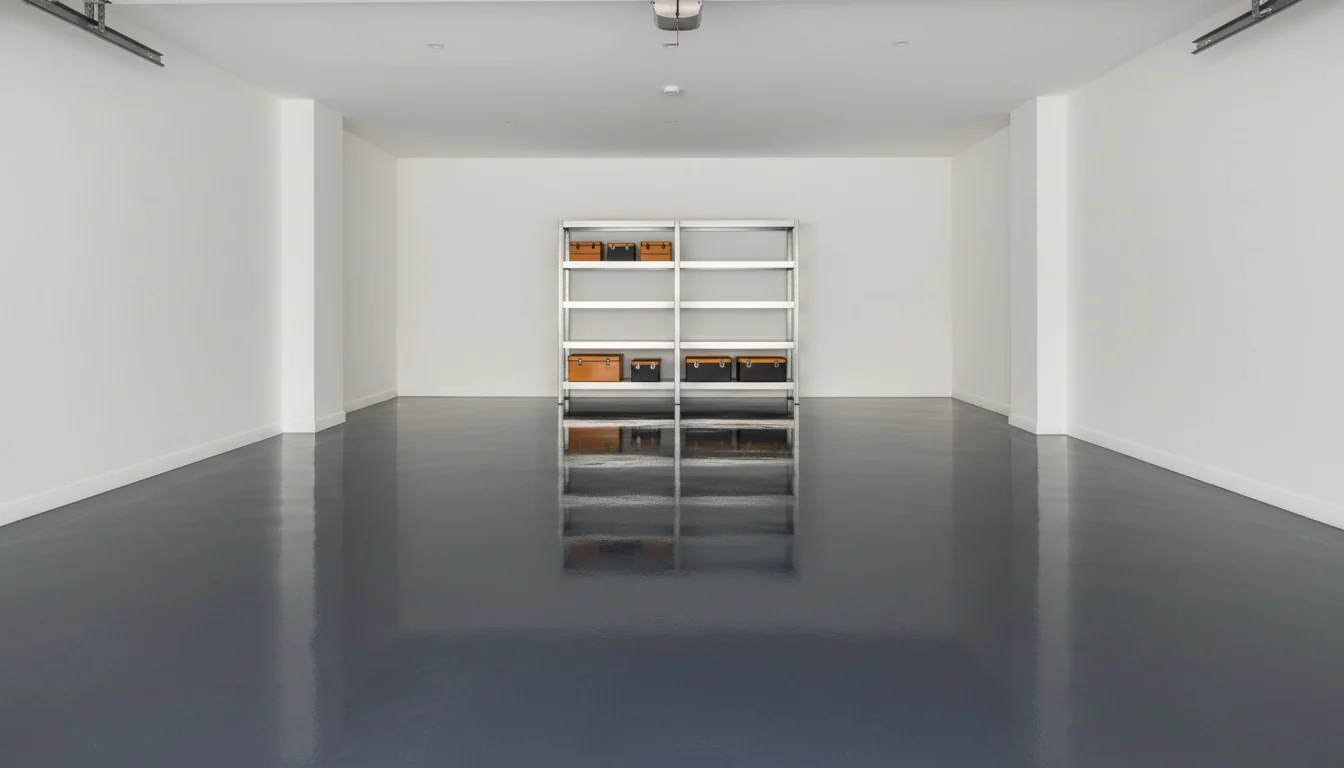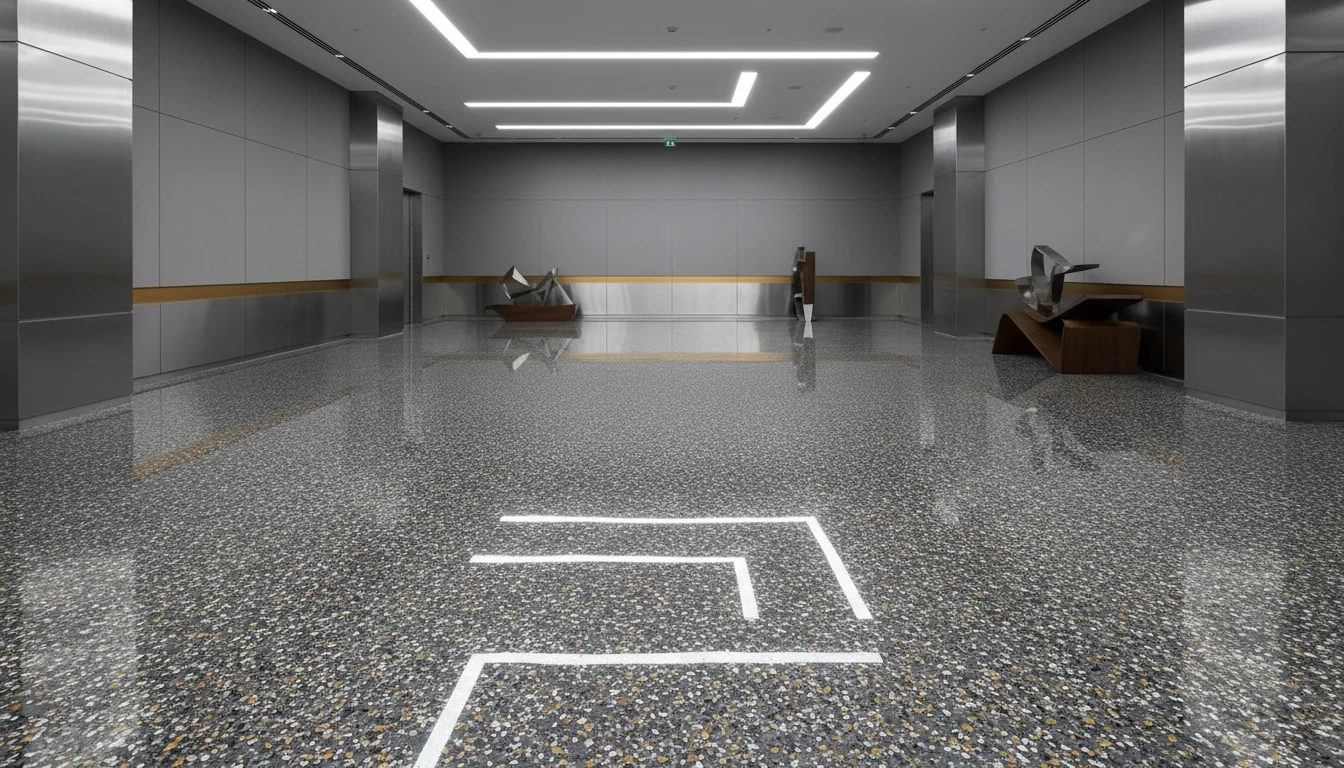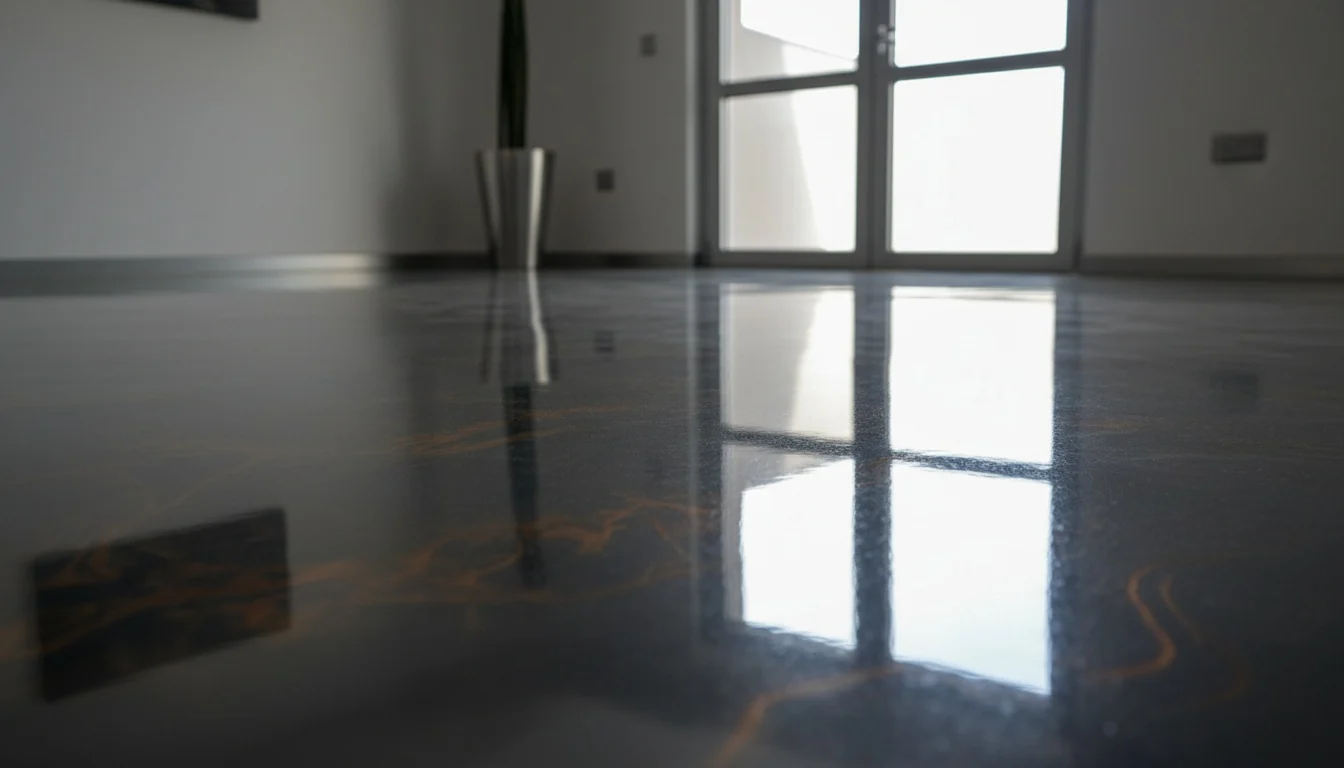

Most people meet epoxy in a photo: a poured, glossy floor without a single joint. The better question comes later, usually once a quote is on the table. What can go wrong with it, and which problems are still there in three years? In Johannesburg the answer has a local twist. Two of epoxy's weak spots, sun and cold, are sharper at 1,753 m than at the coast, and a third, cracked slabs, comes with the clay that parts of Gauteng are built on. Below is every real downside, the upsides that still make epoxy worth having, and how each problem is handled before the first coat.
In short: epoxy is one of the hardest-wearing and easiest-to-clean floors you can buy, and its failures usually trace back to cheap material or skipped preparation rather than to epoxy itself. Choose the system for the room and the slab, and most of the cons stop applying.
Key takeaways
- Where it shines: it takes forklifts, tools and daily parking, it has no joints for dust or storm water to get into, it needs very little upkeep, and it shrugs off oil, fuel and everyday heat.
- Where it falls short: it is slippery when wet unless grip is added, plain epoxy discolours in direct sun, it peels over a slab that was not prepared and tested, it is hard underfoot, and it needs cure time you cannot rush.
- What is different in Johannesburg: UV rises about 12% for every 1,000 m of altitude, July nights average 3.5 °C at O.R. Tambo, and expansive clays in parts of Gauteng crack slabs as they swell and shrink. Each of those changes the spec.
- The bottom line: nearly every con is a specification decision, made before any coating goes down.
The pros of epoxy flooring
The upsides are real, and a few of them matter more on the Highveld than in a manufacturer's brochure. Here is what a good epoxy floor does well.
It is exceptionally durable
Bonded into a ground slab, a high-build epoxy becomes a hard, impact-resistant skin. Dropped spanners, furniture dragged across it, foot traffic and tyres leave little mark. The important word is specified: a double garage that doubles as a workshop and a distribution floor with pallet jacks running all day need different build thicknesses, and a floor that merely looks tough is not the same as one designed for its load. For how many years that durability translates into, see how long an epoxy floor lasts.
It is seamless and hygienic
Epoxy goes down as one continuous sheet, so there are no grout lines for grime and bacteria to settle in and a damp mop is all the cleaning it needs. That suits the Highveld's long dry season: O.R. Tambo averages just 1.7 mm of rain in July, and the fine dust of a dry winter works its way into every joint in a tiled floor. A seamless surface gives it nowhere to lodge, which is why sculleries, laundries and food-prep rooms are good candidates.
It looks the part
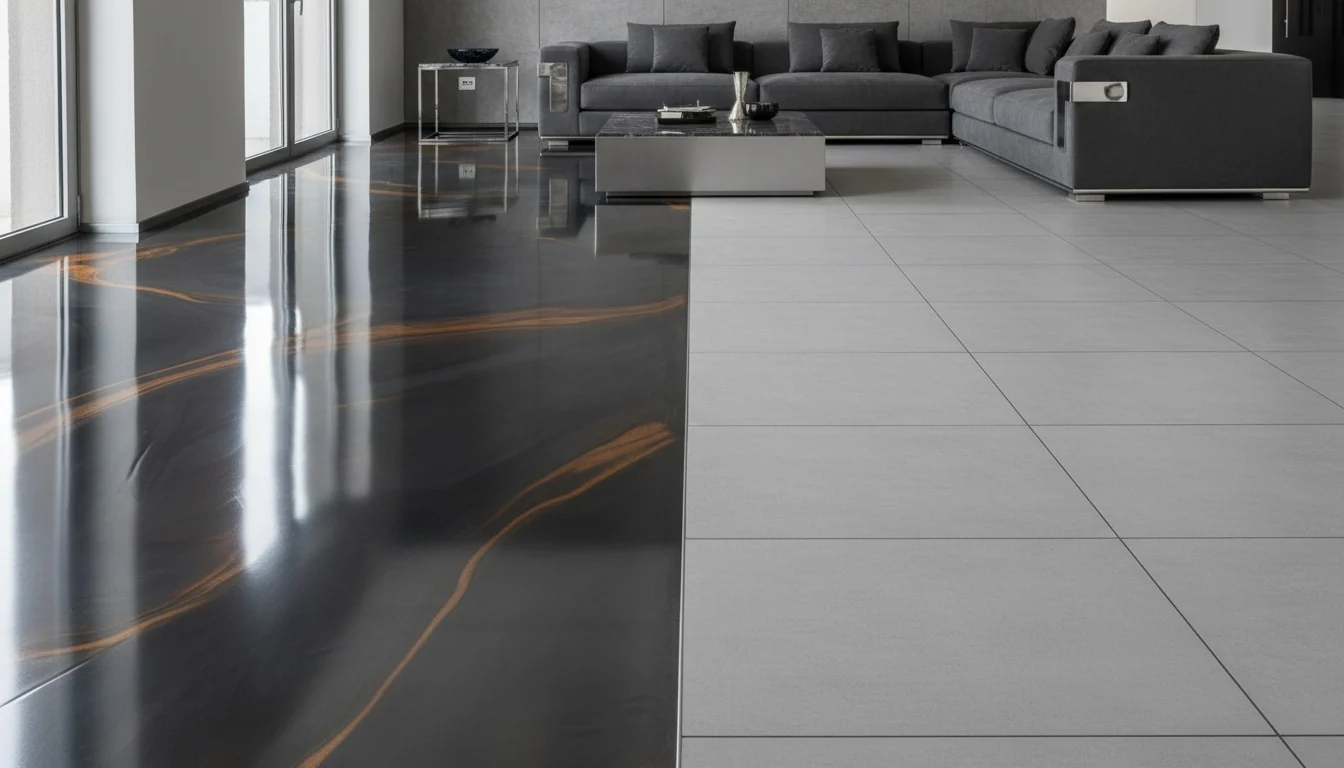
For many people this is the deciding factor. A marbled metallic can pass for polished stone, a flake floor hides tyre marks in a busy garage, and a single solid colour suits a clean, minimal room. In an open-plan home, one poured floor can run from the front door through the living area with no change of tile or threshold strip to interrupt it.
It is low maintenance
There is no grout to scrub, nothing to reseal each year and no wax. Through a dry Johannesburg winter, sweeping is usually enough; the mop comes out in summer, when wet tyres and shoes bring grit in off the driveway.
It is waterproof
With no joints, water stays on the surface of a sound epoxy floor until it is wiped away. The local test is the summer storm season. Johannesburg gets regular afternoon thunderstorms from November to March, with January averaging 131.7 mm of rain, and water driven under a garage door or across a patio finds every gap in a tiled or painted floor. A seamless coating simply sheds it, one of its clearest advantages over tiles here.
It resists chemicals and everyday heat
Engine oil, petrol, brake fluid and household cleaners do not mark a cured epoxy floor, which makes it the usual industrial floor finish for workshops and factory floors around Johannesburg. It also handles ordinary heat: warm tyres, a hot pot set down briefly, sun through a window. It is not fire-rated, so beside a braai or an industrial heat source a higher-temperature system is the right call.
The cons (and how we avoid them)
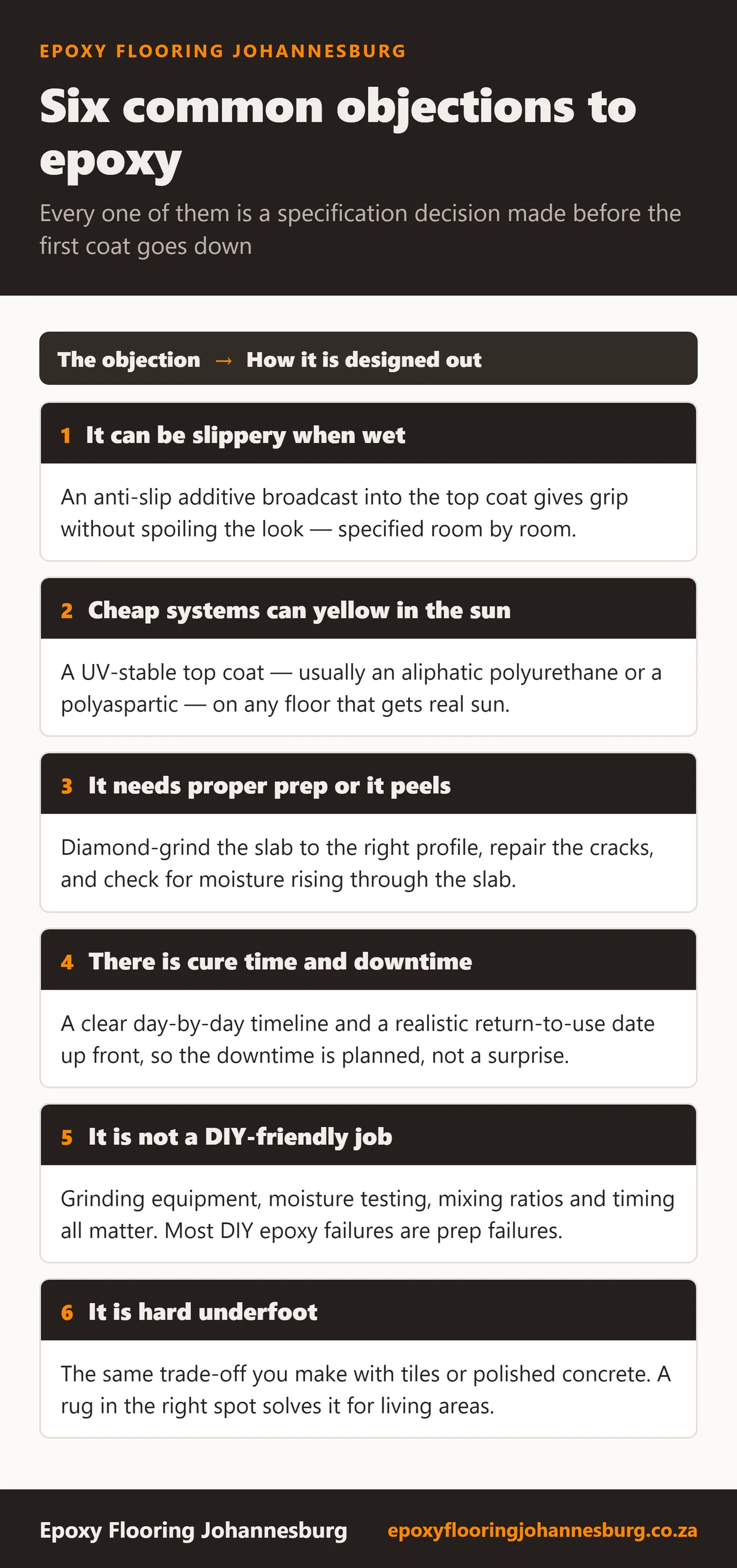
Now the downsides, stated plainly. Almost all of them come down to the product chosen and how the slab is prepared, which means they can be dealt with in the specification rather than discovered after the job.
It can be slippery when wet
A gloss finish loses grip once it is wet, which matters on patios, pool surrounds, entrances and bathrooms. In Johannesburg the risk is seasonal rather than constant. A floor that feels perfectly safe through a dry winter meets a summer of afternoon downpours, and an open patio or a garage threshold can go from dry to streaming in minutes. The standard answer is a fine aggregate broadcast into the top coat, which adds texture without spoiling the look. How much grip a room needs is a measurable thing, covered in slip resistance, and on the Highveld it should be specified for the storm season, not for the dry day the quote happens to be done.

Cheap systems can yellow in the sun
Discolouration is the complaint people remember, and it is nearly always plain epoxy left in strong sun. Even a South African manufacturer's data sheet for an epoxy floor coating says that some discolouration may occur under direct sunlight. Altitude makes it worse here: UV rises by about 12% for each 1,000 m, so at roughly 1,750 m a floor gets about a fifth more than one at sea level. Any floor that sees real sun, outdoors or behind large windows, should have a UV-stable topcoat, usually an aliphatic polyurethane or a polyaspartic, over the epoxy. Done that way, yellowing stops being a risk.
It needs proper prep or it peels
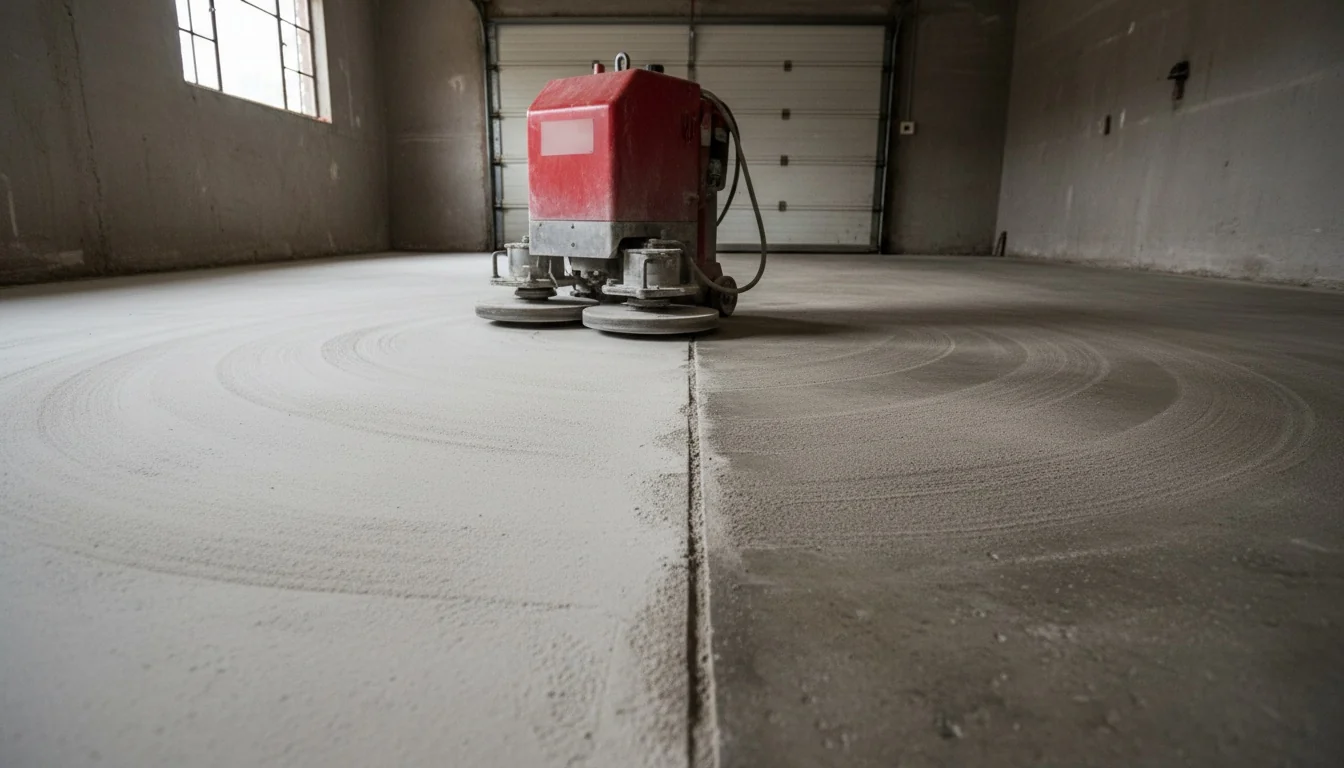
This is the one that decides whether a floor lasts. The slab has to be diamond-ground to an open profile, its moisture tested, and its cracks dealt with, or the coating can lift within a year. Cracks deserve particular care in Gauteng. Expansive clays are found in parts of the province, and research from Tshwane University of Technology describes how they open up in dry periods and heave when the rain returns, causing visible cracks and damaged floors. A crack that is still moving will reflect straight through a rigid coating; the data sheet quoted above warns that wrongly treated cracks can mean reflective cracking and a shorter service life. So each crack is judged first: static ones are filled, live ones are detailed as joints. Ask any installer to explain their prep before you accept a quote. It tells you more than the price does.
There is cure time and downtime
Epoxy cures chemically, and temperature sets the pace. This is where a Highveld winter bites. The South African data sheet quoted above asks for a slab of at least 10 °C and at least 3 °C above the dew point, yet July nights at O.R. Tambo average 3.5 °C and days only 15.8 °C. Its own cure table shows the cost: about 72 hours to foot traffic at 10 °C against about 24 hours at 20 °C, and roughly six days to light traffic instead of four. A floor you could walk on the next day in October might need three days in July. Summer has the opposite problem: the slab is warm and cures quickly, but working time shortens and an afternoon storm can wet a floor that is still curing. Neither is a reason to wait for a particular month, only to plan the days honestly. We work from the slab temperature on the day and give you the return-to-use date up front. The full timeline is in how long an epoxy floor takes to dry.
It is not a DIY-friendly job
A hardware-store epoxy kit looks like a weekend project, but the hard parts are the ones the box glosses over: hiring and running a grinder, testing the slab for moisture, mixing to the exact ratio and coating inside the pot life. When those go wrong the result is bubbles, peeling or a patchy finish that has to be ground off before anyone can redo it. Most failed DIY floors failed at the preparation stage, which is why getting it right once usually costs less than fixing it.
It is hard underfoot
Epoxy is rigid. In a garage or workshop that is the point, but in a kitchen or scullery where you stand for long periods it can feel tiring, and a dropped glass will not survive. This is really the trade-off of any floor laid straight onto concrete; tiles and polished concrete ask the same of you, as anyone weighing up epoxy against tiles will find. A mat or rug where you stand most deals with it, and the hardness is the same property that makes the floor last.
So is epoxy worth it?
For most Johannesburg spaces, yes. Go back through the cons and each has a known fix: grip for wet floors, a UV-stable topcoat for sun, careful crack and moisture work for peeling, a planned cure for downtime, and professional preparation instead of a kit. None of them is a flaw in epoxy as such; they are what happens when the wrong product or a rushed job meets a real slab. Specify it for the room and the conditions and you get a floor that is tough, waterproof, hygienic, easy to clean and good to look at.
For homes, it suits garages, sculleries, laundries, covered patios, kitchens and open-plan living areas, provided the system matches how the room is used. Our guide range in Johannesburg is R250 to R1,500 per m², depending on the system and the preparation the slab needs; the pricing page breaks it down by finish.
Whether epoxy suits your particular floor is easiest to judge on site, so book a free assessment. We will test the slab, look at how the space is used, and give you one written price with no surprises.