
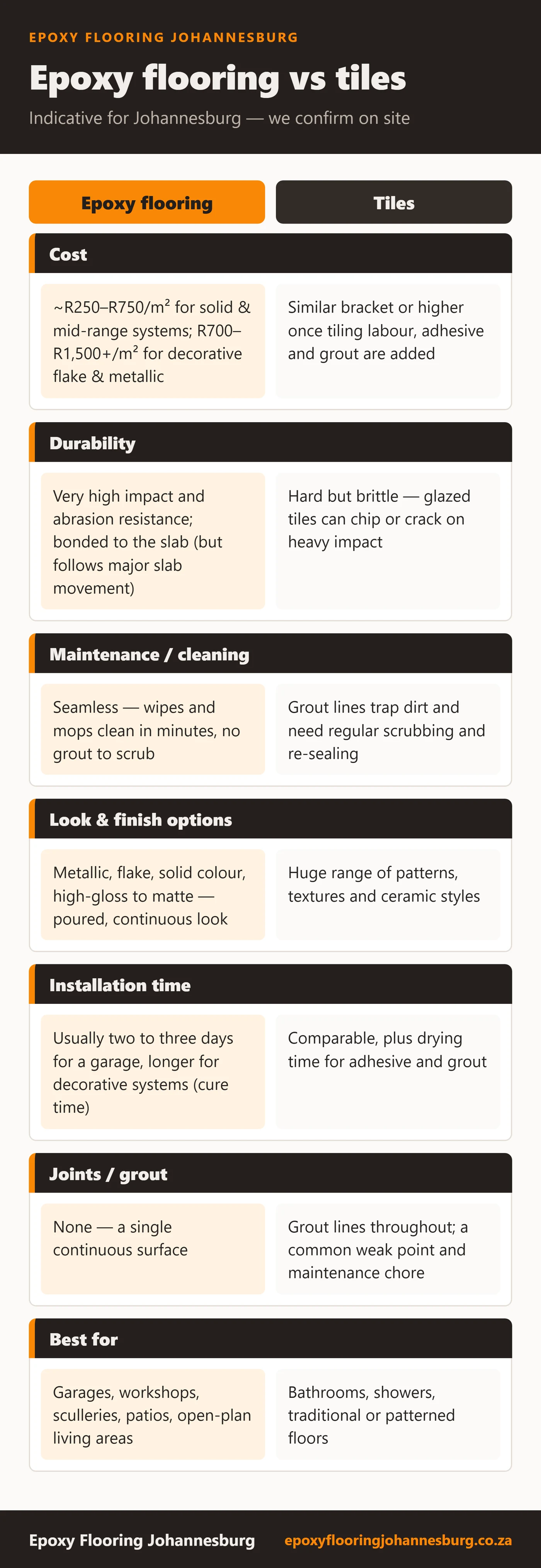
Tiles look cheaper on the shelf. In October 2026 a big South African tile retailer had 600 x 600 mm porcelain floor tiles listed at R159,90 to R279,90 per m², which sounds well under any epoxy quote. The shelf price is only the start of the bill, though. Add the adhesive, the grout, trims, cut wastage, a tiler's labour and, on a new extension, four weeks waiting for the screed to cure, and the gap narrows quickly. Below we compare the two floors with real Johannesburg prices, the waiting times the tile trade's own standard asks for, and what Gauteng's moving clay soils do to each.
Key takeaways
- Price: porcelain tile plus adhesive came to about R198 to R346 per m² at retail before grout and labour. Our solid-colour epoxy band is R250 to R400 per m², fully installed.
- Waiting time: one adhesive maker, following SANS 10107, wants a new screed to cure for four weeks before tiling. Epoxy also needs a dry slab, but it is measured with a meter rather than counted in weeks.
- Joints: a 600 x 600 mm tiled floor carries about 3.3 m of grout line per m². Epoxy has none.
- Where tiles still win: showers, bathrooms, and any room built around a particular pattern.
What a square metre of tiled floor really costs
We priced the materials from one retailer's website on 13 October 2026. Tiles are sold by the box, so each price below is the box price divided by the area the box covers. Adhesive is a 20 kg bag of porcelain adhesive at R144,90, which the retailer says covers 2.2 to 3.8 m² depending on the trowel and the tile.
| Item (600 x 600 mm porcelain) | Listed price | Per m² |
|---|---|---|
| Matt grey porcelain, 6 tiles per box | R345,38 per box (2.16 m²) | R159,90 |
| Polished ivory porcelain, 4 tiles per box | R302,26 per box (1.44 m²) | R209,90 |
| Glazed shiny grey porcelain, 4 tiles per box | R403,06 per box (1.44 m²) | R279,90 |
| Porcelain tile adhesive, 20 kg bag | R144,90 (covers 2.2–3.8 m²) | about R38–R66 |
| Tile plus adhesive | about R198–R346 |
That subtotal leaves out grout, edge trims, the extra boxes you buy to cover cuts and breakages, and the tiler. We have not quoted a labour rate because we did not find a published one we could check, but it is usually the biggest single line on a tiling job.
For comparison, our guide bands in Johannesburg are R250 to R400 per m² for a solid-colour epoxy, R350 to R1,200 for flake and R450 to R1,500 for metallic, all installed, with the slab preparation included. On an existing slab that is in reasonable shape, a plain epoxy floor often costs the same as or less than a finished tiled floor. Decorative systems cost more, and you are paying for the look. The full epoxy price guide sets out what moves a quote within each band.
How long before you can use the room
This is where the two floors differ most on a renovation or a new build. A South African tile adhesive data sheet, written to the SANS 10107 tiling standard, asks for new screeded floors to cure for four weeks before tiling, and six weeks for tiles bedded straight onto new concrete. After laying, grouting waits at least another 24 hours. On an existing, dry slab the job itself takes a few days either way.
Epoxy is just as fussy about moisture, but it is measured rather than counted. One South African epoxy data sheet sets a limit of 4% moisture by weight in the concrete, tested with a meter, so a slab that dries quickly in a dry Highveld winter can be coated sooner than one poured in the middle of the rainy season. Once it is down, the cure time depends on the slab temperature; our drying-time guide gives the numbers.
Clay soils: what happens when the slab moves
Parts of Gauteng are built on expansive clay. Research from Tshwane University of Technology describes clays that crack open in dry spells and heave when the rain returns, leaving visible cracks and damaged floors in light buildings. No floor finish fixes that, but the two floors deal with it differently.
- Tiles rely on movement joints. The adhesive maker above calls perimeter, structural and panel movement joints essential, and one retailer's guidance puts expansion joints every 9 m². Skip them on a moving slab and tiles can lift or crack in lines.
- Epoxy relies on crack treatment. Every crack is assessed before coating: still cracks are filled, cracks that are still moving are cut out and finished as joints. The epoxy data sheet quoted above warns that getting this wrong leads to cracks reflecting through and a shorter life.
Either way, ask whoever quotes how they will handle the cracks you can already see. For more on the coating's weak spots, read our honest list of epoxy's pros and cons.
Impact and wear
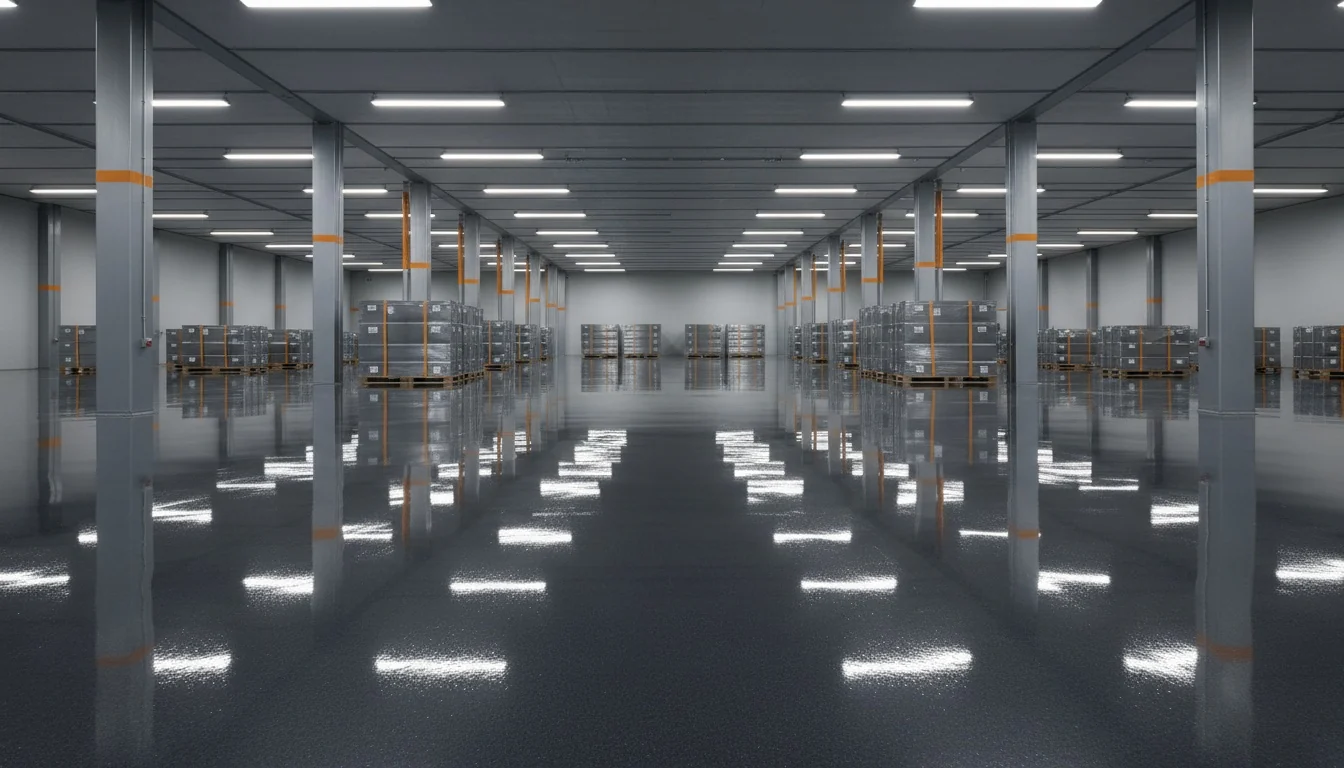
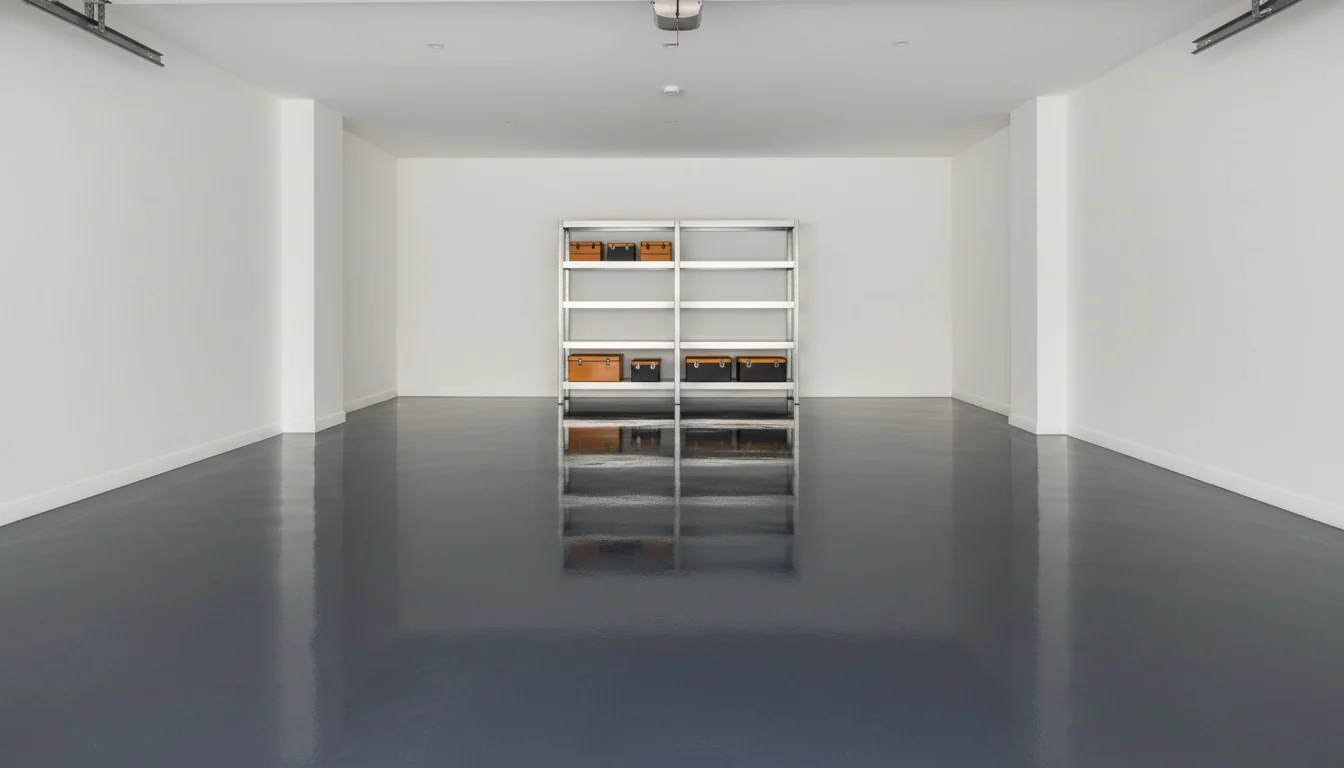
Porcelain is very hard, which makes it scratch-resistant, but a dropped hammer or a full paint tin can crack a single tile. Replacing it means chipping it out, finding a match from the same batch, and re-grouting. Epoxy is a bonded layer, so the same impact usually leaves a dent or scuff that can be patched and recoated. That is why garages and workshops lean towards epoxy, while a lounge that sees socks and slippers can happily be tiled.
Cleaning: grout versus no grout
On a 600 x 600 mm tile, every square metre carries about 3.3 metres of grout line at a minimum of 3 mm wide. In a 20 m² kitchen that is roughly 67 metres of cement grout, which is porous and takes up spills, cooking fat and dirty mop water over the years. Sealing it slows that down; it does not stop it. Larger tiles mean fewer joints, which is part of why big formats are popular.
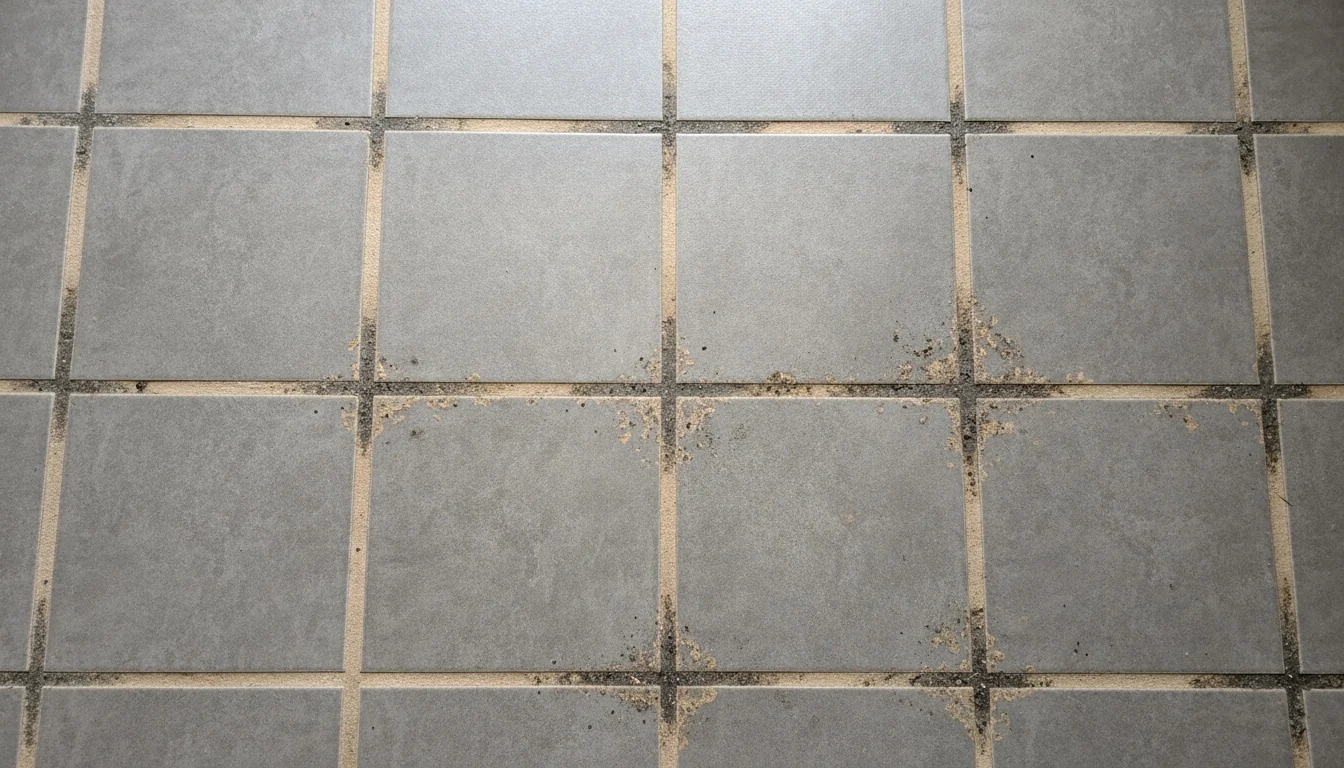
An epoxy floor has no joints at all, apart from any movement joints the slab needs. A mop reaches everything, which is the main reason sculleries, laundries and workshop floors suit it.
Looks
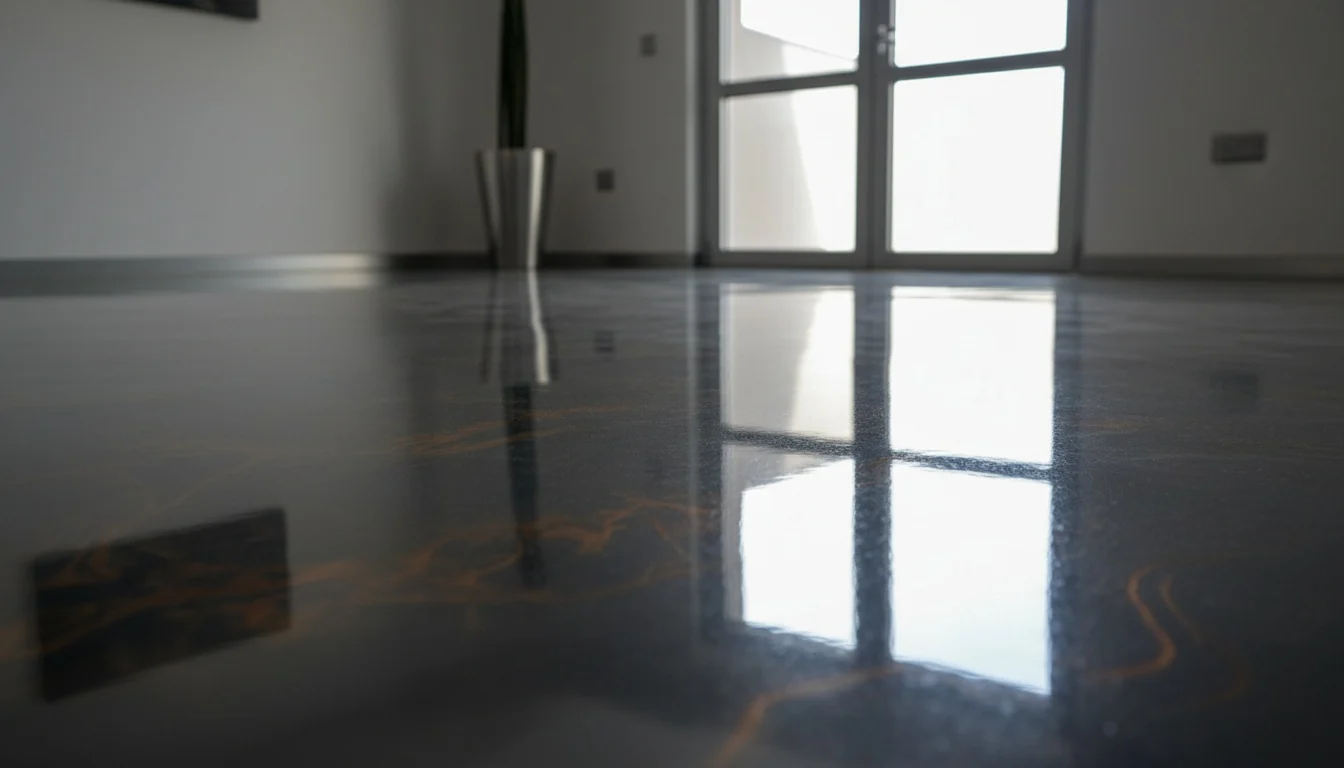
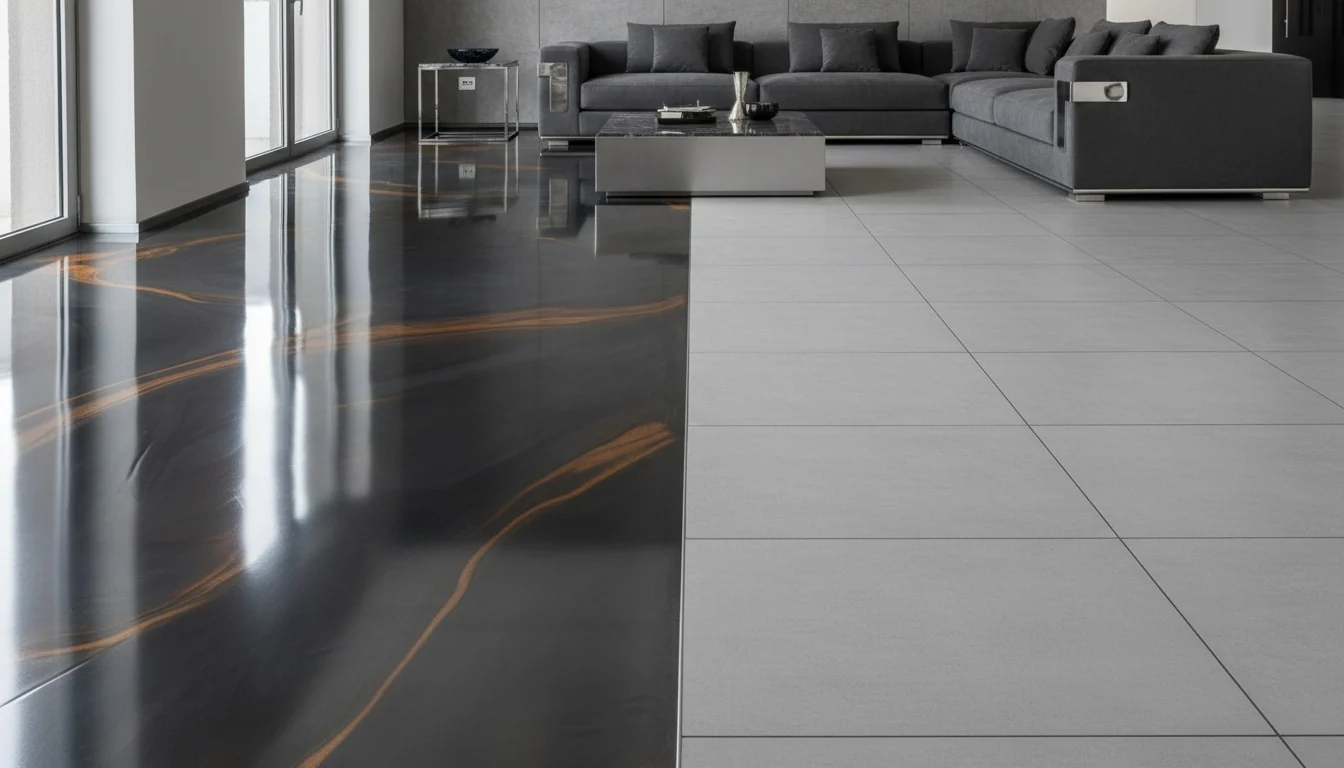
Tiles win on choice. Wood-look planks, marble-look polished porcelain, patterned cement tiles and large stone formats are all off-the-shelf, and you can see the finished look in the showroom. Epoxy wins on continuity. A solid colour gives a plain, modern floor; flake gives a speckled, practical finish; and a metallic finish for living areas gives a marbled pour that is different on every floor. The catch is that you approve epoxy from samples, not a showroom floor.
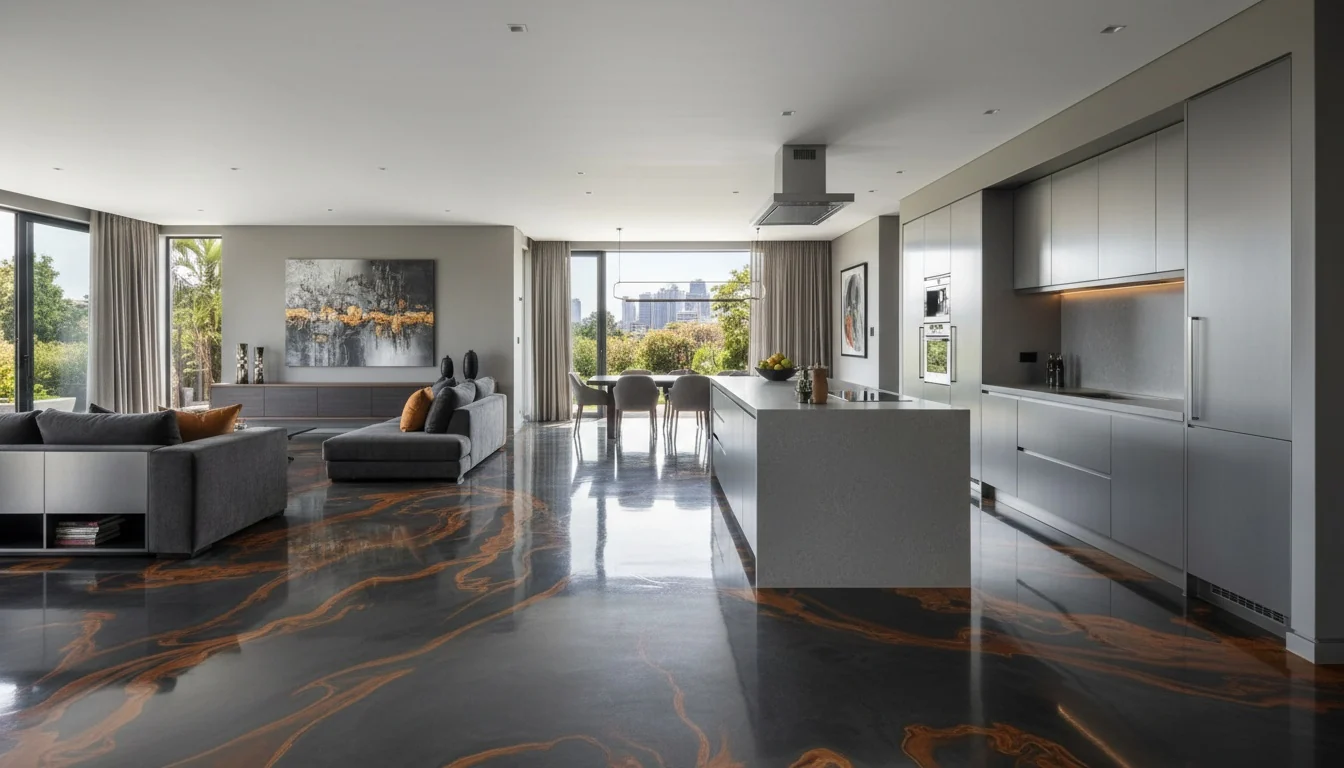
Grip needs thinking about on both. A gloss epoxy is slippery when wet unless fine grit goes into the top coat. Tiles vary just as much, so check the slip rating of any tile meant for a wet area rather than going by how it feels dry in the showroom.
Room by room
| Room | Our usual advice |
|---|---|
| Garage or workshop | Epoxy: takes oil, tyres and dropped tools, and no tile to crack |
| Scullery and laundry | Epoxy with grit in the top coat: no grout to stain |
| Open-plan kitchen and living | Either: epoxy for one unbroken floor, tiles for a particular pattern |
| Covered patio | Epoxy with a UV-stable topcoat and grit, or a rated outdoor tile |
| Bathroom and shower | Usually tiles, laid over proper waterproofing |
You do not always have to choose. If the existing tiles are sound, it is sometimes possible to coat epoxy straight over them, which saves the demolition. Whether that works depends on how well the tiles are stuck down.
Our verdict
For a garage, workshop, scullery, laundry or a busy open-plan floor on an existing slab, epoxy is usually the better buy: it costs about what a finished tiled floor does, it has no grout, and it shrugs off impacts that would crack a tile. For a bathroom, a shower, or a room designed around a tile you love, tile it, and we will say so. If you are building new, remember the four-week screed wait for tiles and the moisture test for epoxy when you plan the move-in date.
The quickest way to settle it for your own floor is a free on-site assessment. We look at the slab and its cracks, check any existing tiles, and give you one written price to set against your tile quotes.