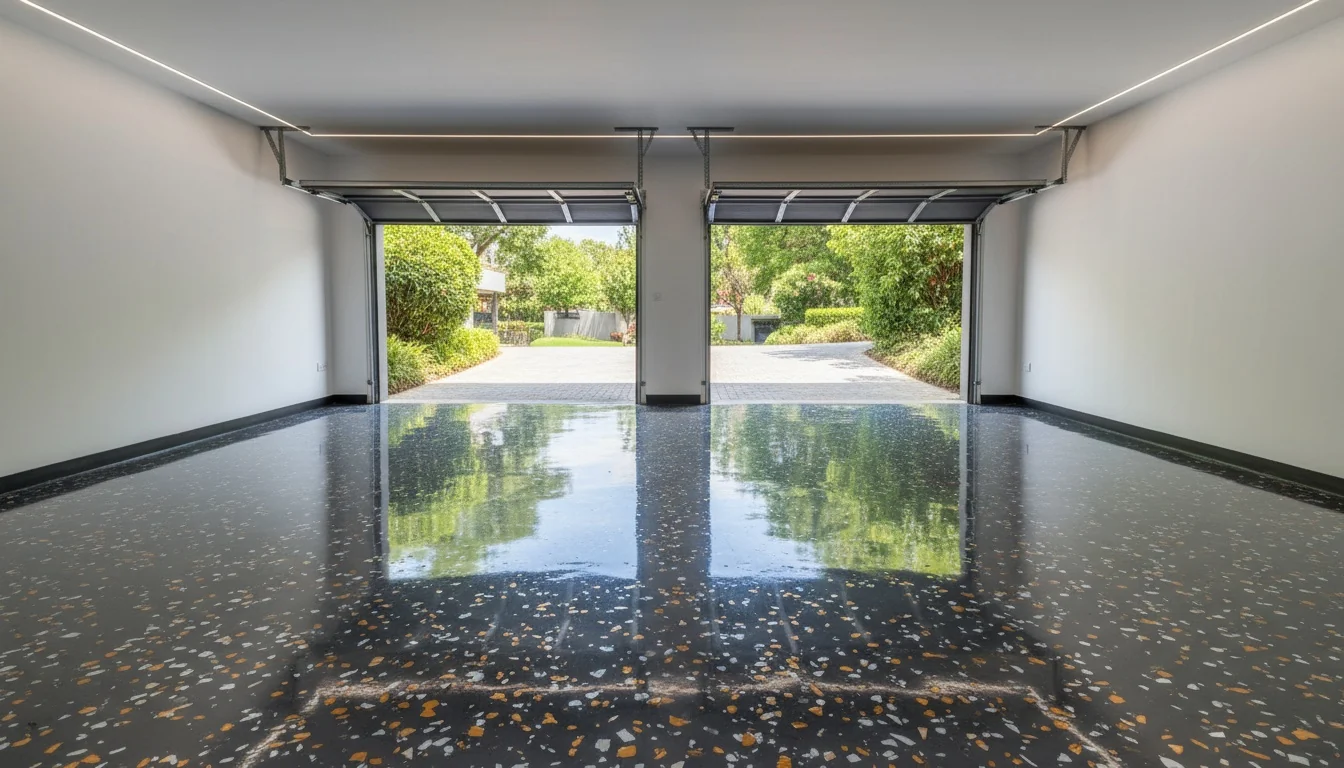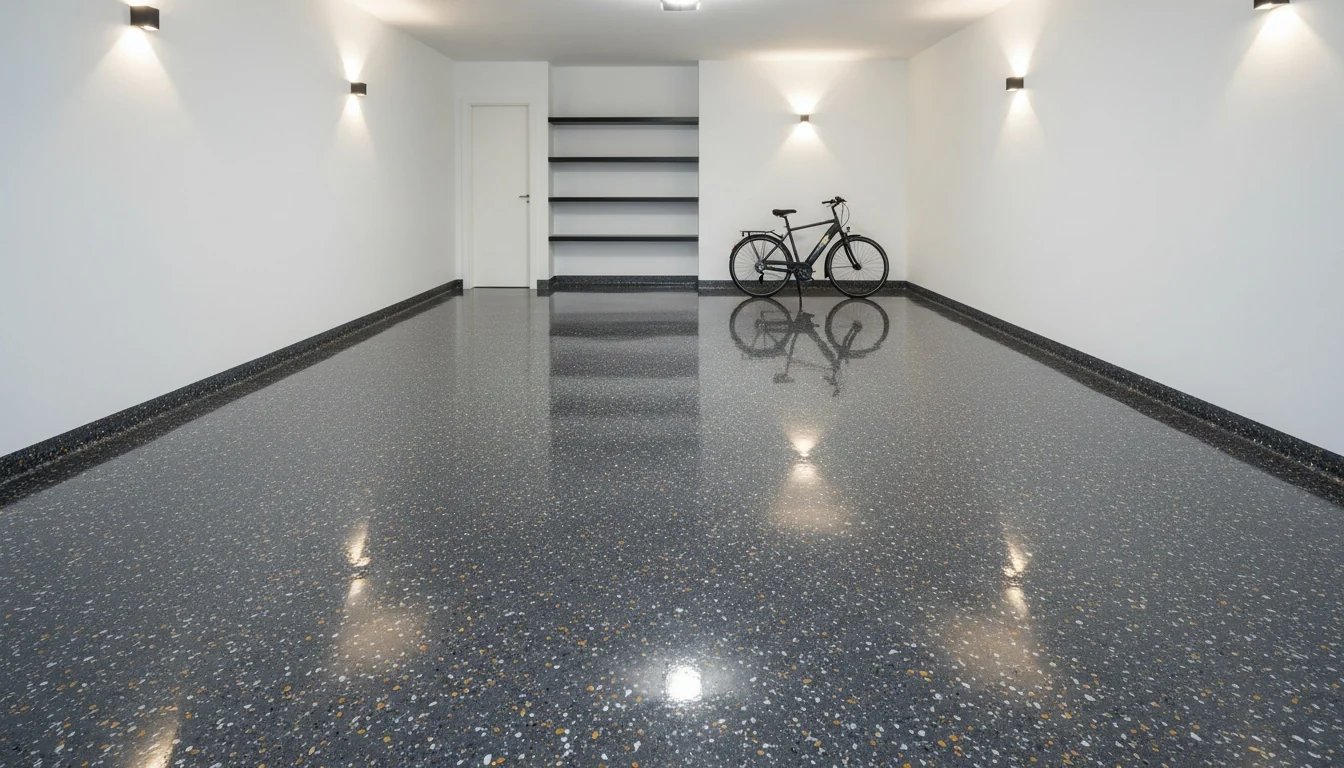

A flake floor is mostly made of something you hardly notice when you look at it. On a full broadcast, one manufacturer's data sheet budgets about a kilogram of coloured chips for every square metre, so a 36 m² double garage swallows more than 30 kg of flake before the clear seal goes on. That quantity is the reason the finish hides dust and tyre marks so well, and it is also the biggest reason two flake quotes for the same garage can be far apart. This guide explains how the floor is built, what the chips actually are, and how to tell a full broadcast from a light scatter when you compare prices. If you already know you want one, the flake flooring service page covers what we offer in Johannesburg.
Key takeaways
- Three layers: a coloured epoxy base, a broadcast of acrylic chips into it while wet, and one or two clear coats on top.
- Full broadcast is heavy: roughly 0.9 to 1 kg of chips per m², against 12 to 24 g per m² for a light scatter, according to one manufacturer's data sheet.
- It forgives dust: the Witwatersrand's windy season runs from about August to October, and a speckled floor shows that dust far less than a plain colour.
- Our guide band: R350 to R1,200 per m², depending mainly on chip density, the number of clear coats and the state of the slab.
What the flakes actually are
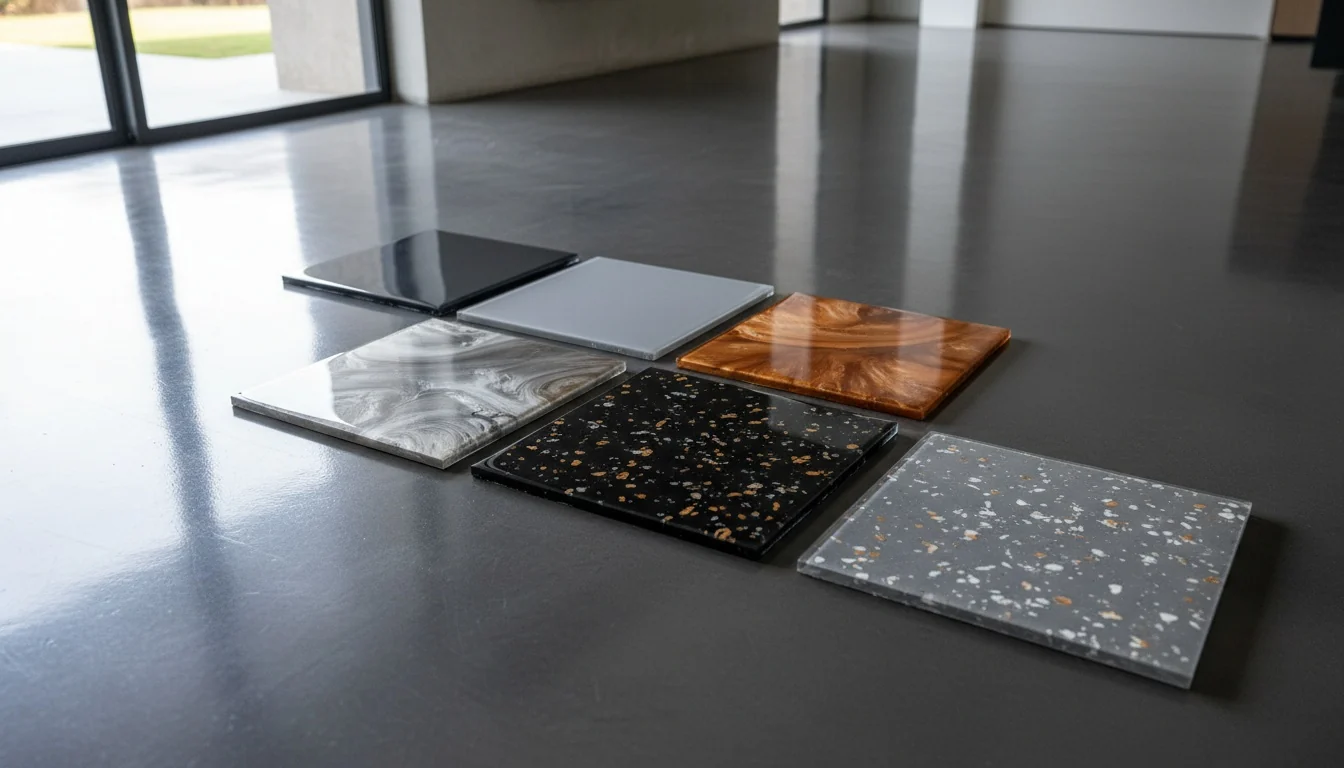
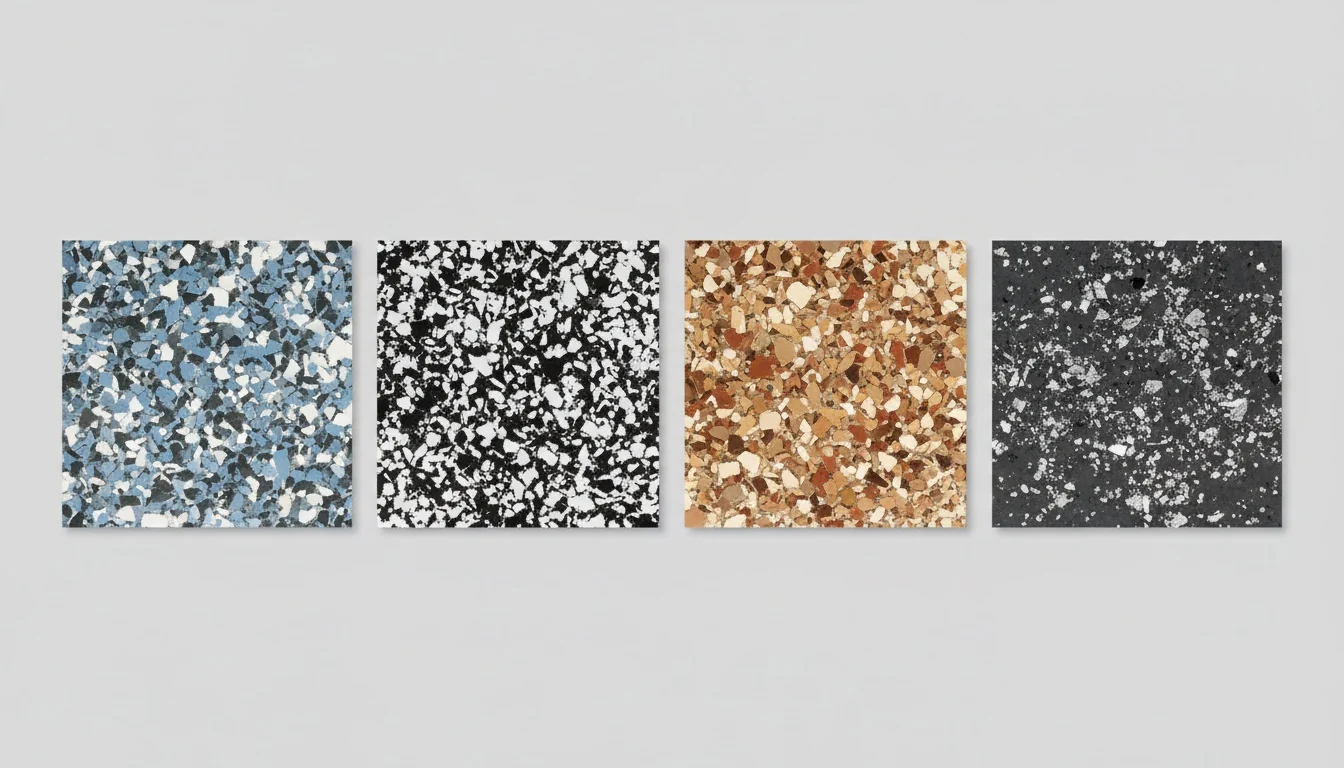
The name suggests vinyl, but one roofing and flooring manufacturer describes its chips as solid, chemically inert, pigmented acrylic. They come in three common sizes, roughly 6 mm, 3 mm and 1.5 mm across, and in pre-mixed blends of three or four colours. Bigger chips give a bolder, more open pattern; small ones read almost like granite from standing height.
The chips are also more fragile than they look. The same data sheet warns that throwing the bags around breaks chips into fine particles, and those particles change how the finished floor looks. Dust from broken flake tends to collect at the end of the job, which is why a careful installer decants the bags gently and keeps the fines out of the last section of floor.
Full broadcast or a light scatter?
This is the single biggest difference between flake floors, and it is rarely spelt out on a quote. A full broadcast keeps throwing chips into the wet base until it will not take any more and no base colour shows. A sparse or decorative broadcast sprinkles chips over a solid colour for a speckled effect. The data sheet figures make the gap clear.
| Broadcast | Data sheet rate | Per m² (our conversion) | On a 36 m² double garage |
|---|---|---|---|
| Full (to refusal) | 18–20 lb per 100 sq ft | about 0.88–0.98 kg | about 32–35 kg of chips |
| Sparse (decorative) | ¼–½ lb per 100 sq ft | about 12–24 g | under 1 kg of chips |
In other words, a full-broadcast floor uses somewhere between 36 and 80 times as much flake as a sparse one. Both are legitimate finishes. A full broadcast gives the deepest pattern and the most texture, and it hides the base coat entirely. A sparse scatter is cheaper and suits a room where you mostly want a solid colour with a bit of life in it. What matters is knowing which one you are being quoted for, so ask.
How the floor goes down
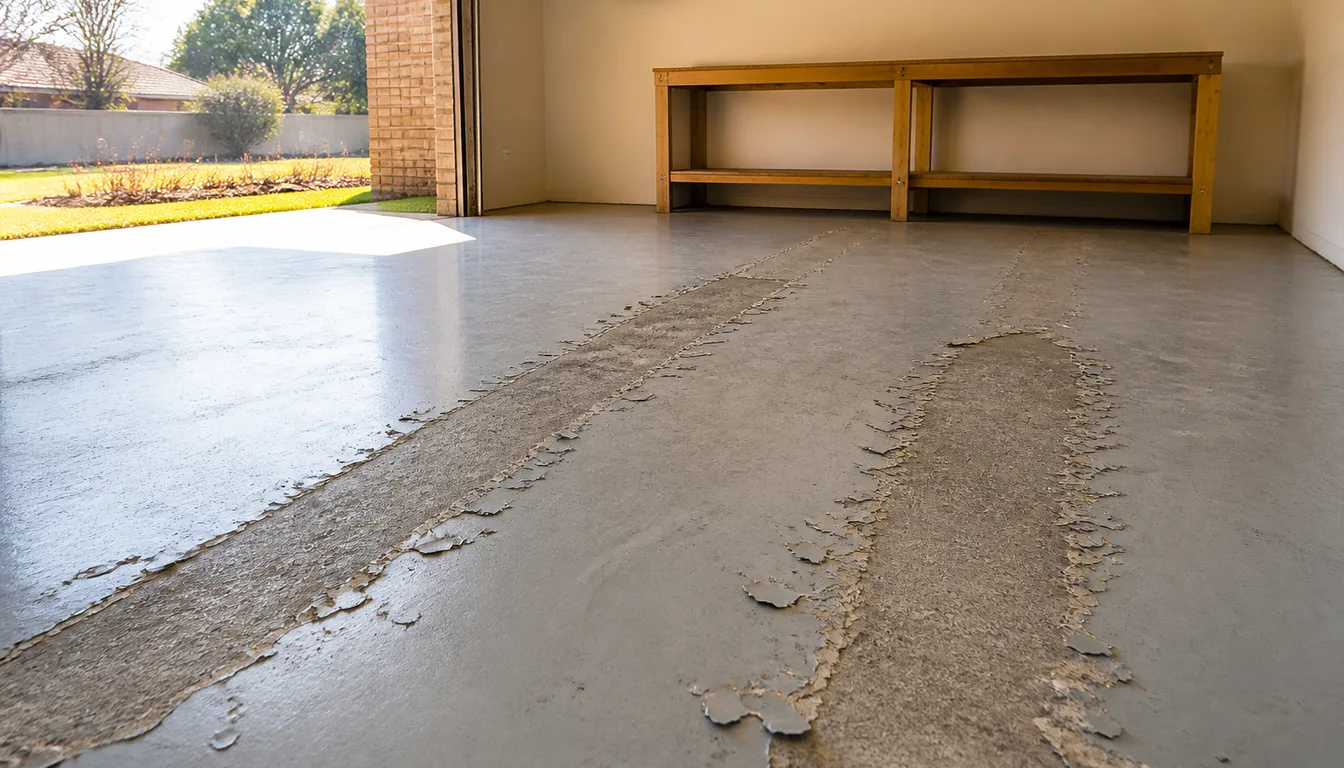
Every flake floor starts with the slab. It is diamond-ground to take off the weak top skin of the concrete, cracks and holes are repaired, and the slab is tested for moisture before a primer goes on. A flake finish disguises small blemishes in the concrete, but it cannot hold on to a slab that was never opened up, so this step decides whether the floor lasts.
The coloured base coat is then rolled out in sections, and the chips are thrown upwards so they fall straight down onto the wet resin rather than skidding across it. Once the base has cured overnight, the loose chips are swept up and the whole floor is scraped to knock down any chip standing on its edge. Skipping the scrape leaves sharp points that poke through the seal and catch dirt.
Last comes the clear seal. Because it has to fill the gaps between thousands of chips, it uses more resin than a plain coat. One South African epoxy data sheet budgets 0.6 to 0.8 kg/m² for a seal coat over a broadcast system, against 0.4 to 0.72 kg/m² for an ordinary roller coat. A second clear coat gives a smoother, glossier floor that is easier to mop; a single coat leaves more texture underfoot.

How long you wait before using the floor depends on the slab temperature on the day, and a cold Highveld winter slab cures much more slowly than a warm summer one. Our epoxy drying-time guide sets out the walk-on and park-on times by season.
Why flake suits a dusty city
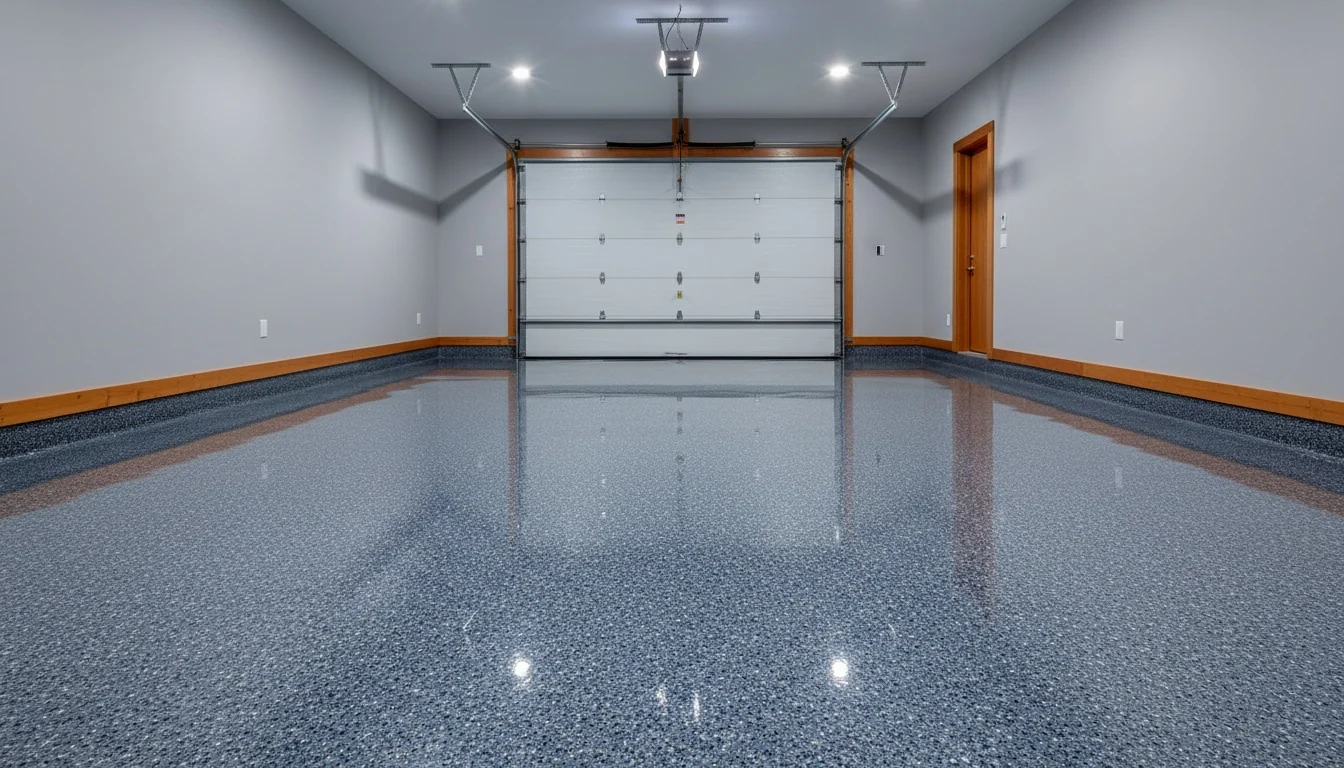
A plain, dark, single-colour floor is honest about everything that lands on it. Fine dust, dried tyre tracks and paw prints all show. A flake floor breaks the surface into hundreds of small colour changes, so the eye stops picking out the dust. That matters here. Research from the University of Johannesburg and Wits describes windblown dust fallout as a prominent hazard on the Witwatersrand in spring, with complaints concentrated in the windy season from August to October. A garage with the door open on a dry, gusty afternoon collects that dust within hours. A mid-grey or earthy blend hides it best; very dark and very light blends show more.
The cured system is also hard-wearing in its own right. The clear seal takes the scuffing from tyres and boots, and because the floor is one continuous sheet, oil and grit have no joints to settle into. How many years that adds up to depends on the build and the traffic; our guide to epoxy floor lifespan goes through it.
Grip underfoot
Flake gives more grip than a smooth gloss epoxy because the chips leave a faint texture under the seal. The more clear coats on top, the smoother that texture becomes, so there is a trade-off between easy mopping and traction. Where a floor will get properly wet, such as a laundry, a covered patio or the first metre inside a garage door during a summer storm, fine anti-slip grit can be mixed into the last coat. Tell us at the quote stage which parts of the floor get wet.
Choosing a blend
Blends are mixes of three or four chip colours, and on a full broadcast the blend becomes the colour of the whole floor, because the base coat disappears under it. On a sparse scatter the base colour still does most of the work. A few practical points:
- Greys and warm earth tones are the most forgiving with dust and tyre marks.
- Chips with a lot of white in them brighten a dim garage or storeroom.
- High-contrast blends such as black and white show the pattern strongly from a distance.
- Always look at a physical sample in the room's own light before deciding.
Where flake fits
- Garages: the most common use. If you are still deciding, read whether a garage floor is worth coating or see the garage epoxy page.
- Workshops and storerooms: trolleys, dropped tools and sweeping every day.
- Laundries and sculleries: seamless and easy to mop, with grit added where it gets wet.
- Covered patios: under a roof, not in open sun, unless the seal is a UV-stable topcoat.
- Gyms and shop floors: busy floors that have to stay presentable.
What sets the price
Our guide band for flake in Johannesburg is R350 to R1,200 per m², installed. Three things move a quote within it. The first is chip density, because a full broadcast uses dozens of times more flake than a scatter. The second is the seal: one clear coat or two, and whether it is a standard epoxy or a UV-stable topcoat for a sunny spot. The third is the slab, since grinding off old paint, filling cracks or dealing with damp all take time. The full breakdown by finish is on our epoxy flooring price guide. When you compare two quotes, check that both are for the same broadcast and the same number of clear coats.
Is flake the right finish for you?
If the floor is going to see dust, tyres, tools or pets, and you want it to look tidy between cleans, flake is hard to beat. Decide early between a full broadcast and a scatter, pick a blend that suits the dirt the room actually gets, and make sure the seal matches whether the floor sees sun or water. Book a free on-site assessment and we will measure the space, test the slab, bring samples and give you one written price.