
Open a South African epoxy data sheet and the colour section is shorter than you might expect. One floor coating published by Sika South Africa in September 2026 lists six stock colours: five greys (pebble, light, dusty, agate and traffic grey) and a sand yellow, with anything else on request. That tells you two things before you choose. Grey is the default for a reason, and almost every other look is possible, at the cost of a little lead time. This guide covers solid colours, flake blends, metallics and gloss levels, and how Johannesburg's light, which is strongest in summer but lowest and deepest-reaching in winter, should shape the choice. For pictures rather than words, start with our finish examples gallery.
Key takeaways
- Stock colours are mostly greys; custom shades are ordered in, so allow time.
- On a large or phased floor, colour from one production batch avoids patchy joins.
- Flake blends hide dust and scuffs far better than a single flat colour.
- Metallics are the feature finish: each one is unique and best kept to dry rooms.
- Any floor that gets sun needs a UV-stable clear coat to hold its colour.
Solid colours: why grey dominates
A solid colour is pigment mixed right through the coating, so the whole floor is one even shade. The South African stock list above is a fair picture of what is quick and economical to get:
| Stock colour | RAL name | Where it tends to work |
|---|---|---|
| RAL 7035 | Light grey | Small or dim rooms you want brighter; shows dirt sooner |
| RAL 7032 / 7038 | Pebble grey / Agate grey | Soft mid tones for homes, sculleries and offices |
| RAL 7037 / 7042 | Dusty grey / Traffic grey A | Garages and workshops where dust and tyre marks are daily |
| RAL 1002 | Sand yellow | A warmer option, and a useful base for marking out zones |
If none of those is right, colours are made to order. Charcoal, slate blue, warm greige or a brand colour are all realistic; they simply take longer to arrive than a stock grey. A light floor bounces light around a dark room but shows every mark. A darker one feels richer but shows dust, which is worth weighing on the Highveld, where the dry months leave a fine film on every surface.
One practical detail people rarely hear about: the same data sheet says that for an exact colour match, all the material in an area should come from the same production batch. On a big floor, or one done in stages, that is worth confirming before the order goes in.
Metallic finishes
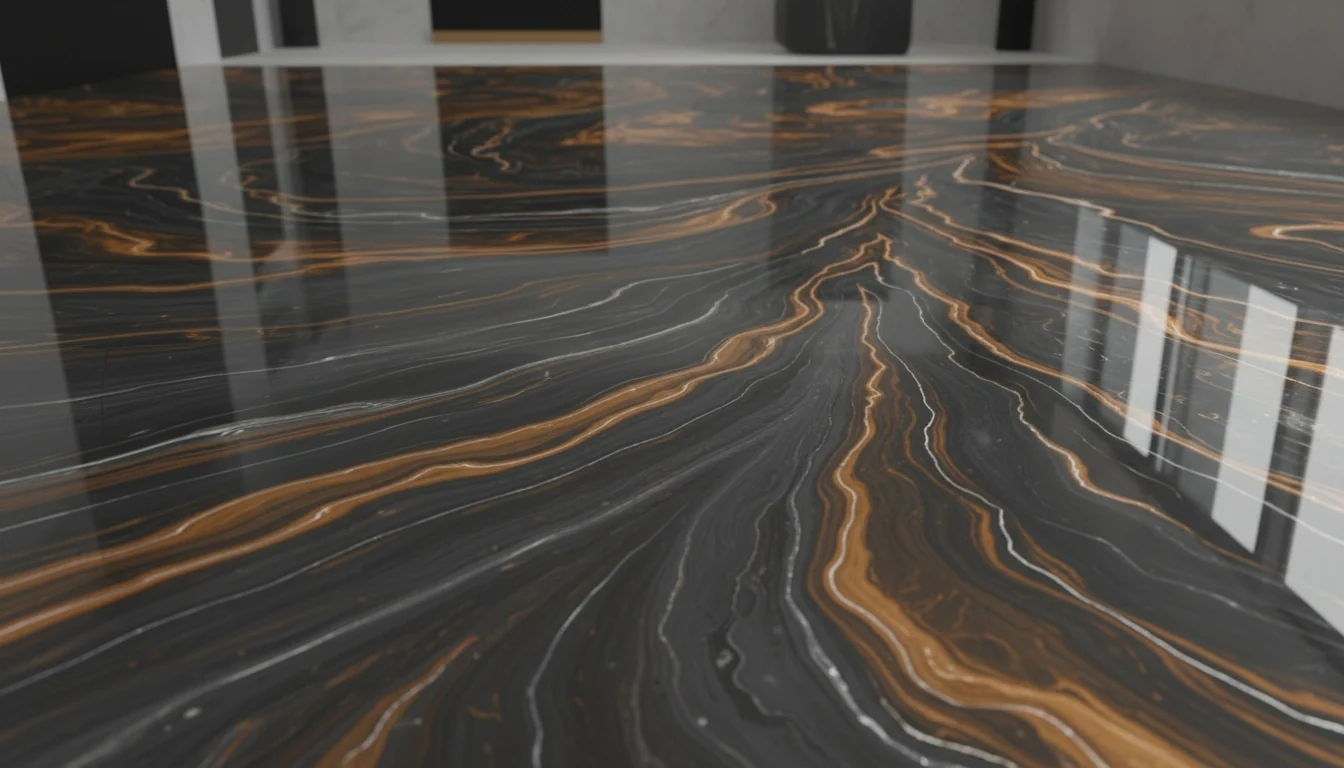
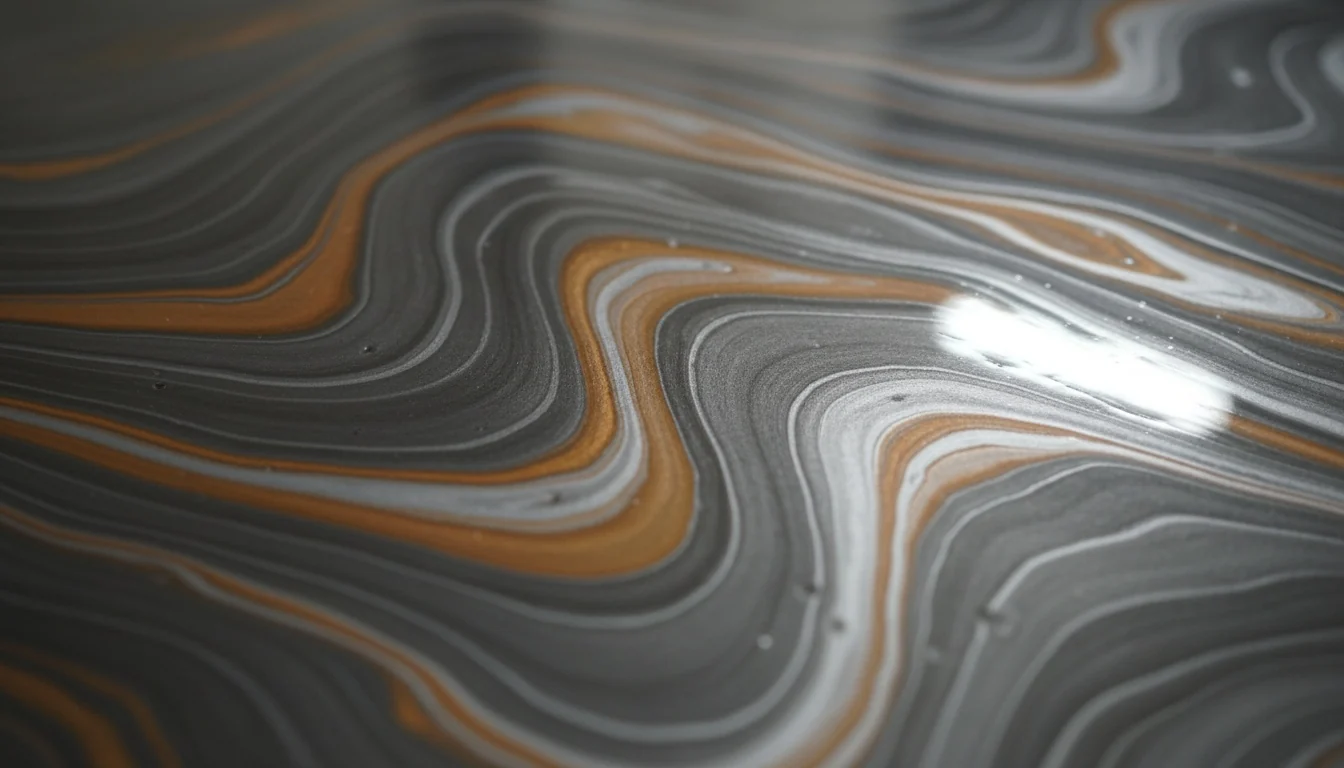
Metallic epoxy is clear resin carrying fine metallic pigment, moved around while wet with rollers, air or a torch so it settles into veins, cells and soft clouds. Coatings writers make the point that, unlike solid colours or chips, no two metallic floors come out alike, so you choose a palette and a level of drama rather than an exact pattern.
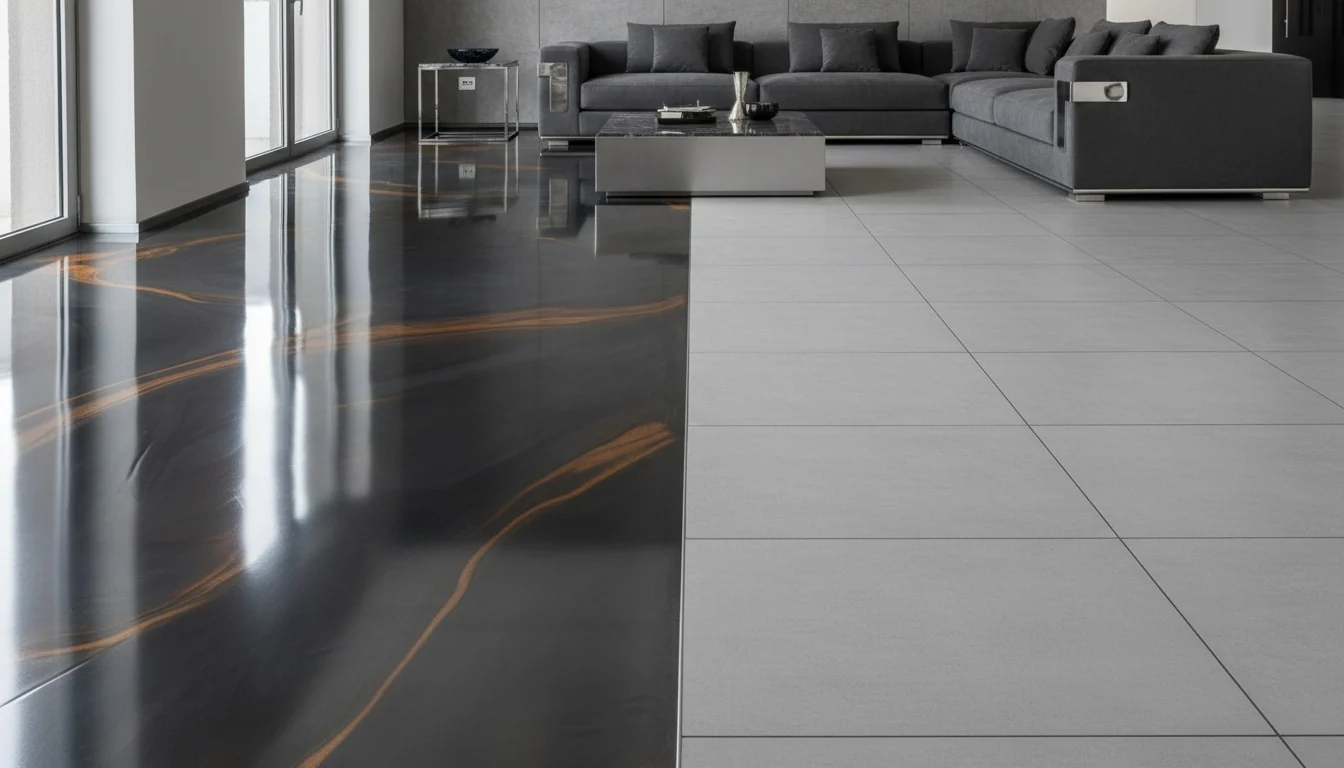
Silver, pewter and charcoal read cool and modern. Copper, bronze and champagne warm a room up. Blues and teals give depth. One colour over a matching base is calm; two or three marbled together is a statement. Metallic belongs in lounges, entrances, showrooms and other dry rooms where the floor is part of the design, and it is covered properly on our metallic epoxy flooring page.
Flake and chip blends
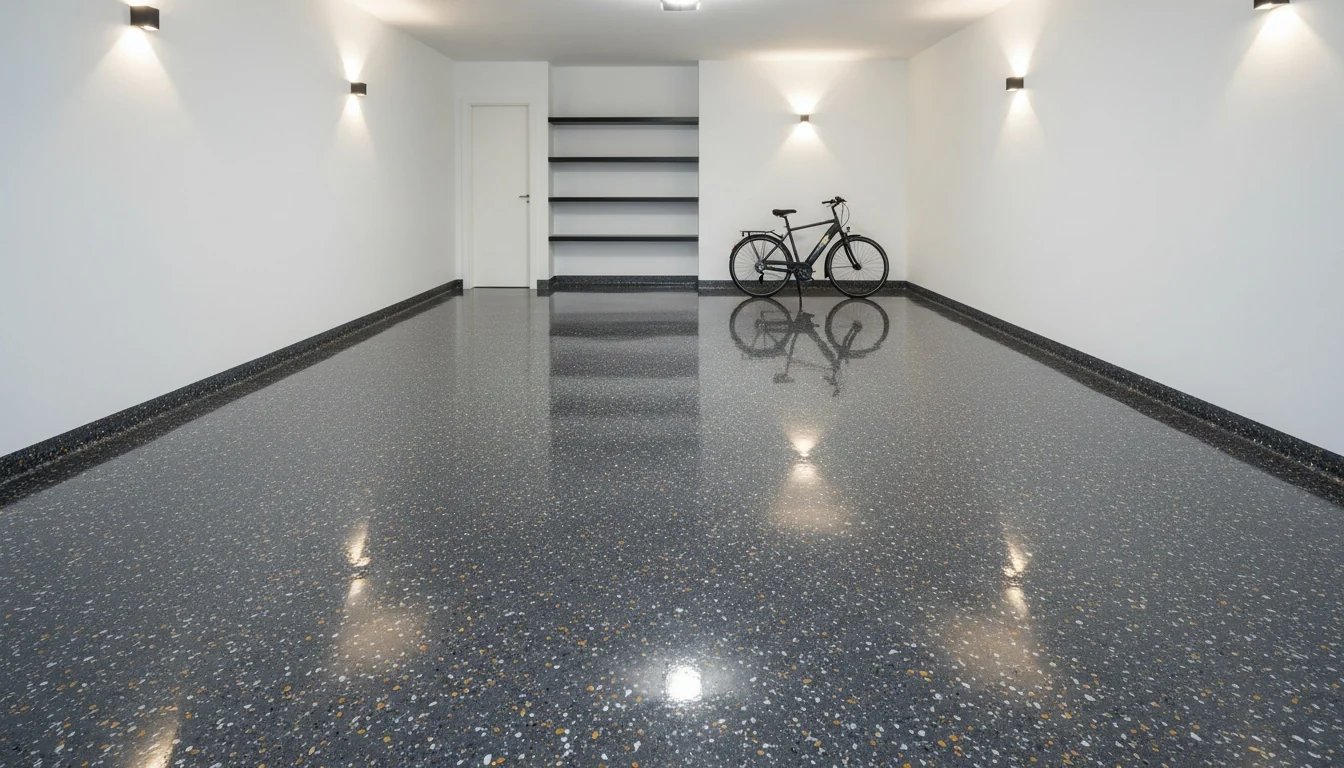
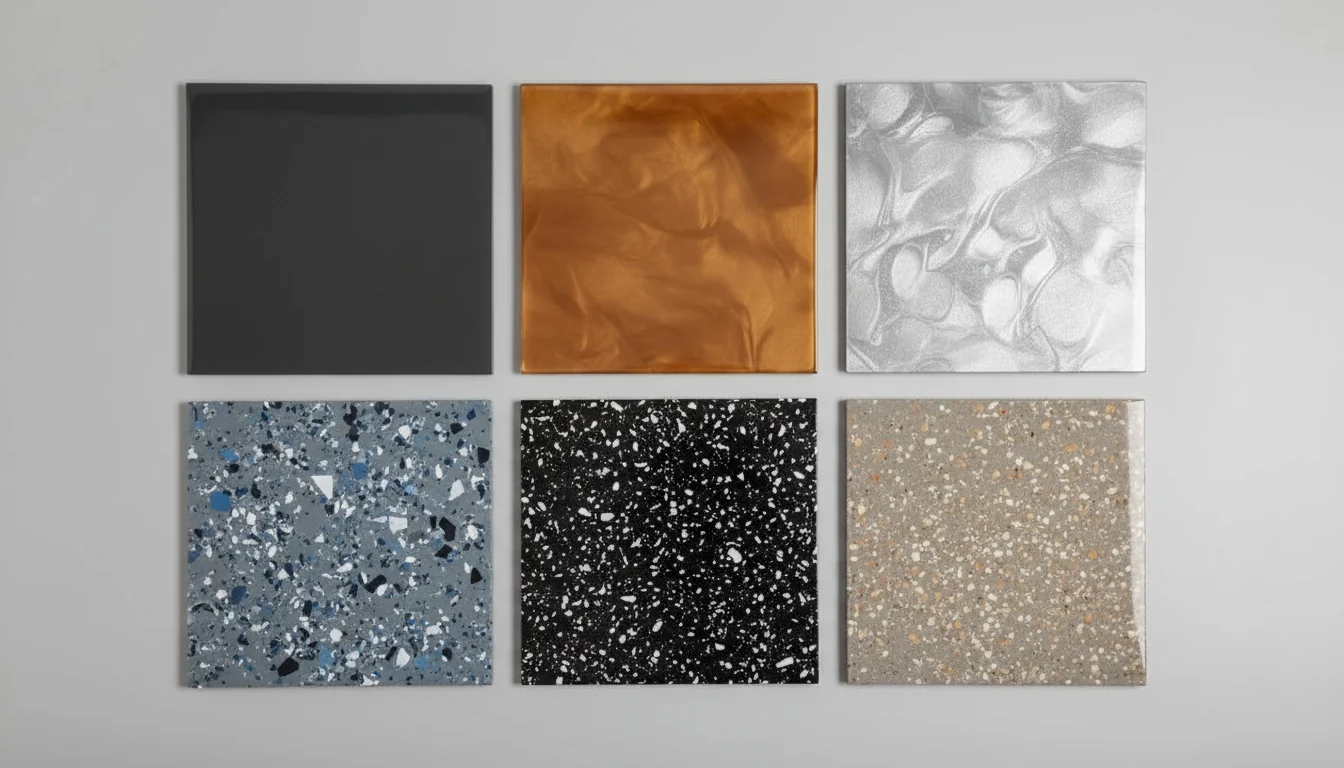
Flake floors have coloured vinyl chips scattered over a base coat and locked in under clear resin. The result is speckled, a little like terrazzo, and very forgiving: dust, small chips and tyre marks disappear into the pattern instead of sitting on a plain surface.
A blend is a base colour plus two or three chip colours. Grey with black and white chips is the neutral, hard-to-fault option. Tan, brown and cream blends feel warmer and less industrial in a house. Coverage can be a light scatter or a full broadcast that hides the base entirely. For a garage, scullery or a family entrance that sees muddy summer shoes and dusty winter ones, flake is usually the most practical colour decision you can make. The range is on our flake-chip floors page.
Gloss level changes the colour too
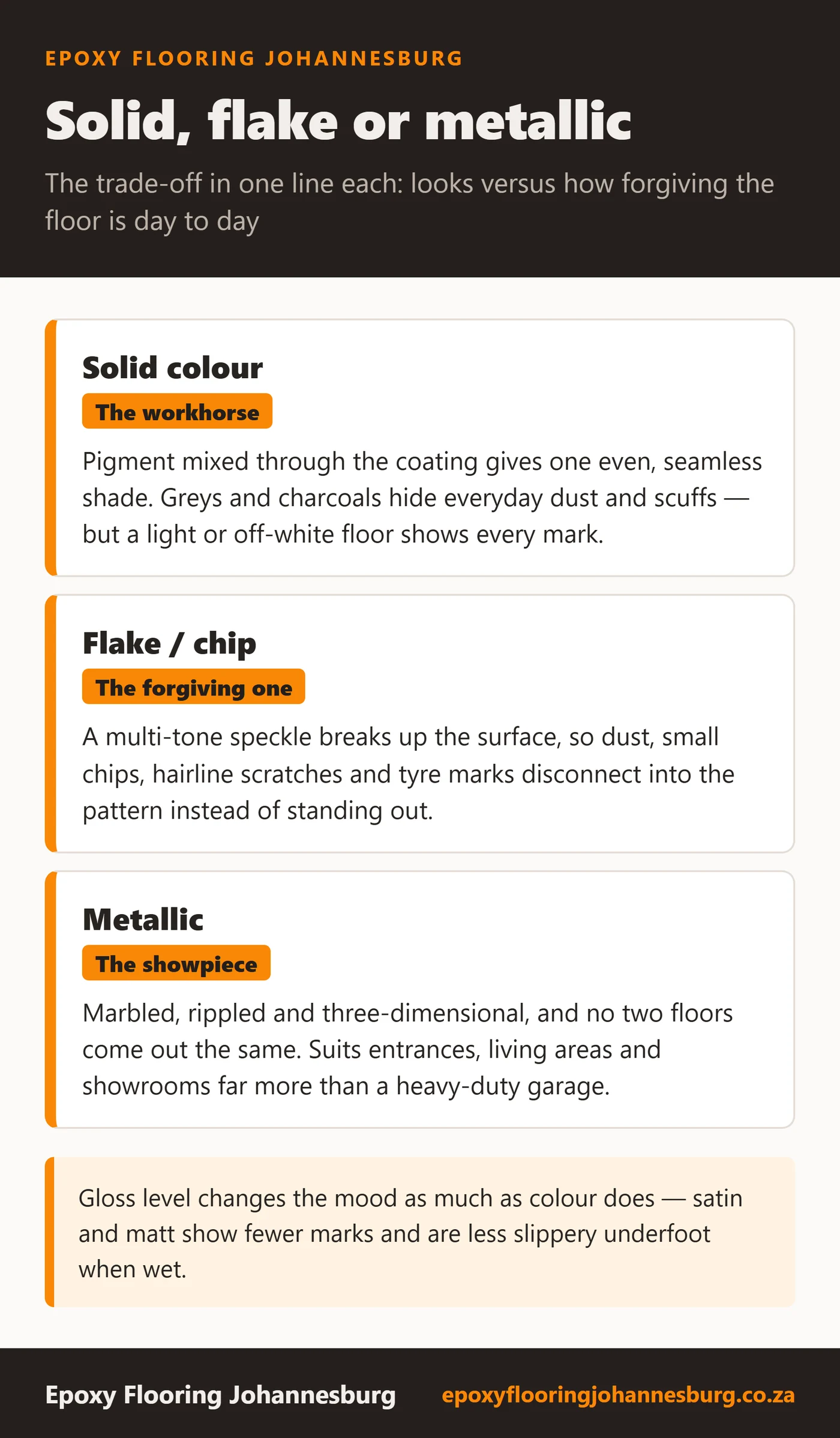
The same grey looks different at different sheens. High gloss deepens colour, throws light around and suits metallics and showroom floors. Satin and matt soften the colour, show fewer footprints and smudges, and are kinder to small surface flaws that a mirror finish would pick out. Decide the sheen together with the colour rather than after it, and if the floor will get wet, decide the grip at the same time: our guide to slip resistance explains how texture is added without spoiling the look.
Johannesburg light and your colour
Light changes how a colour reads, and the Highveld's light changes through the year in a way that catches people out.
- Summer is the high-UV season. The average UV index at O.R. Tambo is 14 from December to February, against 5 in June and July. That is the radiation that discolours plain epoxy.
- Winter is the sunniest season. July and August each average about 284 hours of sunshine, more than December or January.
- Winter sun comes in low. Johannesburg sits at about 26° south. By our own calculation from that latitude, the midday sun is only about 40° above the horizon in late June, against nearly straight overhead in late December. So in winter, sun pours through north-facing doors and windows and reaches well across the floor.
In practice, a pale grey that looks soft on a sample board can look almost white in a bright north-facing room in July, and a dark charcoal that feels heavy in a small south-facing room can look just right in a sunny open-plan space. And because the sun reaches those floors in both seasons, a South African manufacturer's warning that direct sunlight can cause some discolouration and colour variation applies to more of a Johannesburg house than you might think. Anywhere the sun lands, plan for a clear aliphatic polyurethane coat over the colour; they are made specifically to stop UV reaching and yellowing the epoxy underneath.
Mixing finishes across a property
You do not need one look everywhere. A common pairing is a metallic floor in the entrance or lounge for impact and a flake floor in the garage for wear. A scullery or laundry often takes a solid mid grey in satin. A covered patio can continue the indoor colour outside to join the spaces, as long as it gets a UV-stable top coat and some grip.
Within a single floor, a solid border around a metallic centre, a yellow band marking a walkway in a workshop, or a logo set into a showroom floor are all possible. Let each room's use and light lead, rather than forcing one colour through the whole house.
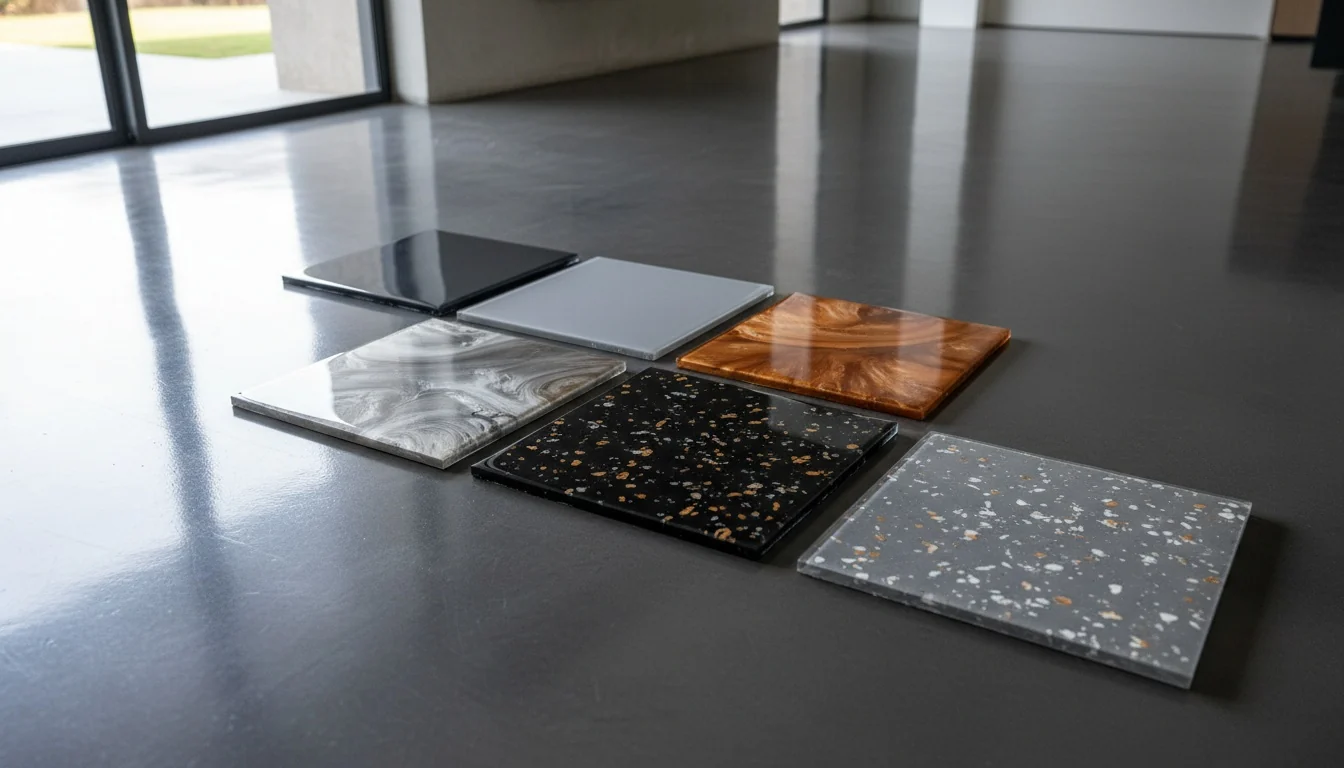
Choosing your colour, step by step
Start with the room: what it is used for and where the sun falls in both July and December. Pick the finish family next: solid for clean simplicity, flake for hiding wear, metallic for a feature. Then choose the shade against a sample in that room's light, settle the sheen, and confirm whether the colour is stock or ordered in. As a guide, finished epoxy floors in Johannesburg run from around R250 to R1,500 per m², depending on the system; the pricing breakdown shows where each finish sits. The colour decision itself is best made on site, with samples on your floor, at our free on-site quote.