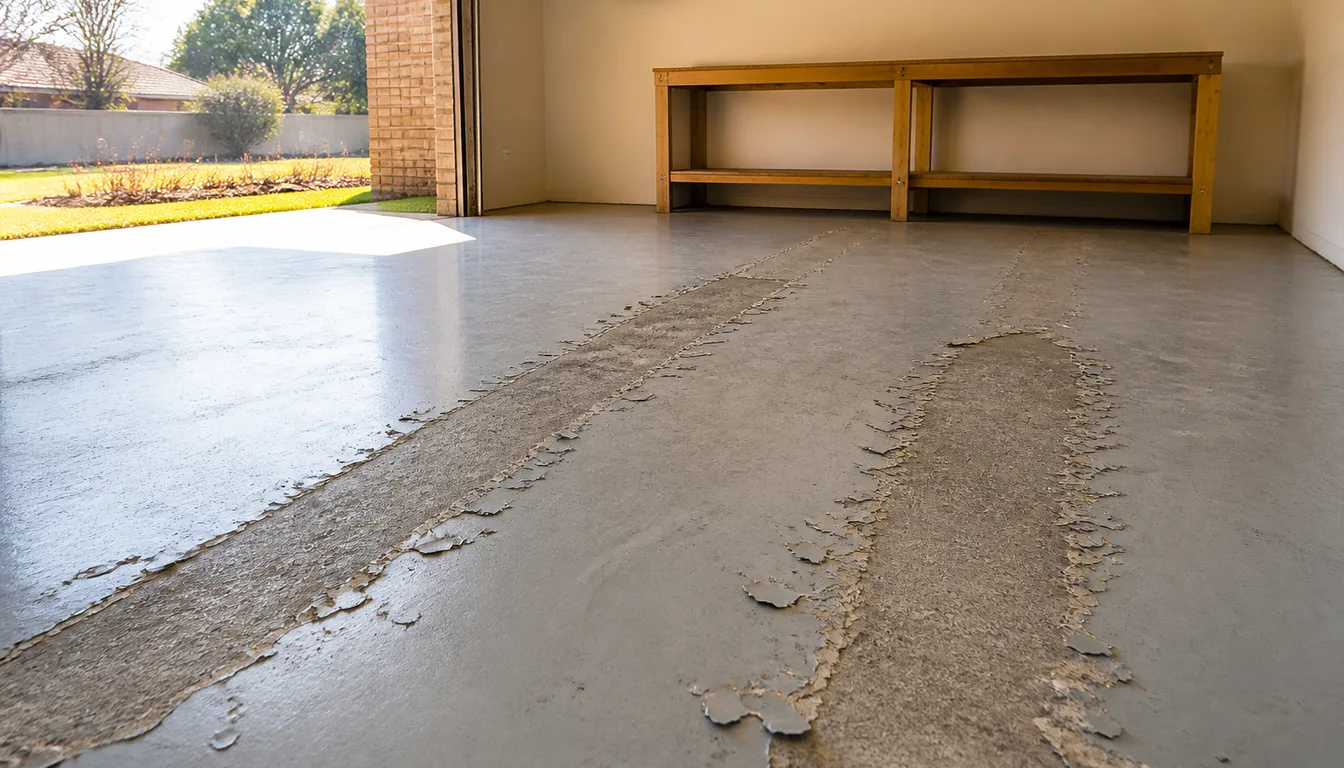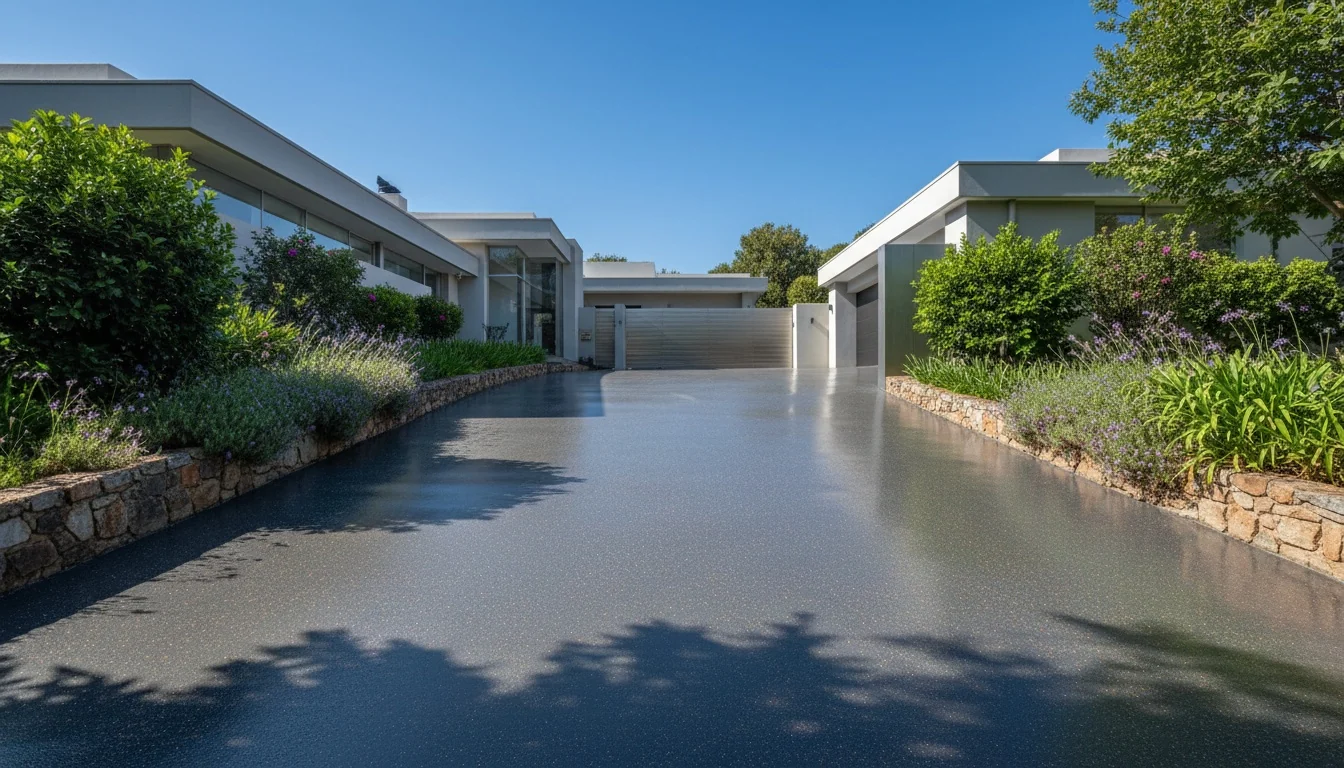

Most failed epoxy driveways do not fail because of the epoxy. They fail because a coating made for a shaded garage was put out in the sun, over a slab that was never properly cleaned, and a warm tyre pulled it off. One troubleshooting guide lists the culprits plainly: concrete that was not ground, oil or silicone on the surface (tyre-shine overspray is a common one), and cheap single-pack coatings that soften with heat. Add a Johannesburg summer, with an average UV index of 14 from November to February and storms most afternoons, and the gap between a driveway that lasts and one that peels comes down to the specification. Here is what that looks like.
Key takeaways
- Start with the slab: one South African epoxy data sheet asks for concrete of at least 25 N/mm² that is free of oil and grease. Pavers and crumbling concrete are not candidates.
- Epoxy needs a hat outdoors: uncoated epoxy discolours in direct sun, so a UV-resistant polyurethane topcoat goes over it.
- Hot tyre pickup has known causes: poor grinding, silicone or oil on the slab, and low-grade single-pack coatings.
- Grip is built in: aggregate or flake in the top layer, because summer storms arrive fast.
- Timing matters: fresh coating has to be kept dry for at least 24 hours, and exterior topcoats go on while the temperature is falling.
Is your driveway a candidate?
An epoxy system bonds to concrete, so the first question is the concrete itself. One South African epoxy data sheet asks for a substrate with at least 25 N/mm² of compressive strength and a pull-off strength of at least 1.5 N/mm², clean and free of oil, grease and old coatings. Plenty of driveways pass easily. Some do not: a thin, dusty slab, one broken up by tree roots, or one that has dropped and cracked across its width. Brick or concrete pavers are a different surface altogether and are not coated this way.
Movement is the other question. Expansive clays are found in parts of Gauteng, and a driveway slab sitting straight on the ground feels every swell and shrink. Cracks that have stopped moving can be repaired and coated over. Cracks that open and close with the seasons need to be treated as joints, or they will come straight back through the new surface.
The sun problem, and the topcoat that solves it
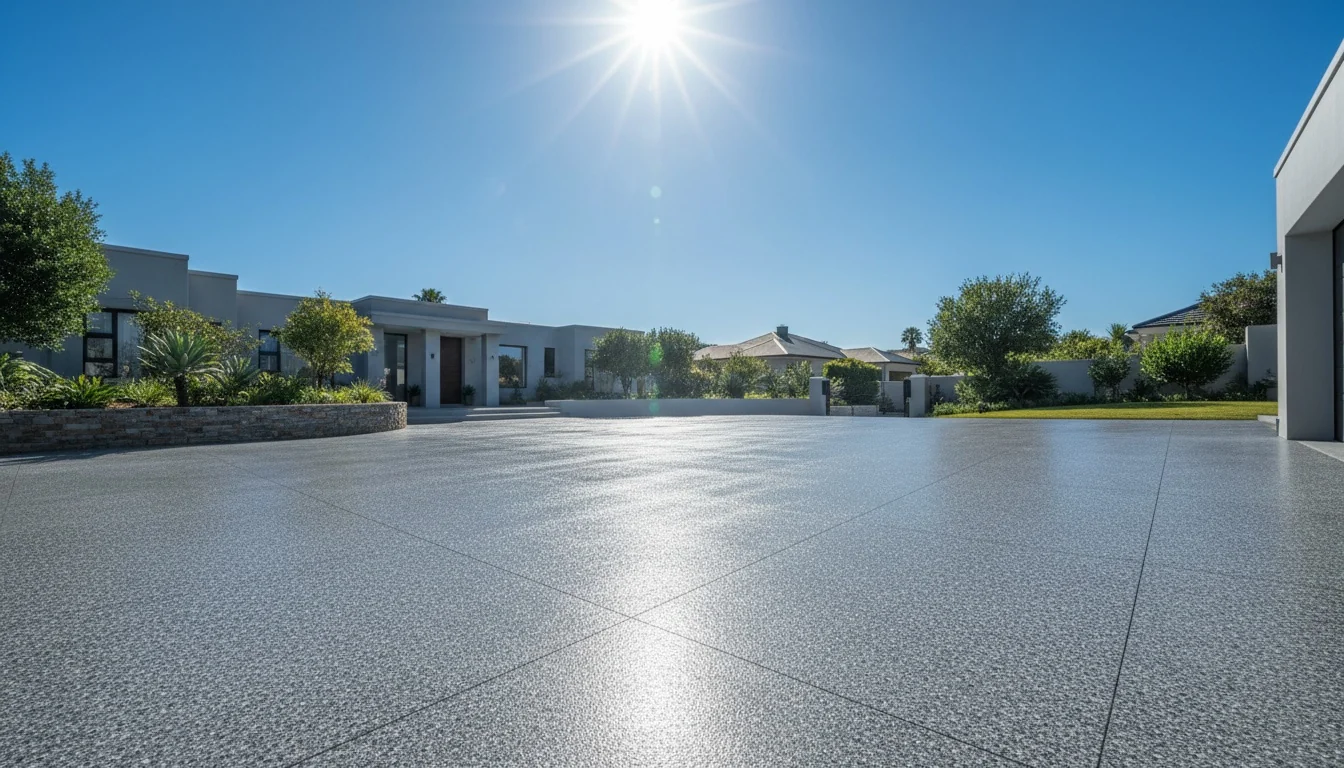
Epoxy is a superb body coat, but it is not built to face the sky. A South African epoxy floor data sheet says so in its own words: under direct sunlight, some discolouration may occur. Outdoors that shows up as ambering and a dull, chalky surface, most visible on light colours and clear coats. Johannesburg's altitude does not help; the average UV index in the climate record is 14 for four months running, from November to February.
The fix is a different resin on top. One South African polyurethane floor coating data sheet describes its product as UV resistant and non-yellowing, for use inside or out, applied as at least two coats. That layer takes the sun and the tyre wear, and the epoxy underneath supplies the build, the colour and the bond to the concrete. When the topcoat eventually dulls, it is the topcoat you renew, not the whole floor.
Hot tyre pickup: why coatings peel off with the car
Tyres come home hot, and a parked car presses that heat into one spot. If the coating softens, it grips the rubber, and when the car pulls away a patch of floor goes with it. A coatings troubleshooting guide lists four usual causes:
- the concrete's weak top layer, its laitance, was never ground off;
- oil or silicone was left on the slab, with overspray from silicone tyre-shine products a common source;
- the base coat was a cheap single-pack product that softens with heat;
- a two-pack water-based product was laid too thick and never fully cured.
Every one of those is decided before the coating is opened. On a driveway that means degreasing years of oil drips, grinding the whole surface, and asking whether anyone in the house uses a tyre-shine spray in that spot. Tyres also contain plasticisers, and some manufacturers sell floor topcoats rated specifically to resist them.
Grip for the storm season
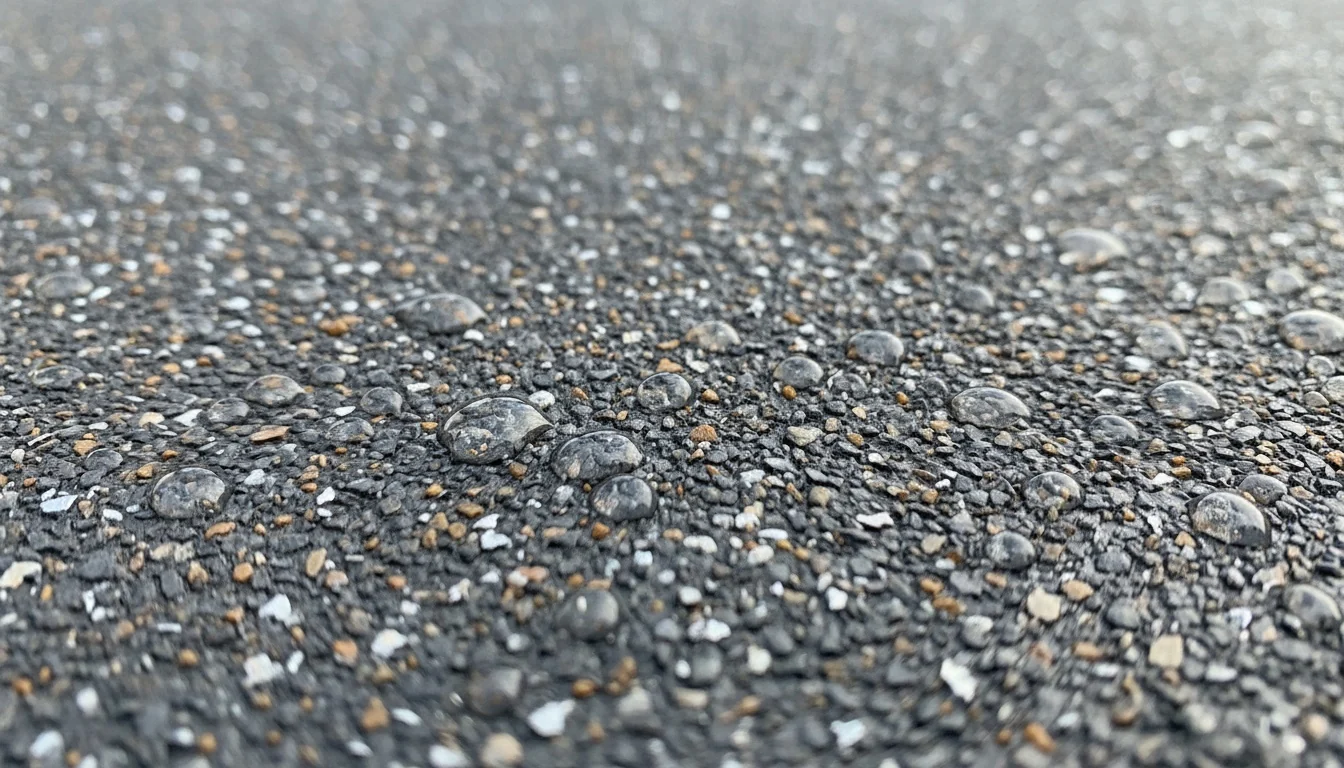
Johannesburg's summer pattern is hot mornings and regular afternoon thunderstorms from November to March. A sloped driveway that is dry at lunchtime can be running with water an hour later, and a gloss finish under a wet shoe or a braking tyre is not where you want to be. Grip comes from aggregate scattered into the final coat, or from a flake system whose chips leave texture under the seal. On a steep driveway we would lean towards a coarser texture, even though it takes a little more effort to hose clean. Our guide to slip resistance explains how grip is measured.
Timing the job around the weather
Weather affects an outdoor job more than any garage. Two data sheet rules matter here. First, one South African epoxy sheet says freshly applied coating must be kept away from damp, condensation and water for at least 24 hours, which an afternoon storm can easily break. Second, the polyurethane topcoat sheet quoted above says exterior work should go on while the temperature is falling, because coating a slab that is still warming up can leave pinholes in the finish.
Cure time also stretches in the cold: that topcoat sheet gives about 12 days to full cure at 10 °C against 7 days at 20 °C. In practice that means a driveway is booked against the forecast, the car has somewhere else to park for about a week, and in the storm season the work sometimes waits for a dry spell. Our drying-time guide goes into cure times in more detail.
What an outdoor build looks like
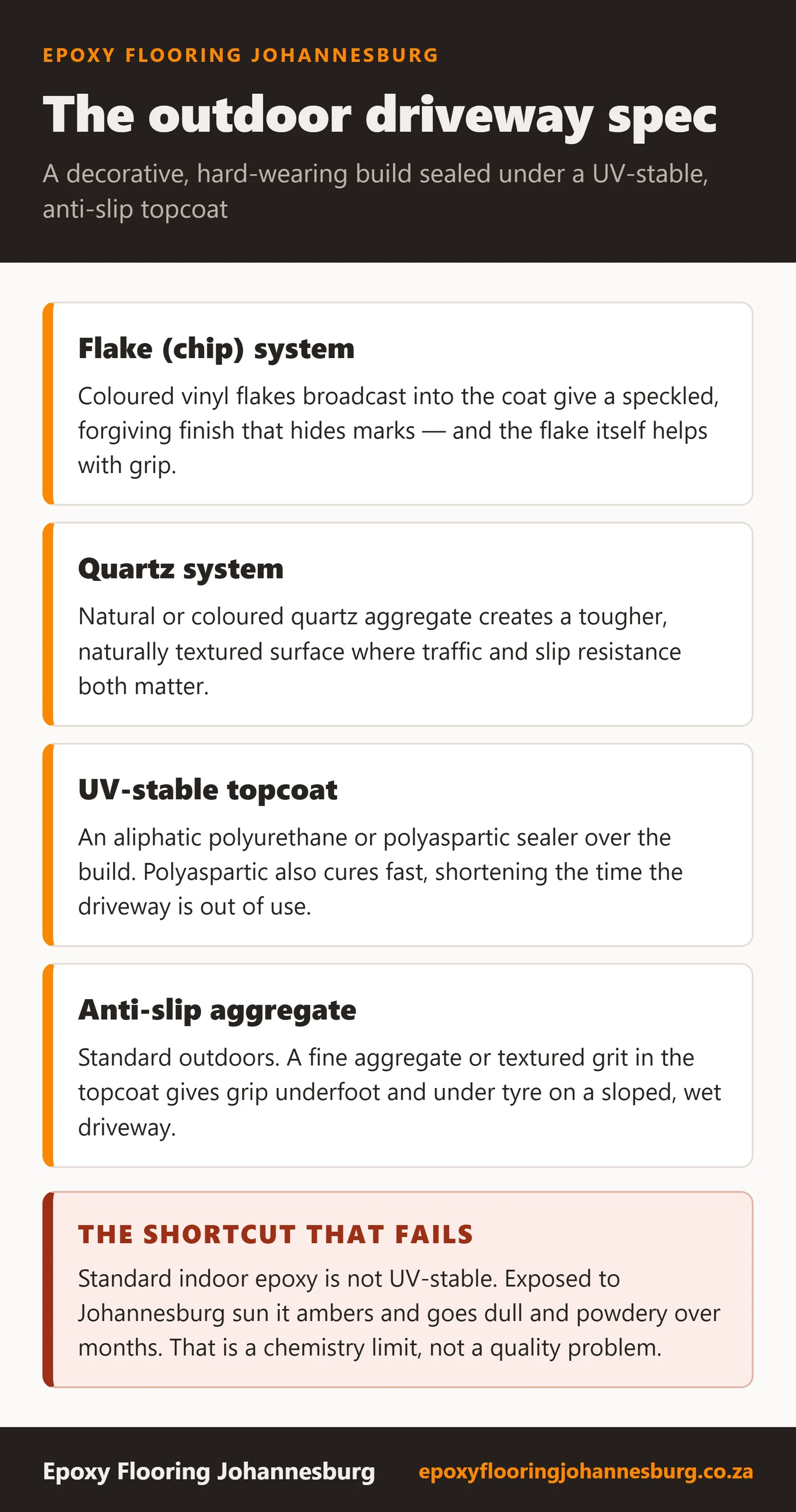
Put together, a driveway system usually has four layers, each with a job:
- Prepared slab: degreased, diamond-ground, cracks repaired or jointed, and tested for moisture.
- Primer and epoxy body coat: the bond and the build.
- Flake or quartz: broadcast into the wet body coat for texture and a forgiving look. Quartz gives a harder-wearing, grittier surface; flake gives more colour.
- UV-resistant polyurethane topcoat: at least two coats, with grit where the slope or the wet calls for it.
The same logic applies to patios, pool surrounds and any other slab in the open: the sun decides the topcoat. Indoors, the same finishes are specified differently, as our page on epoxy floors for homes shows.
Living with it
An outdoor coating works harder than an indoor one, so plan on renewing the topcoat sooner than you would in a garage. Hose it down now and then, wipe up oil before it sits, and keep tyre-shine spray off the floor. When the surface starts to look dull, a fresh topcoat brings it back for a fraction of the cost of starting over. For what drives the overall life of a coating, see how long epoxy floors last.
On cost, an outdoor build sits towards the upper end of our bands because of the extra prep, the topcoat and the grit. The bands themselves are on our epoxy flooring price page, and we give you a firm figure after seeing the slab.
Other driveway finishes worth considering
A coating is not the only answer. Exposed-aggregate concrete, stamped or coloured concrete, pavers and cobbles all live in the sun without a topcoat to renew, and on a long, fully exposed driveway one of those may be the lower-maintenance choice. A coated driveway earns its place where you want a smooth, decorative, easy-to-clean surface, often running on from the garage, and are happy to refresh the topcoat every few years. If that is not you, we will say so.
The short answer
Yes, you can coat a Johannesburg driveway, provided the concrete is sound, the oil and silicone are gone, the build ends in a UV-resistant topcoat with grit, and the job is timed around the weather. Skip any of those and the sun, the tyres or the first storm will find it. Book a free on-site assessment and we will check the slab, tell you honestly whether it is a good candidate, and give you one written price.