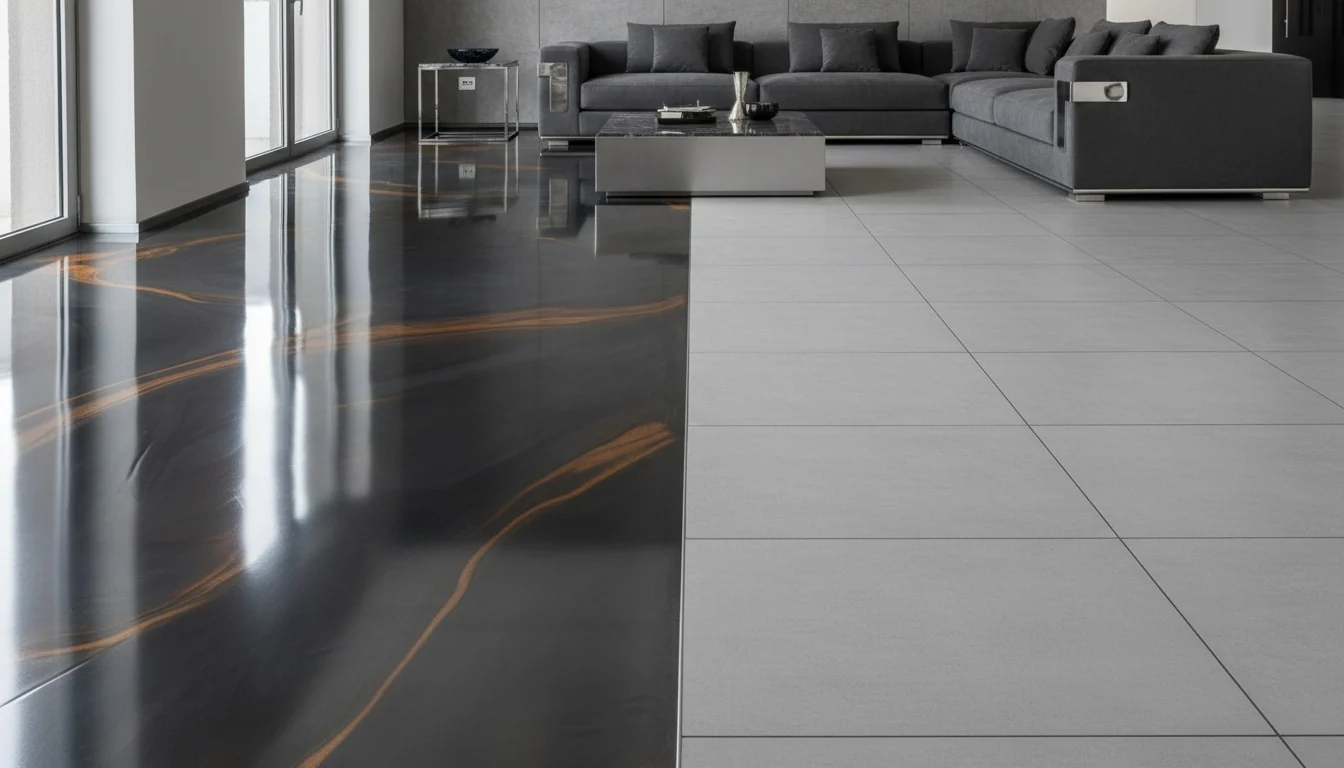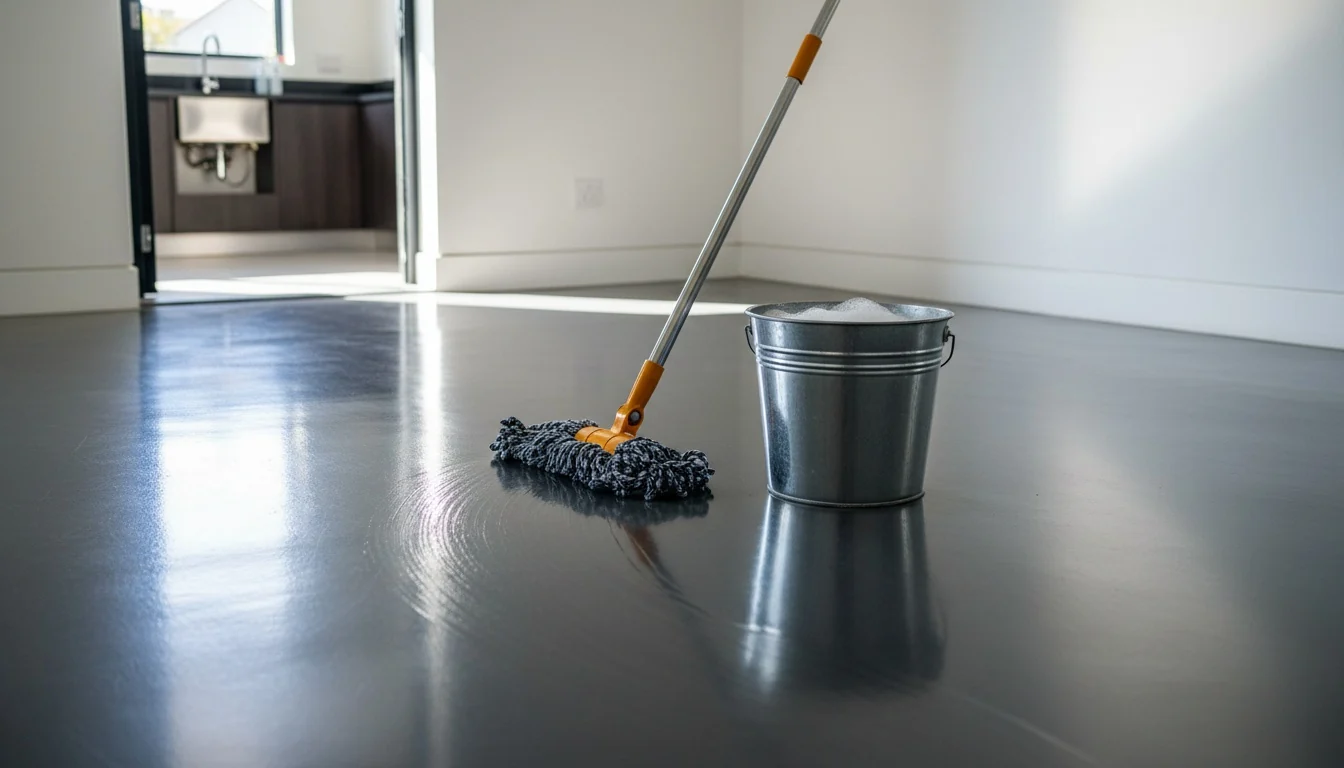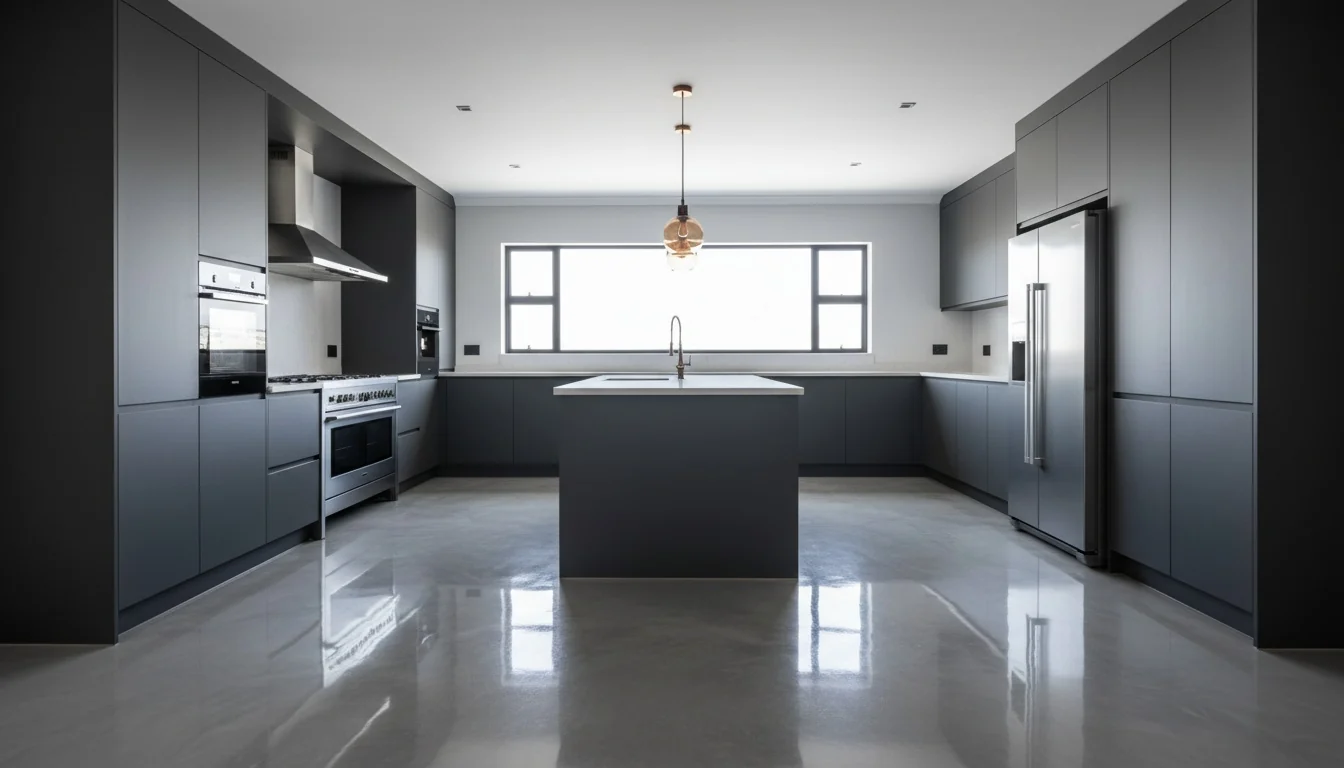

South African food-hygiene law describes the kitchen floor it wants quite precisely. Regulation R638 of 2018 asks for floors in a food-handling area with no open joints or open seams, made of something smooth, cleanable, non-absorbent, dust-proof and water-resistant. That list reads almost like a description of a poured resin floor, and it is a useful checklist for a home kitchen too, even though no inspector will ever visit one. This guide covers what the regulation actually says, how much heat a typical epoxy can take, the grip question, and the honest downsides, for both home and commercial kitchens in Johannesburg.
Key takeaways
- The rule for food businesses: R638 of 2018 wants food-area floors without open joints or seams, and non-absorbent and water-resistant. A seamless floor with a coved edge fits that wording.
- Heat has a number: one South African epoxy data sheet gives 50 °C for permanent dry heat and 100 °C for no more than 12 hours. Daily hot wash-down calls for a polyurethane-cement system instead.
- Grip is not optional: no kitchen floor should go down as plain gloss.
- It is hard underfoot: a mat at the sink and stove deals with it.
What the hygiene regulation asks of a kitchen floor
R638 of 2018, the Department of Health's regulations on hygiene for food premises, covers businesses that handle food, from restaurants to caterers and food factories. For the floors, walls and ceilings of a food-handling area, it says the surfaces must not have open joints or open seams, and must be smooth, rust-free, non-toxic, cleanable, non-absorbent, dust-proof and water-resistant.
Read against that list, a tiled floor has a built-in weakness: every grout line is a joint, and cement grout is porous unless it is kept sealed. A poured resin floor has no joints at all across the room. The one place left is the corner where floor meets wall, which is why commercial kitchens usually have the resin turned up the wall as a coved skirting, so there is no right-angled seam for grease to collect in.
The same regulation also says food may not be handled on premises without a valid certificate of acceptability. The application goes in writing to the local authority, which refers it to an inspector. The inspector looks at the whole premises, not just the floor, so a good floor helps but does not on its own guarantee a certificate. If you are fitting out a new food business, it is worth asking the inspector early what they expect.

Heat: where epoxy stops and polyurethane cement takes over
Kitchens are hot, but how hot matters. One South African epoxy floor coating data sheet gives these limits for dry heat: 50 °C permanently, 80 °C for up to seven days, and 100 °C for up to 12 hours. Wet heat, such as occasional steam cleaning, is rated to 80 °C, and only for a thicker broadcast build of about 3 to 4 mm.
In a home kitchen those numbers are comfortable. A pot of boiling water knocked over is a brief splash that cools within seconds, and nothing sits at oven temperature on the floor for hours. A commercial kitchen is different. Hot water wash-downs every night, combi-oven drains, fryers and steam cleaning put repeated heat shock into the floor. For those, the usual choice is a polyurethane-cement screed rather than an epoxy coating. One South African data sheet for such a screed describes it as resistant to thermal shock and non-tainting, laid 6 to 9 mm thick, with thermal expansion similar to concrete, and asks for at least 48 hours after application before food is placed in the area. We cover those systems on our polyurethane flooring page.
Grip: the part that cannot be skipped
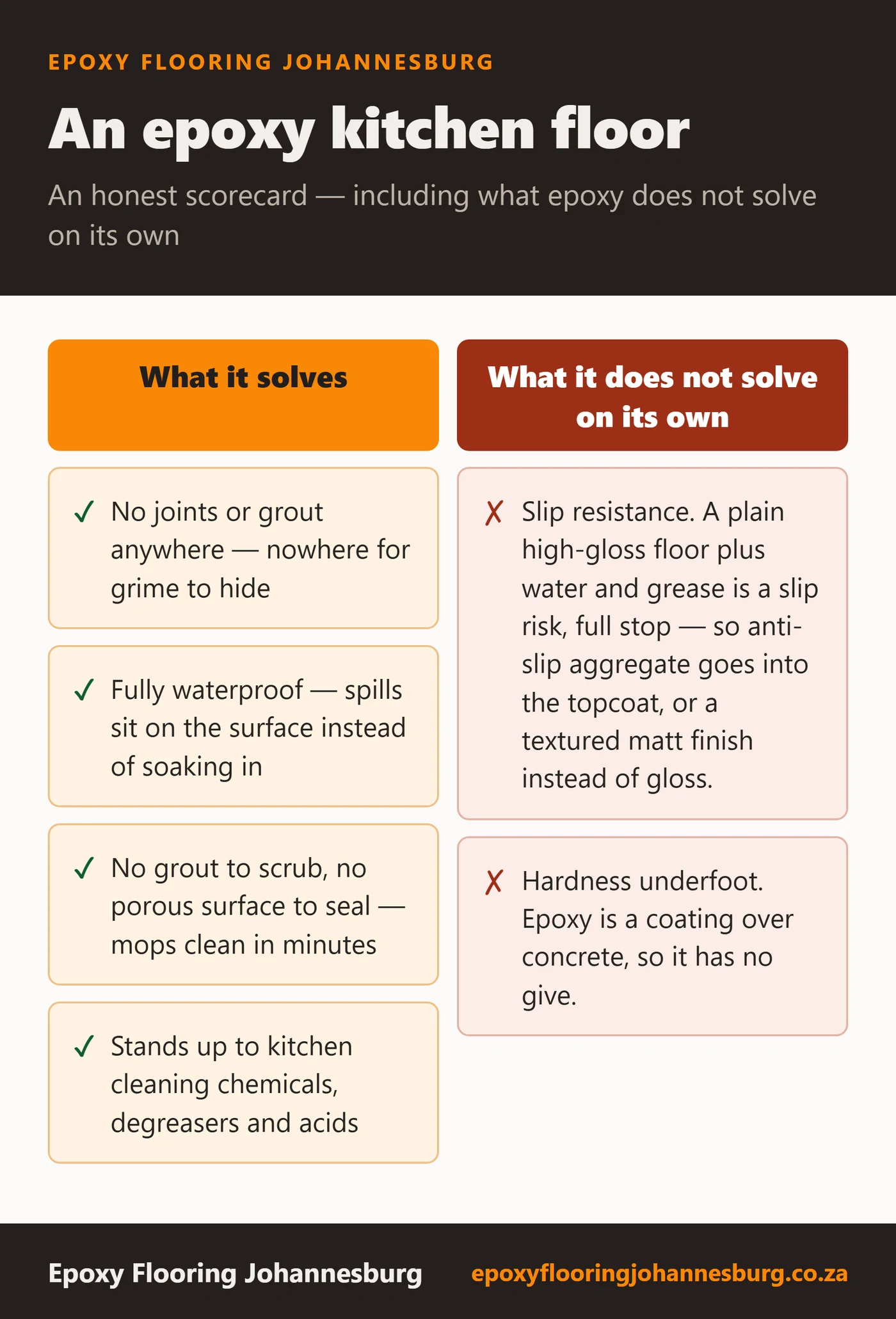
A gloss resin floor with water or cooking oil on it is slippery. Kitchens are the one room where the floor is regularly both, so a plain gloss finish is the wrong choice there, however good it looks in photos. Grip comes from fine aggregate scattered into the final coat or from a textured matt finish. Homes need a light texture that still mops easily; a commercial line in front of the fryers needs a coarser one. A flake floor builds some texture into the surface as well. When you ask for a quote, say that the floor is for a kitchen and point out where the sink, dishwasher and stove are, so the texture goes where the water does.
Home kitchens
In a house, the floor has to cope with spilt juice, a dropped jar, a dog's water bowl and the odd red-wine accident, and it has to look good doing it. A standard epoxy with a light grit in the top coat covers all of that. Because the floor is poured, it can carry on from the kitchen into the dining area or lounge without a threshold strip, which is a big part of the appeal in open-plan homes. Our residential epoxy page looks at which other rooms in a house suit it.
Cleaning is simple: sweep, then a damp mop with a neutral cleaner. There is no grout to scrub and nothing to reseal each year. The full routine is in our guide to looking after an epoxy floor.
Restaurant and commercial kitchens
A working kitchen asks more of the floor than a house ever will: trolleys, constant foot traffic, degreasers, hot water and a nightly wash-down. The checklist is usually:
- a jointless floor with a coved skirting, to meet the R638 wording on joints and seams;
- a coarse anti-slip texture at the cooking line and around drains;
- a heat rating that matches the wash-down routine, which often means polyurethane cement;
- falls to the drains, so water does not pond;
- a plan for downtime, since even a fast system needs time before food can come back in.
Colour and finish
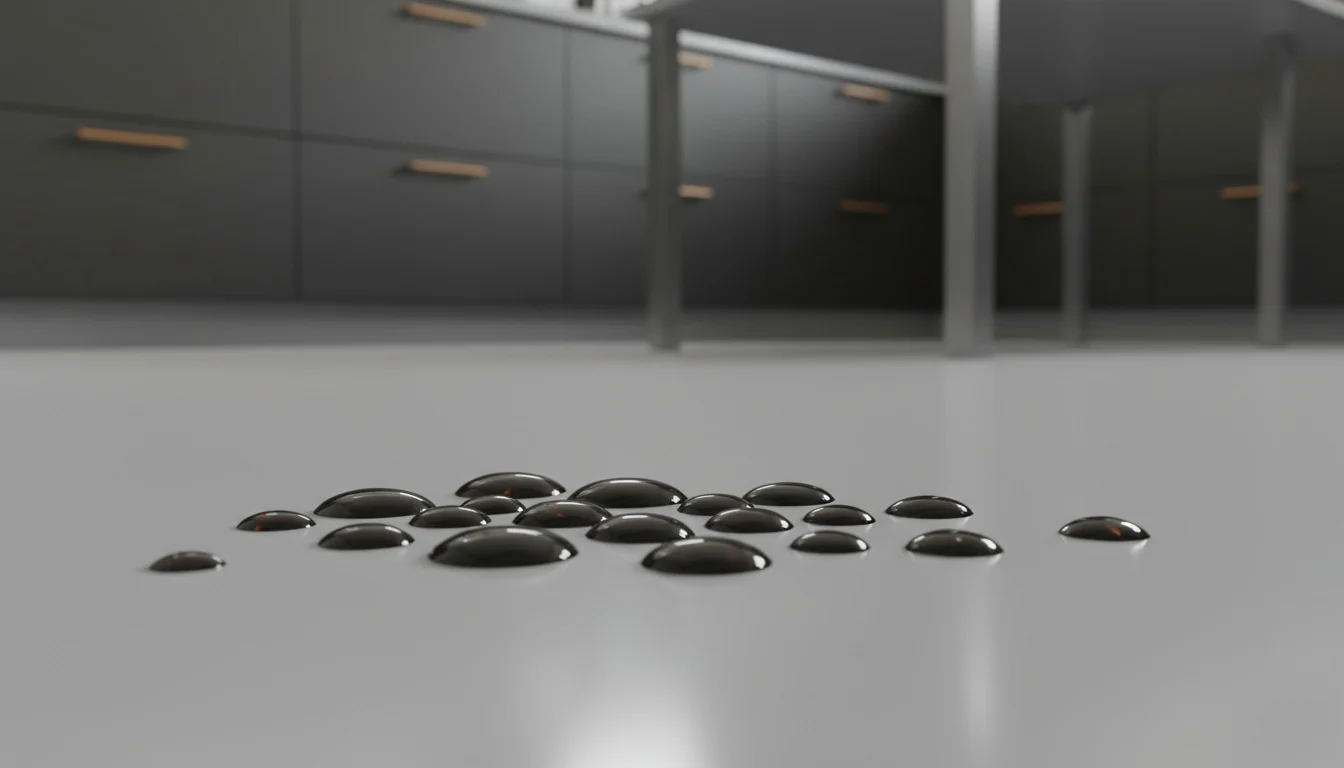
A practical kitchen floor does not have to look clinical. Solid colours can be matched to cabinetry, and a lighter shade makes a dark kitchen brighter. Flake hides crumbs and drips between cleans. A metallic pour gives an open-plan kitchen a stone-like centrepiece. Whatever the finish, the grip and heat decisions above come first, and the colour is chosen within them.
The honest downsides
Slip, if the texture is left out. This is the mistake that matters most in a kitchen, and the easiest to avoid at the quote stage.
Hardness. Resin over concrete has no give. Standing at the counter for hours is tiring and a dropped glass will break. An anti-fatigue mat at the sink and stove is the usual answer.
Preparation. The concrete must be ground, repaired and tested for moisture first. Kitchens often have old tile adhesive, grease soaked into the slab or damp near plumbing, and each of those has to be dealt with or the coating can lift. That is also why a kitchen floor is not a kit job.
So, is it right for your kitchen?
If you want a floor that is easy to keep clean, has no grout and copes with spills, an epoxy floor with grit in the top coat is a strong choice for a home kitchen. For a food business, check the R638 wording, plan for a coved edge, and match the system to how hot your wash-downs are, which may point to polyurethane cement. Still deciding between materials? Our comparison of epoxy and tiles works through cost and cleaning with real prices.
Our guide range in Johannesburg is R250 to R1,500 per m², depending on the system and the state of the slab; the pricing page breaks it down by finish. Book a free on-site assessment and we will look at the floor, ask how the kitchen is used, and give you a written price for the right system.